
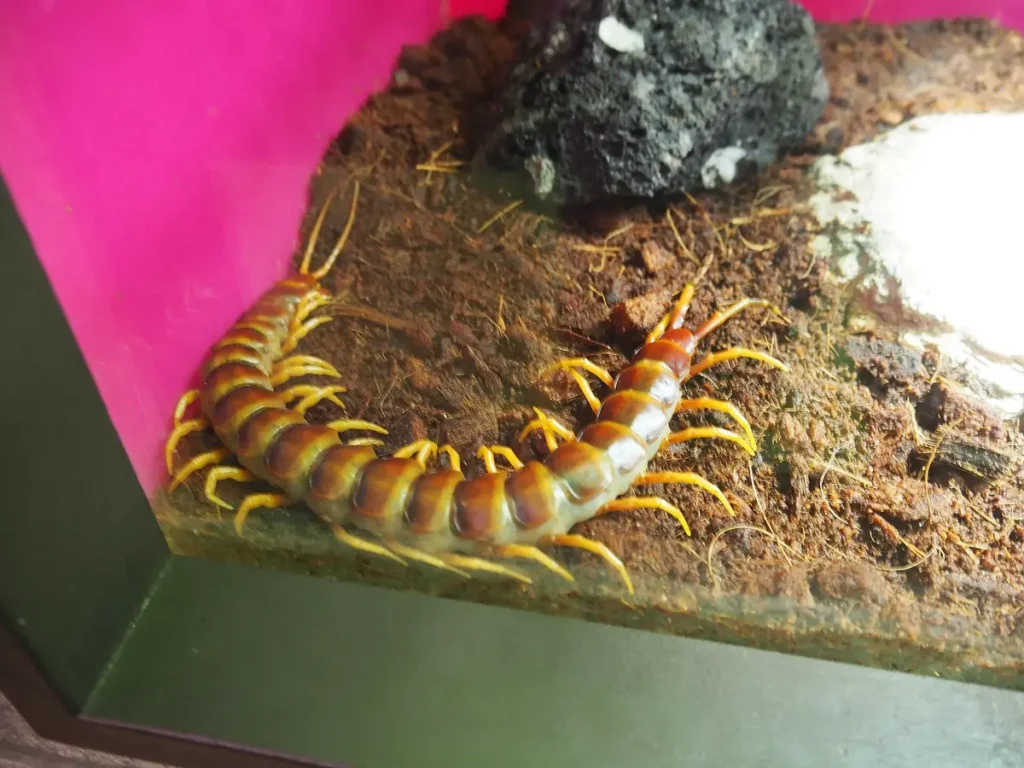
Types of centipedes range from tiny soil dwellers hiding under garden stones to giants more than a foot long that hunt in tropical forests. If you have ever lifted a rock and watched a many legged creature dart for cover, or spotted a long legged visitor racing across a bathroom wall at night, you have met one of the roughly 3,000 described species in the class Chilopoda. This guide sorts the most important types into one clear chart, with real sizes, habitats, and facts, so you can identify the one you found and know whether it deserves caution or a quiet thank you.
Every centipede shares the same basic body plan. It has one pair of legs on each body segment, a flattened body built for slipping into cracks, and a pair of venom claws called forcipules just behind the head. Those claws are modified legs, and they are how a centipede grabs and subdues prey. Large species can deliver a painful bite with them, while small species usually cannot break human skin. Speed is the other giveaway: centipedes are fast, active hunters, not slow grazers.
How Scientists Group Types of Centipedes
Scientists divide centipedes into four living orders, and knowing them makes identification much easier. House centipedes belong to Scutigeromorpha, the long legged sprinters with 15 pairs of legs. Stone centipedes sit in Lithobiomorpha, short bodied and quick, also with 15 pairs as adults. Soil centipedes are Geophilomorpha, thread thin burrowers with 27 to more than 170 pairs of legs. The big tropical and desert hunters belong to Scolopendromorpha, with 21 or 23 pairs depending on the species.
Everyday names do not always match the science. “Blue centipede” and “green centipede” are color labels for various tropical Scolopendra species, not separate species, and “tropical centipede” describes a climate, not a group. When a name sounds like a color or a place, treat it as a description and look for the scientific name underneath.
Types of Centipedes: 20 Species, Sizes and Habitats
The chart below covers the 20 types people search for and encounter most, from the harmless house guest to the largest predator in the group. Sizes are typical adult body lengths, not counting the extra reach of long legs.
| Species | Typical Size | Habitat and Range | Key Fact |
|---|---|---|---|
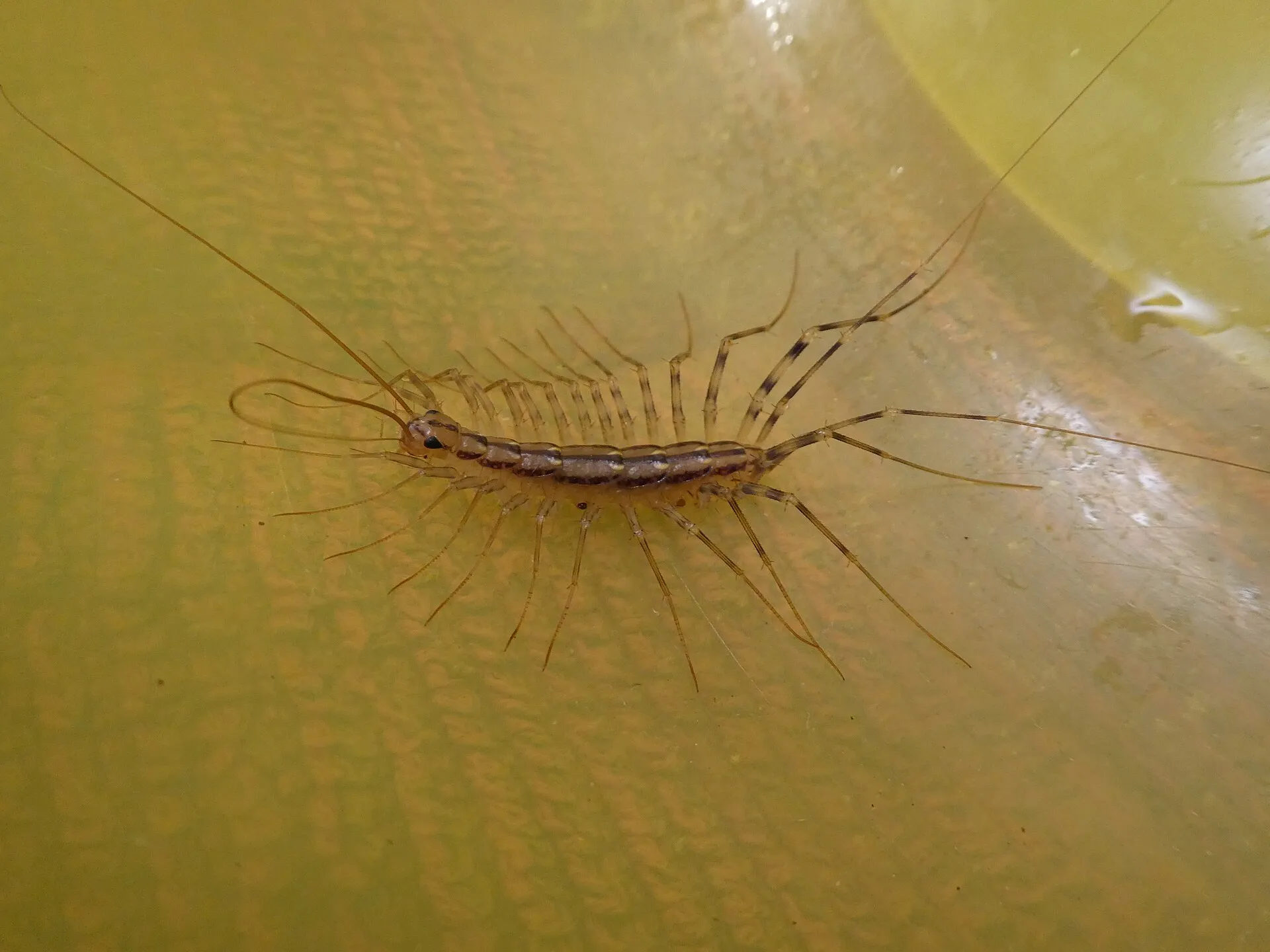
| House centipede (Scutigera coleoptrata) | 1 to 1.5 inches body, longer with legs | Homes, basements and damp rooms worldwide | Long striped legs make it look bigger; hunts cockroaches and spiders indoors |
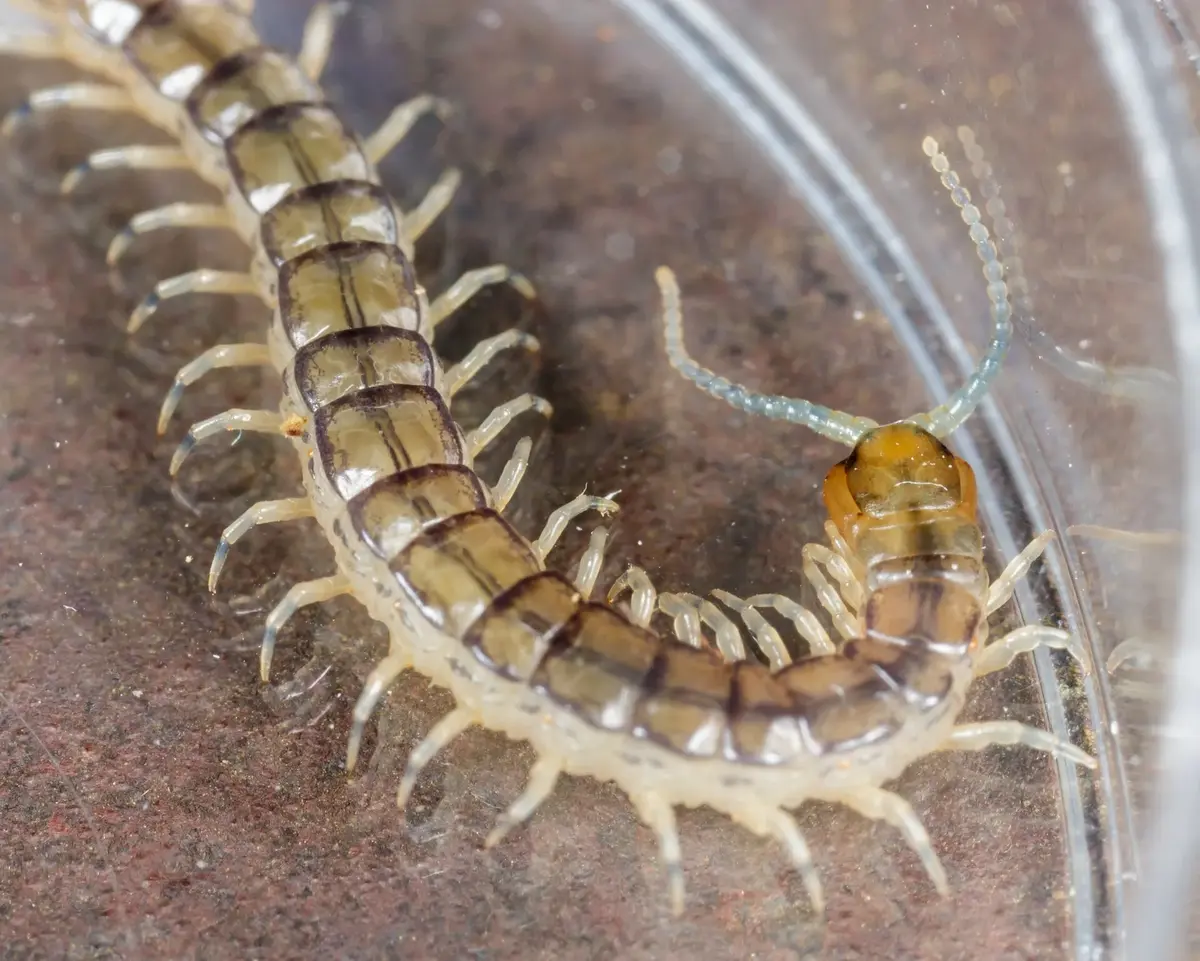
| Common stone centipede (Lithobius forficatus) | 0.7 to 1.2 inches | Under rocks, logs and leaf litter across Europe and North America | The small centipede most often found in gardens |
| Soil centipede (Geophilus species) | 1 to 2.5 inches, very thin | Soil and gardens in temperate regions worldwide | Thread thin burrower hunting tiny worms and larvae |
| Blind soil centipede (Geophilomorpha species) | 0.8 to 1.6 inches | Deep soil and underground tunnels | Eyeless and pale; lives its whole life underground |
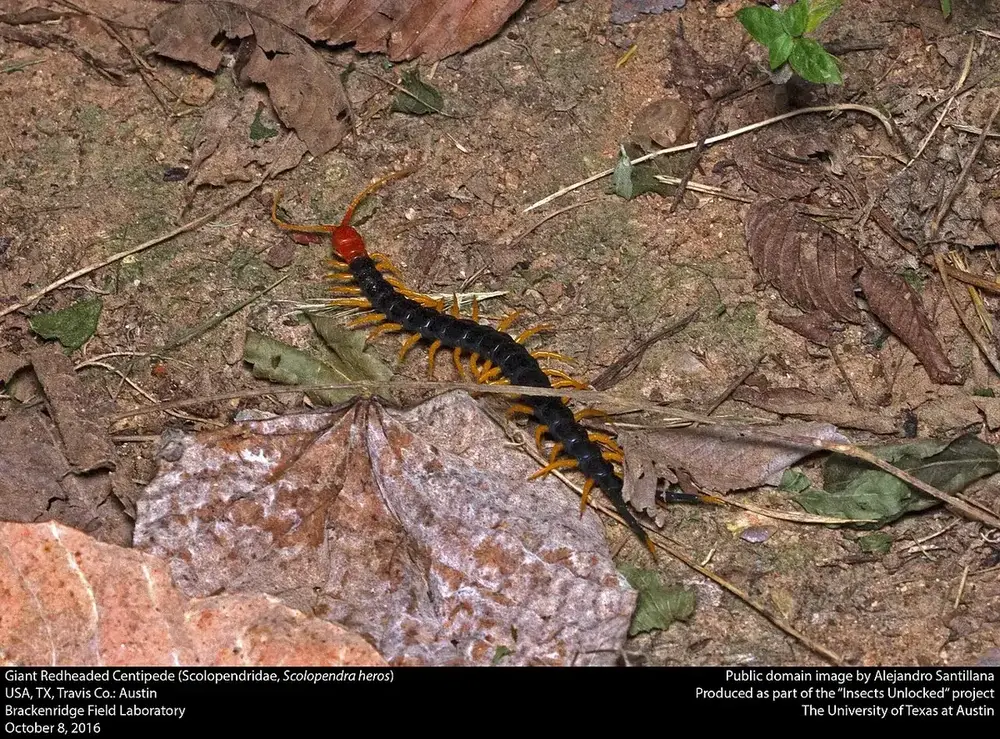
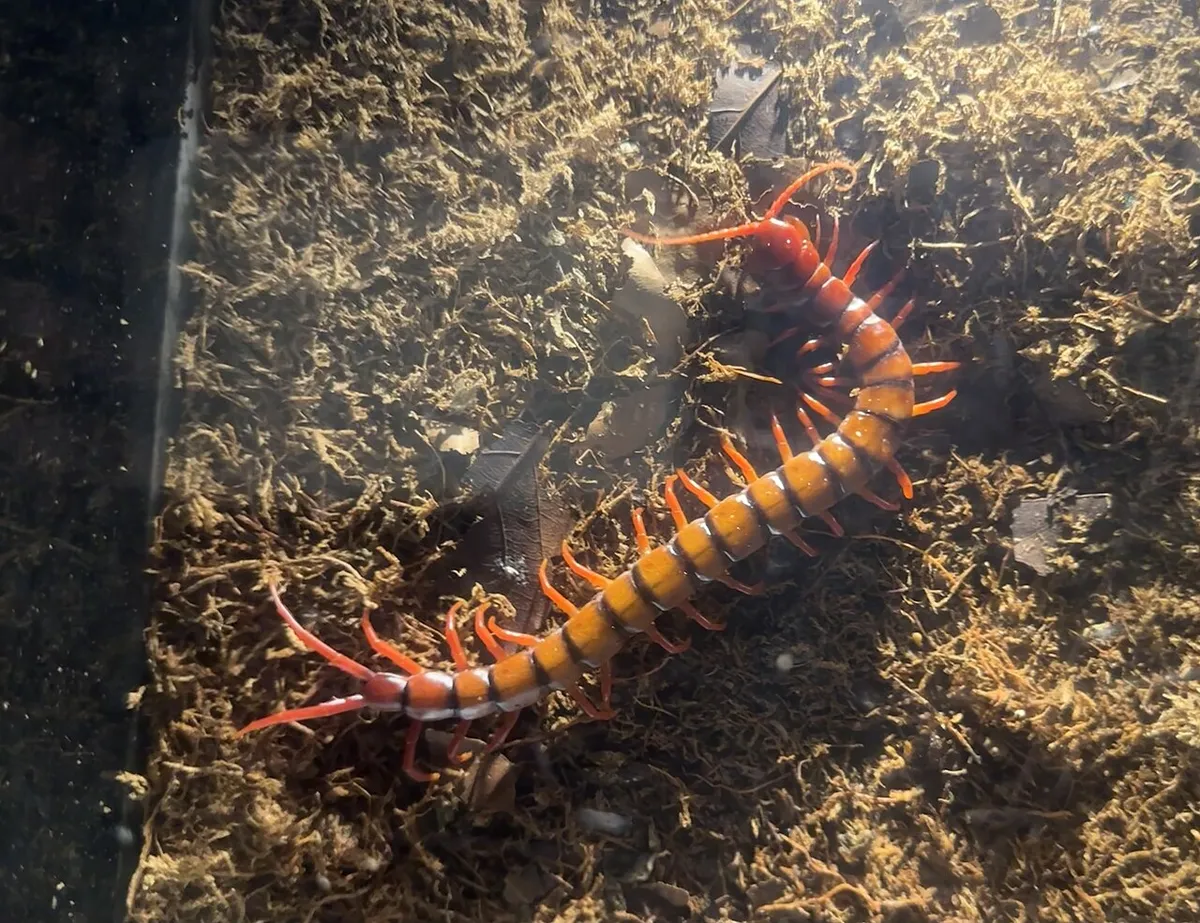
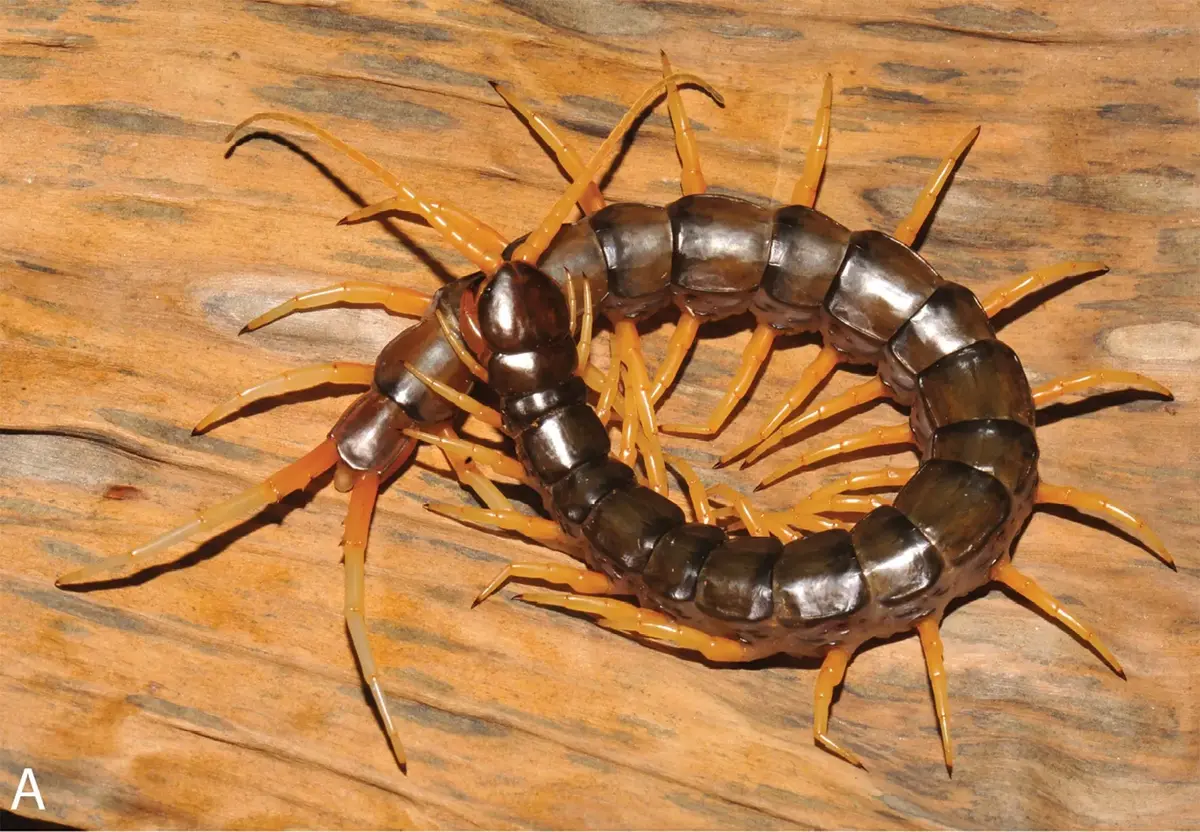
| Giant redheaded centipede (Scolopendra heros) | 6 to 8 inches | Deserts and dry grassland of the US Southwest and northern Mexico | Red head warns predators; bite is famously painful |
| Amazonian giant centipede (Scolopendra gigantea) | 10 to 12 inches | Tropical forests of northern South America and the Caribbean | Largest in the world; catches frogs, lizards, small bats |
| Vietnamese centipede (Scolopendra subspinipes) | 6 to 8 inches | Southeast Asia and tropical regions worldwide | Quick and defensive; a commonly kept large species |
| Chinese red-headed centipede (Scolopendra mutilans) | 5 to 7 inches | East Asia, especially China, Korea and Japan | Used in traditional medicine in China |
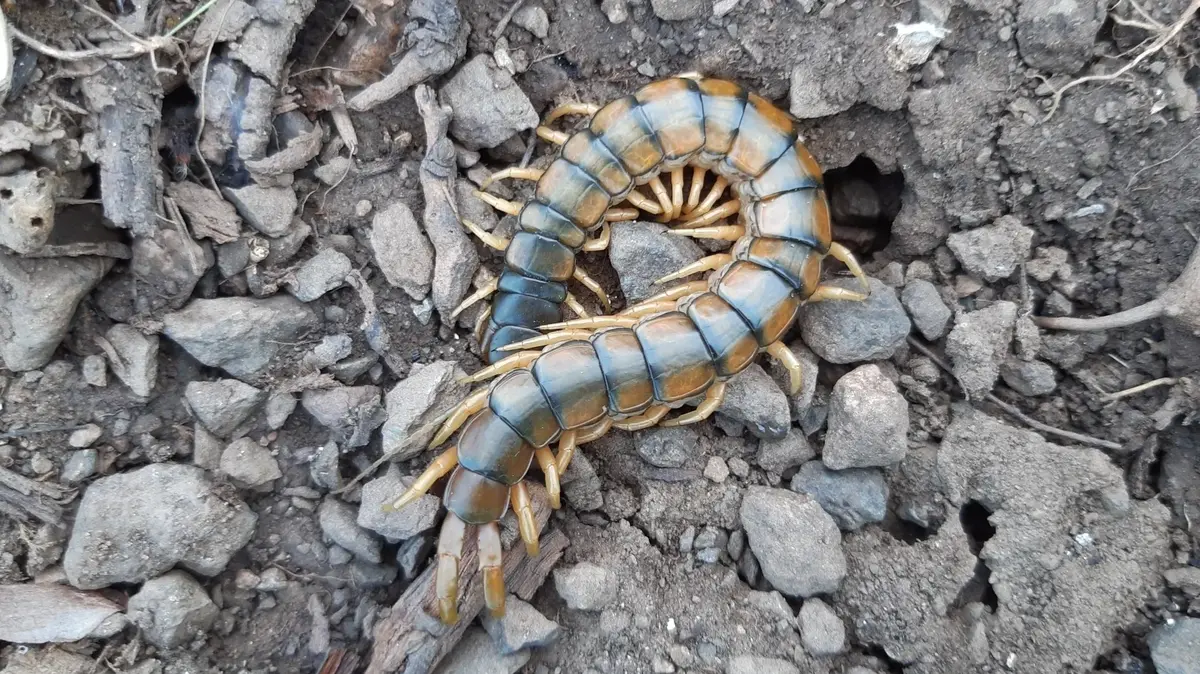
| Tiger centipede (Scolopendra polymorpha) | 4 to 7 inches | Dry regions of the US Southwest and northern Mexico | Banded pattern varies from tan to dark brown |
| Eastern bark centipede (Hemiscolopendra marginata) | 2 to 3 inches | Under bark and logs in the eastern United States | Flattened for life under bark; blue green to dark brown |
| Mediterranean banded centipede (Scolopendra cingulata) | 4 to 6 inches | Southern Europe, North Africa and the Middle East | Black and gold bands; striking European species |
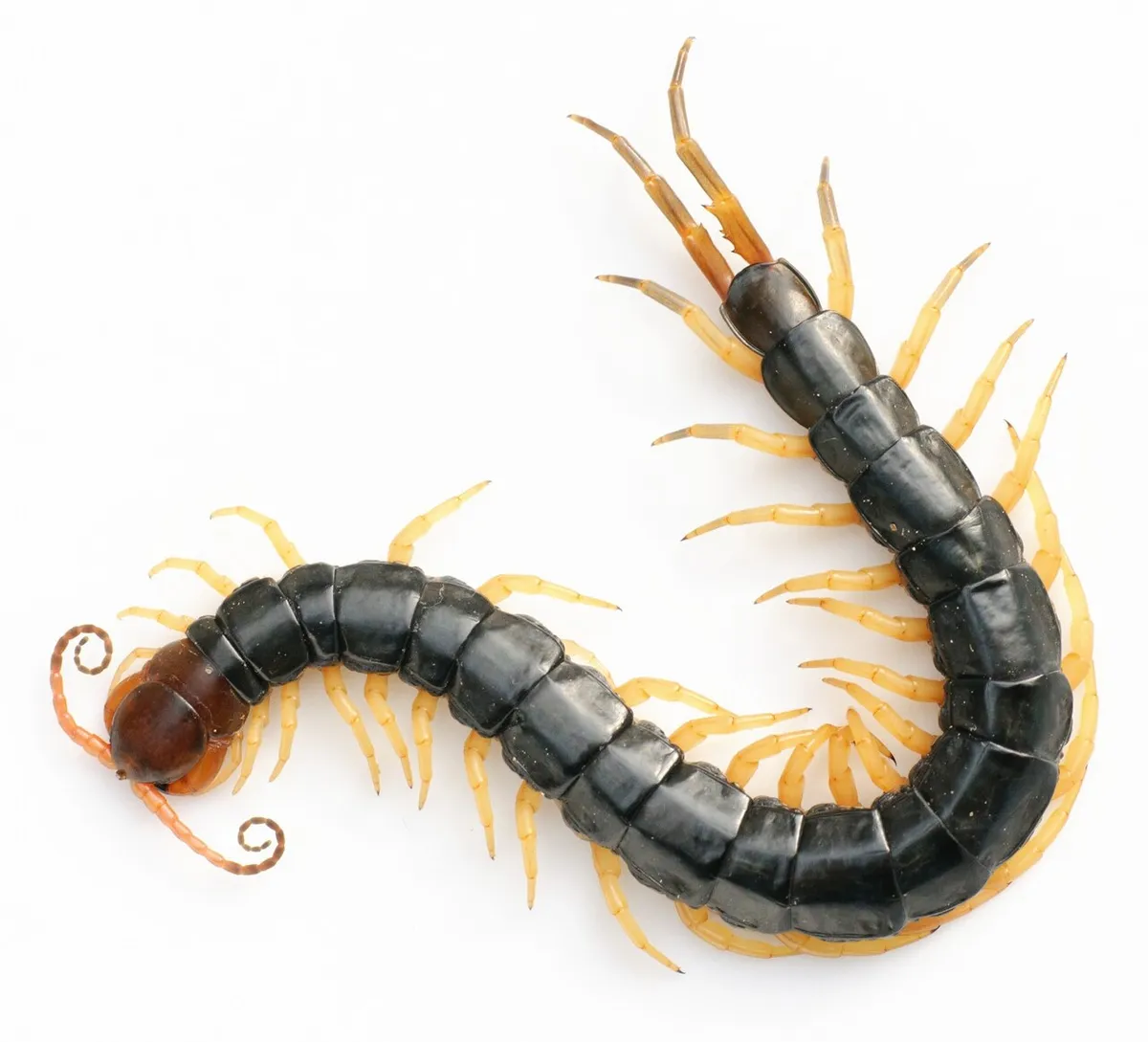
| Giant African centipede (Ethmostigmus trigonopodus) | 6 to 8 inches | Forests and savannas of sub-Saharan Africa | Heavy bodied forest floor hunter of large insects |
| Waterfall centipede (Scolopendra cataracta) | 6 to 8 inches | Streams in Thailand, Laos and Vietnam | First amphibious centipede, confirmed 2016; swims |
| Cave centipede (cave adapted species) | 1 to 3 inches | Caves and deep rock crevices worldwide | Pale with reduced eyes; adapted to permanent darkness |
| Tanzanian blue ring centipede (Scolopendra morsitans) | 4 to 5 inches | Africa, Asia and Australia in warm dry habitats | Blue banded legs; aggressive, popular with keepers |
| Asian forest giant centipede (Scolopendra dehaani) | 6 to 9 inches | Forests of Southeast Asia | Often confused with the Vietnamese centipede |
| Amazonian green centipede (Scolopendra viridicornis) | 6 to 8 inches | Forests of South America, especially Brazil | Greenish head and legs set it apart |
| Galapagos giant centipede (Scolopendra galapagoensis) | 8 to 12 inches | Galapagos Islands and coastal South America | Island giant; preys on seabird chicks and lizards |
| Eastern red centipede (Scolopocryptops sexspinosus) | 2 to 3 inches | Forests of the eastern United States | Reddish and blind; often mistaken for small Scolopendra |
| Garden centipede (Cryptops hortensis) | 1 to 1.5 inches | Gardens and soil across Europe and North America | Small, orange brown and blind; common in garden soil |
Two patterns jump out of the chart. Size follows climate: the giants all live in warm, humid or desert regions, while temperate regions get mostly small stone and soil species. And color is a warning system: bright heads and banded bodies usually belong to larger, venomous species, while small, dull colored species are the harmless ones.
The Largest Types of Centipedes
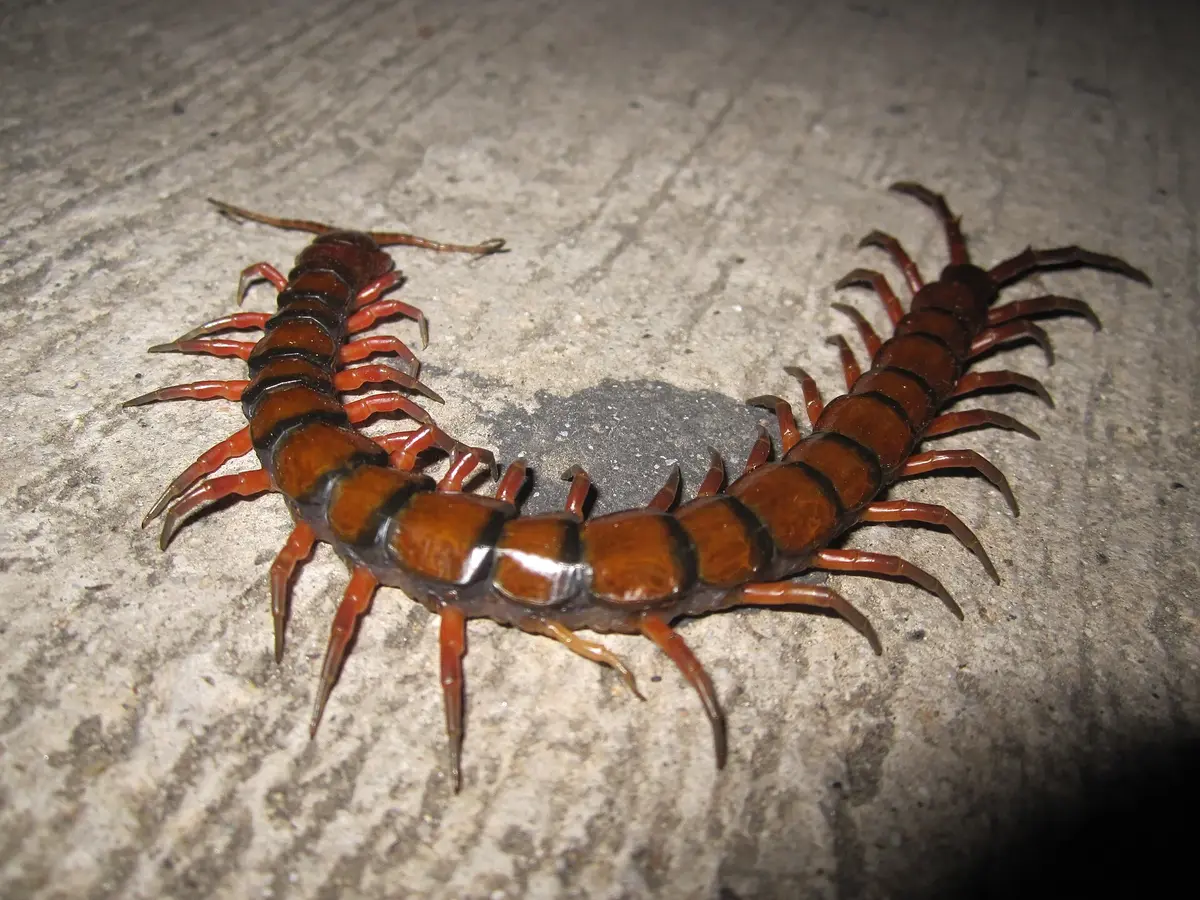
The giants all belong to Scolopendromorpha, and they are the only centipedes that regularly take vertebrate prey. The Amazonian giant leads the list at up to 12 inches, with verified specimens close to a foot long. The Galapagos giant runs close behind, and its island diet includes seabird chicks, remarkable for an invertebrate.
What makes these giants dangerous is venom, not size alone. Their forcipules inject venom that paralyzes prey quickly, and in a large species it causes intense pain in a person. Even so, bites are almost never life threatening for healthy adults. The real risk comes from allergic reactions, bites to small children, and infection if a bite is scratched open.
The Smallest Types of Centipedes
At the other end of the scale sit the quiet species most people never notice. Stone centipedes spend their lives under rocks and rarely pass an inch, soil centipedes are thinner than a piece of thread, and the house centipede looks bigger than it is only because of its long legs. These small species do the most good in gardens and homes, eating springtails, mites, fly larvae and other tiny pests around the clock.
Small size also means small risk. A stone or soil centipede either cannot break human skin or leaves nothing worse than a pinprick. If you find one indoors, it wandered in by accident, so scoop it into a container and release it outside near leaf litter.
Which Types of Centipedes Are Dangerous?
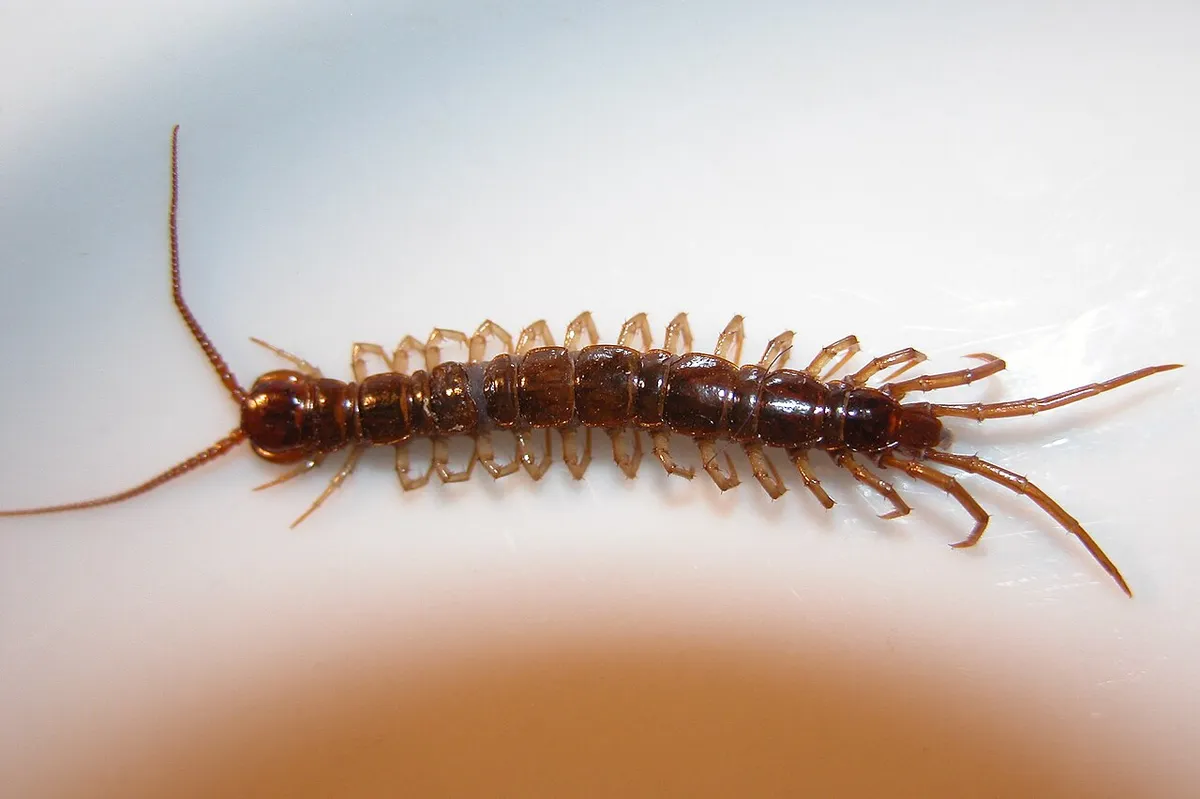
Most centipedes you meet cannot hurt you. The small house, stone and soil species are harmless, and even the mid sized bark and garden species cause at most a brief sting. The bite people fear comes from the large tropical and desert Scolopendra species: the Amazonian giant, the giant redheaded, the Vietnamese, the Chinese red-headed, the giant African and the Asian forest giant. Their bites cause sharp pain, swelling and redness that may spread up a limb for hours.
If a large centipede does bite, wash the area with soap and water, apply a cold pack, and keep the limb raised. Pain usually peaks within an hour or two and fades over a day. Seek medical care if swelling spreads rapidly, if breathing feels difficult, if the person is a small child, or if redness and heat increase after a day. Never handle a large centipede with bare hands, and never reach blindly into woodpiles or rock piles where giants live.
Centipedes in the House
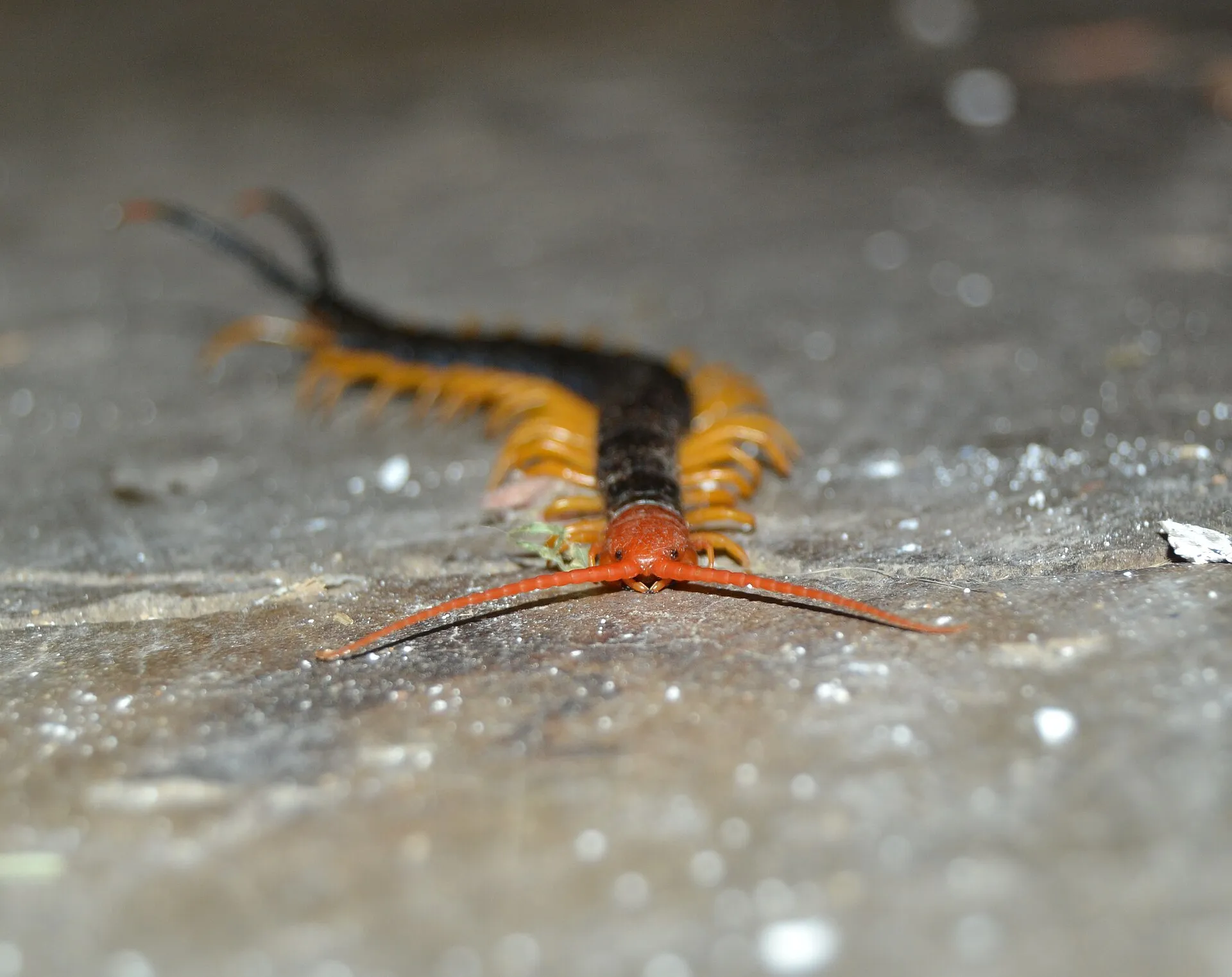
The centipede most people see indoors is the house centipede, Scutigera coleoptrata. It likes damp, dark spaces such as basements, bathrooms and crawl spaces, hunts at night, and feeds on smaller pests already living in your home. A few house centipedes quietly reduce your bug problem, which is why university extension programs call them beneficial rather than true pests.
They get inside through gaps around pipes, doors and foundations, drawn by moisture and prey. Drying out basements, fixing leaks and sealing those gaps does more to move them along than any spray. If the count climbs, another insect is breeding nearby and feeding them, so find that food source. The same damp habitats attract other indoor insects: our guides to types of cockroaches and types of crickets cover two of the most common house guests.
How to Tell a Centipede from a Millipede
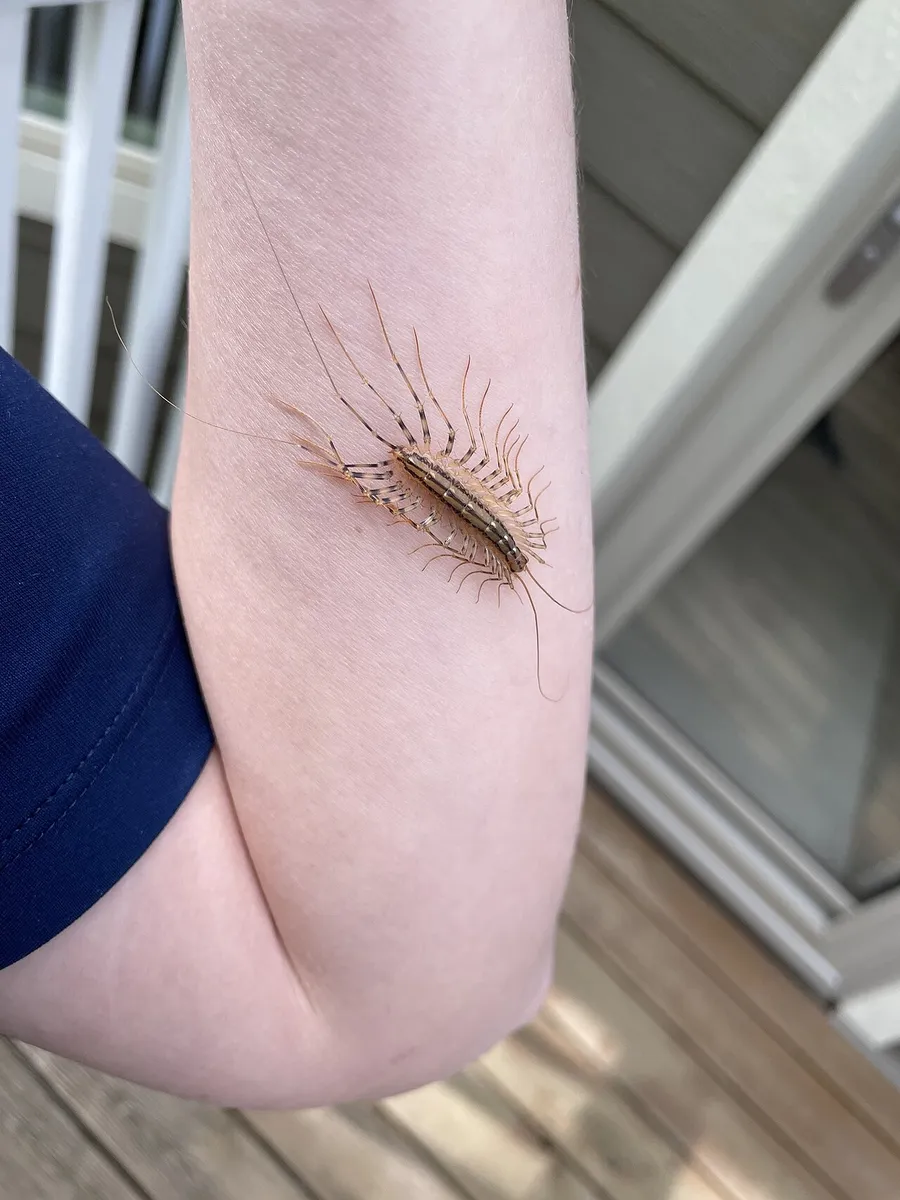
Centipedes and millipedes get mixed up constantly, yet they are easy to separate once you know the trick. A centipede has one pair of legs per segment and moves fast. A millipede has two pairs per segment and moves slowly, often curling into a tight spiral when touched. Diet tells them apart too: centipedes are predators, while millipedes eat dead leaves and decaying plant matter, so they pose no bite risk at all.
Body shape is the fastest field check. Centipedes are flattened, built to slip under bark and stones, with long antennae and legs that stick out sideways. Millipedes are rounder, almost tube shaped, with short legs tucked underneath. If it darts away, it is a centipede. If it ambles along or curls up, it is a millipede. Our guides to types of grasshoppers and types of cicadas cover other insects that share the same outdoor habitats.
Where Different Types of Centipedes Live
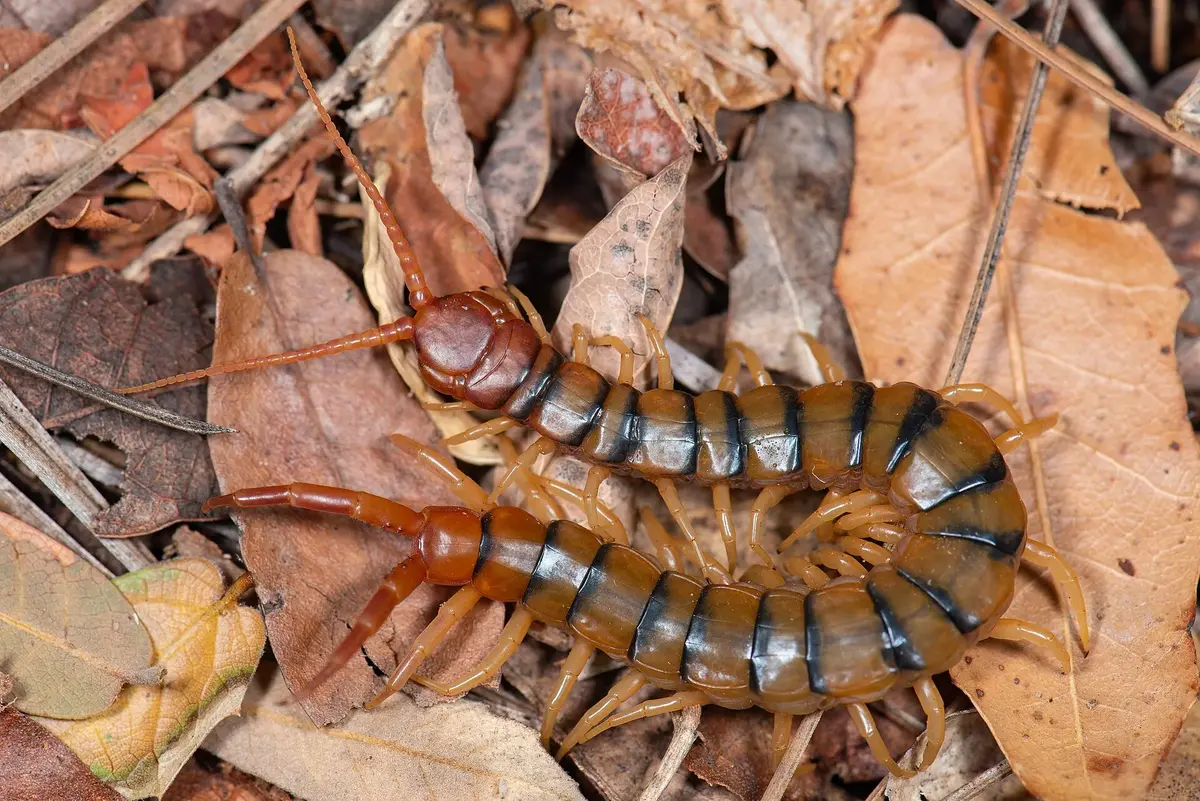
Habitat is often the best identification clue when size and color overlap. Under a rock in a temperate garden, you will almost always find a stone or garden centipede. Deep in soil, the thread thin burrower is a soil centipede. Under loose bark in the eastern United States, the flattened hunter is the bark centipede. In a desert, the banded hunter is likely the tiger centipede, while the big red headed hunter is the giant redheaded centipede.
Tropical forests hold the greatest variety, caves hold pale, often eyeless specialists, and streams in Southeast Asia hold the waterfall centipede, the only known amphibious species. Wherever you find one, look at the microhabitat first: rock, soil, bark, house or stream narrows the list faster than color alone.
Frequently Asked Questions About Types of Centipedes
How many types of centipedes are there?
Scientists have described roughly 3,000 species of centipede, grouped into four main orders. Most homes only ever see one of them, the house centipede, while gardens add stone and soil species to the list.
What is the most common centipede in the house?
The house centipede, Scutigera coleoptrata, is the one found indoors almost everywhere. It is the thin bodied centipede with very long, striped legs that darts across bathroom floors at night.
What is the largest centipede in the world?
The Amazonian giant centipede, Scolopendra gigantea, is the largest. It can reach around 30 centimeters and is strong enough to catch frogs, lizards and even small bats.
Are centipede bites dangerous?
For most people a centipede bite causes pain, swelling and redness rather than real harm. Bites from large tropical species hurt a lot, but serious reactions are rare and usually linked to an allergy.
Do centipedes really have 100 legs?
Not exactly. The name means hundred legs, but species range from about 30 to more than 350 legs, and a centipede always has an odd number of leg pairs.
Should I kill a centipede in my house?
Usually not. House centipedes eat cockroaches, silverfish, spiders and other pests, so one or two are doing you a favor. Seal gaps and reduce dampness to encourage them to move on, and release any you catch outside.
Conclusion
Types of centipedes turn out to be far more varied than the single scary creature most people picture. The small stone, soil and house species are harmless helpers that keep smaller pests in check, the mid sized bark, tiger and banded species add color to deserts, forests and gardens, and the giants show how far one body plan can go when evolution scales it up. Use the chart above to place the one you found, respect the large tropical species from a distance, and leave the small ones to their quiet, useful work.

