
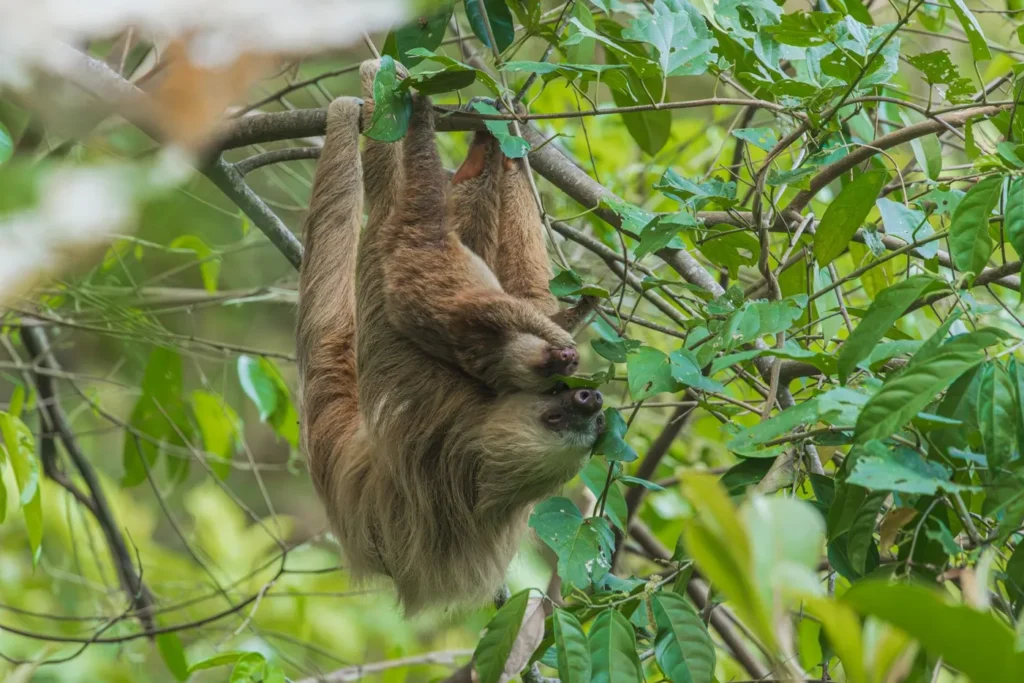
If you picture a sloth, you probably picture one animal: a slow, smiling creature hanging upside down from a branch. The real story is richer. The different types of sloths vary in size, face shape, diet, activity patterns, and home forest. Some live only on a single small island. Others range across half a continent.
This guide covers all six living species, with a comparison chart: claw count, size, range, diet, lifespan, and which ones need protection most.

How Many Types of Sloths Are There?
There are six living types of sloths in the world today, and that surprises many people who expect a longer list. Long ago, giant ground sloths roamed the Americas, some as large as an elephant. All of those giants are extinct. The six survivors are all tree dwellers living in the tropical forests of Central and South America.
Scientists group them into two families. Four belong to the three-toed family, Bradypodidae, in the genus Bradypus. Two belong to the two-toed family, Megalonychidae, in the genus Choloepus. The names refer to the front limbs, where the easiest identification clue lives.
Two-Toed vs Three-Toed Sloths: The Key Differences
The most common mix-up about types of sloths is the toe count itself. Both groups have three toes on their hind feet. The difference is on the front limbs: two-toed sloths have two claws there, while three-toed sloths have three.
Two-toed sloths are generally larger, heavier, and more active at night. They have a longer, more pig-like snout and shaggier fur, and they eat a broader diet that can include fruit and the occasional insect. Three-toed sloths are usually smaller and more active during the day. They have rounder faces with the famous “smile,” smoother fur, and a stricter leaf-based diet. They also have extra neck vertebrae, letting them turn their heads almost fully around.
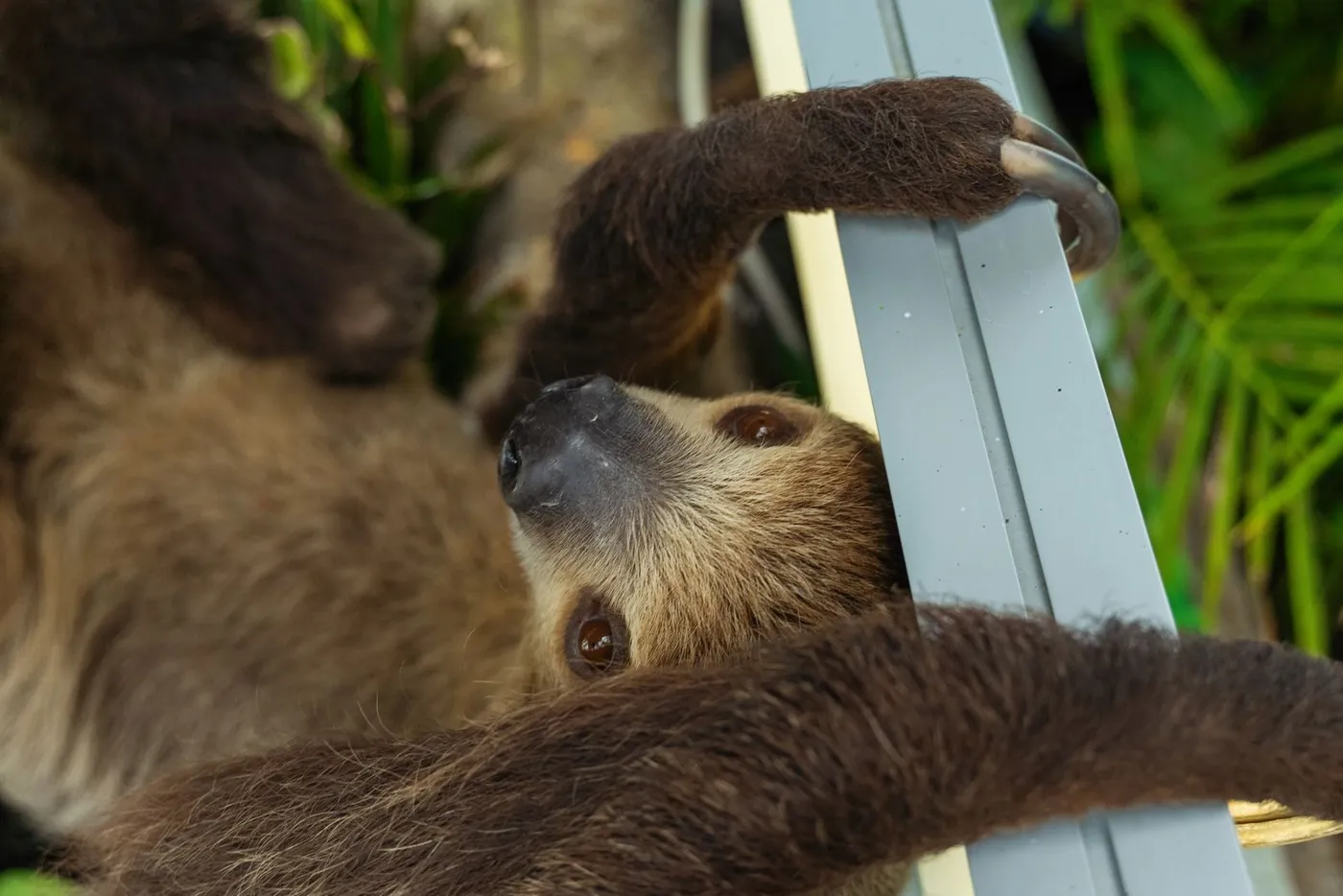
Speed is another difference, though “fast” is relative here. Two-toed sloths climb a little more quickly, while three-toed sloths are the true slow-motion specialists, sometimes covering only about 40 yards in a whole day. For both groups, slowness is a survival strategy: a low-energy lifestyle keeps them hidden from predators like harpy eagles and jaguars.
Types of Sloths Compared: Full Data Chart
Use this chart as your quick reference for all six species. Sizes and weights are typical adult ranges, and lifespans are approximate, since wild sloths are hard to track for decades. Where a figure is poorly studied, the table says so.
| Species | Front claws | Length | Weight | Range and habitat | Diet | Lifespan | Key trait |
|---|---|---|---|---|---|---|---|
| Brown-throated three-toed sloth (Bradypus variegatus) | 3 | 42 to 80 cm | 2.3 to 5.5 kg | Honduras to northern Argentina; lowland and secondary forest, cacao groves | Mostly leaves | About 20 to 30 years in the wild | Most widespread sloth; brown throat patch |
| Pale-throated three-toed sloth (Bradypus tridactylus) | 3 | 45 to 75 cm | 3.2 to 6.0 kg | Guianas, Venezuela, northern Brazil; rainforest canopy | Mostly leaves | About 20 to 30 years in the wild | Pale yellow throat patch; quiet, canopy life |
| Maned three-toed sloth (Bradypus torquatus) | 3 | 55 to 75 cm | 4.0 to 7.5 kg | Brazilian Atlantic Forest only; humid coastal forest | Mostly leaves | About 20 to 30 years in the wild | Dark mane along neck and shoulders; vulnerable |
| Pygmy three-toed sloth (Bradypus pygmaeus) | 3 | 48 to 53 cm | 2.5 to 3.5 kg | Isla Escudo de Veraguas, Panama, only; island mangrove and lowland forest | Mostly mangrove leaves | Poorly studied; believed under 20 years in the wild | Smallest sloth; critically endangered |
| Hoffmann’s two-toed sloth (Choloepus hoffmanni) | 2 | 55 to 70 cm | 4.0 to 8.0 kg | Central America to Peru; rainforest canopy | Leaves, fruit, flowers, occasional insects | About 20 to 30 years in the wild; over 40 years in captivity | Nocturnal; broadest diet of any sloth |
| Linnaeus’s two-toed sloth (Choloepus didactylus) | 2 | 55 to 70 cm | 4.0 to 9.0 kg | Brazil and the Guianas; tropical rainforest | Leaves, fruit, flowers, occasional insects | About 20 to 30 years in the wild; over 30 years in captivity | Larger and more elusive than Hoffmann’s |

The Four Three-Toed Sloth Species
Brown-Throated Three-Toed Sloth
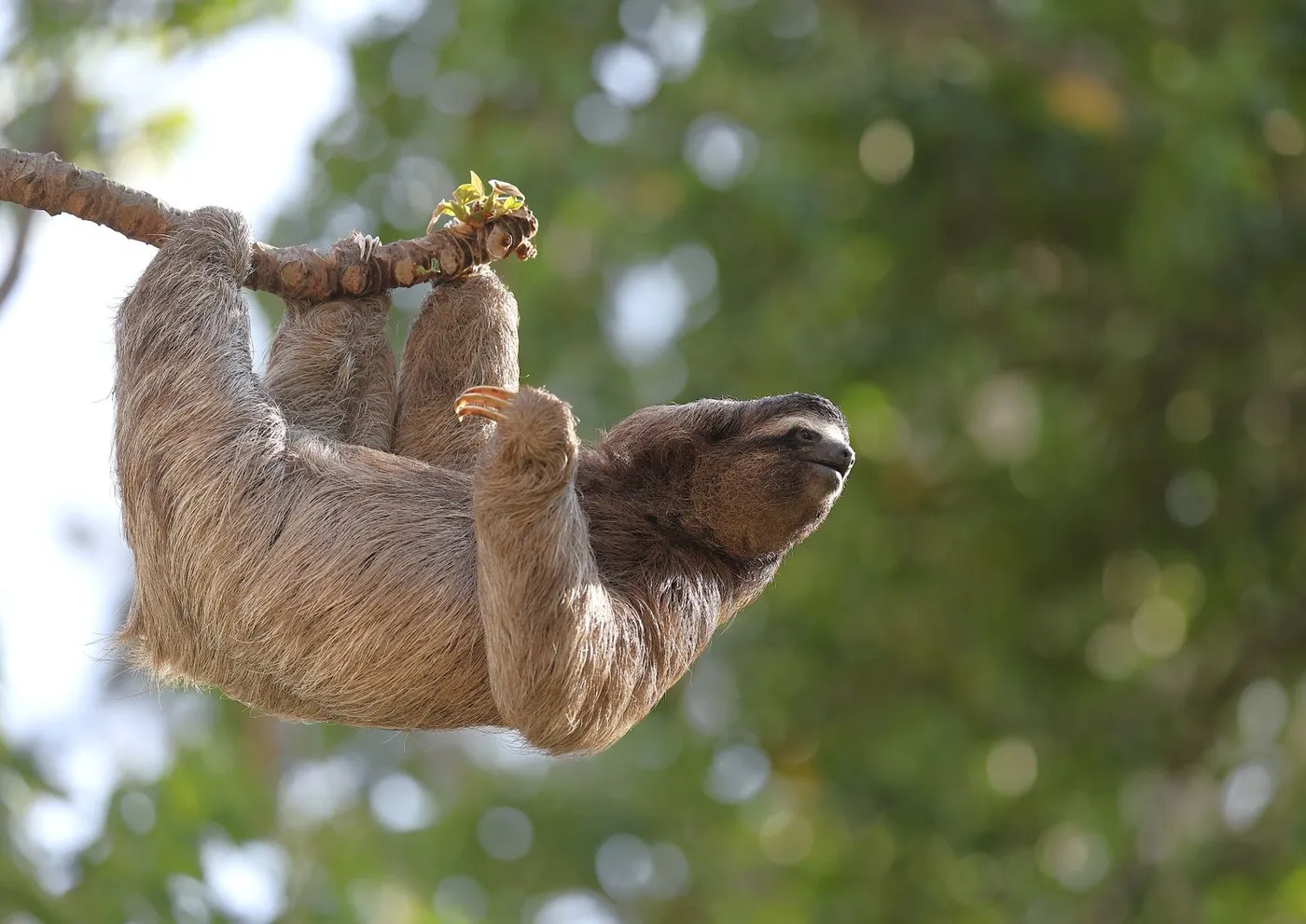
The brown-throated sloth is the species most travelers meet. It ranges further than any other sloth, from Honduras to northern Argentina, and tolerates disturbed forest, including cacao plantations, better than its cousins. Look for the brownish throat patch that gives it its name. If you see a sloth in Costa Rica during the day, this is very likely the one you are watching. It shares the canopy with the animals in our guide to types of monkeys.
Pale-Throated Three-Toed Sloth
The pale-throated sloth is the brown-throated sloth’s northern South American counterpart. Its pale, yellowish throat patch is the giveaway, and its range centers on the Guianas, Venezuela, and northern Brazil. It spends long hours motionless in the canopy, and its greenish, algae-tinted fur works as camouflage among the leaves.
Maned Three-Toed Sloth
The maned sloth lives nowhere but Brazil’s Atlantic Forest, a coastal forest that has lost most of its original area. Males carry a dark mane along the neck and shoulders, which makes this the easiest three-toed species to identify. Because its home is so fragmented, it is listed as vulnerable.

Pygmy Three-Toed Sloth
The pygmy three-toed sloth is one of the rarest mammals on Earth. It lives only on Isla Escudo de Veraguas, a small island off Panama’s Caribbean coast, and its whole population is thought to number in the low hundreds. It is noticeably smaller than other three-toed sloths and feeds heavily on mangrove leaves. Even small-scale habitat disturbance can threaten the entire species, which is why it is critically endangered.
The Two Two-Toed Sloth Species
Hoffmann’s Two-Toed Sloth
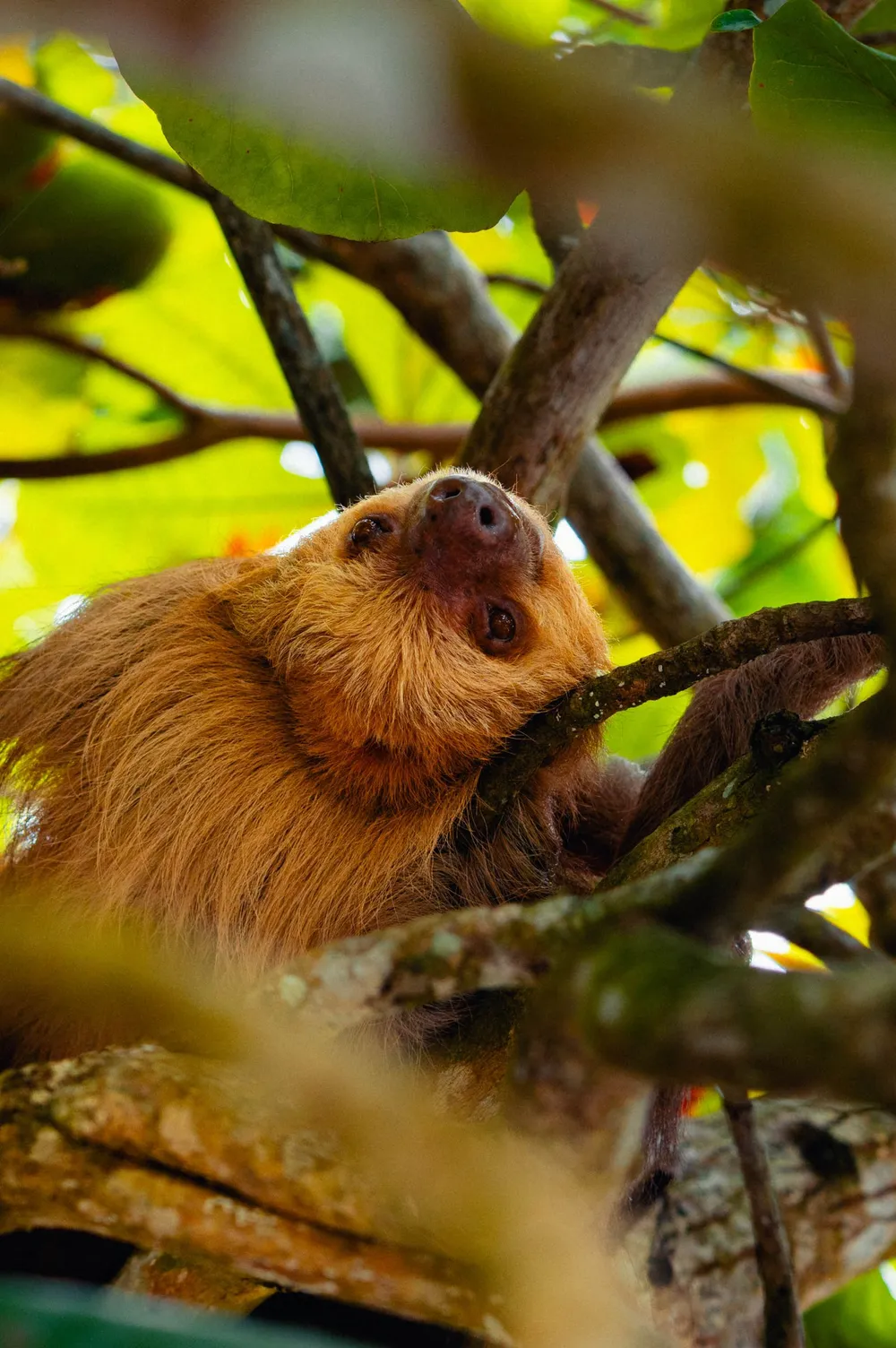
Hoffmann’s two-toed sloth is the night owl of the sloth world. It is larger and shaggier than its three-toed cousins, with a longer snout and a more varied menu that includes fruit and flowers alongside leaves. It is also the sloth most often seen in rescue centers in Costa Rica and Panama, which is why so many close-up photos of two-toed sloths show this species.

Linnaeus’s Two-Toed Sloth
Linnaeus’s two-toed sloth, named after the father of modern taxonomy, lives across northern South America. It looks very much like Hoffmann’s sloth, and telling the two apart takes a specialist’s eye for skull shape and fur detail, plus location, since their ranges meet but do not fully overlap. It is the more elusive of the pair and less common in rescue centers.
Types of Sloths in Costa Rica and Panama
If you want to see sloths in the wild, Costa Rica and Panama are the easiest places to start, since each hosts species from both groups. Costa Rica is home to exactly two species: the brown-throated three-toed sloth and Hoffmann’s two-toed sloth. That pairing makes it a perfect classroom for the two-toed versus three-toed comparison.

Panama hosts three species: the same two as Costa Rica, plus the pygmy three-toed sloth on Isla Escudo. The pygmy sloth is not a casual sighting: Isla Escudo is remote, and the species’ tiny population means viewing must never disturb its mangrove habitat. For most visitors, Panama’s mainland forests offer the same two common species as Costa Rica.
How to Identify a Sloth in the Wild
Start with the front feet, if you can see them clearly. Two claws means a two-toed sloth; three means a three-toed sloth. Next, check the face: a round, smile-like mouth points to a three-toed sloth, while a longer snout suggests a two-toed sloth. Time of day helps too: three-toed sloths are usually active in daylight, two-toed sloths mostly at night.

Location narrows it further. A sloth in Brazil’s Atlantic Forest with a dark mane is a maned sloth. A small sloth on Isla Escudo is a pygmy sloth. In Costa Rica, a daytime sloth is almost certainly a brown-throated three-toed sloth, while a nighttime sighting is likely Hoffmann’s. Bring binoculars and never touch or feed a wild sloth: handling stresses them and can separate mothers from babies. The same distance rule applies to other night-active canopy animals, as explained in our guide to types of bats.
Are Sloths Endangered?
Most types of sloths are currently listed as least concern, but that label hides real pressure. Forest clearing for farming, roads, and development fragments the canopy sloths depend on. When trees are cut, sloths are forced to the ground, where they face dogs, traffic, and power lines.

Two species need urgent attention. The pygmy three-toed sloth is critically endangered, with its entire range limited to one small island. The maned three-toed sloth is vulnerable as Brazil’s Atlantic Forest shrinks. Supporting forest protection, choosing responsible tours, and never buying a sloth as a pet help most. Sloths belong in trees, not in homes or photo props.
Frequently Asked Questions About Types of Sloths
How many types of sloths are there?
Six: four three-toed species and two two-toed species. Ancient giant ground sloths are extinct.

What is the difference between two-toed and three-toed sloths?
The difference is the number of claws on the front limbs: two for two-toed sloths and three for three-toed sloths. Two-toed sloths are also larger, more nocturnal, and have longer snouts, while three-toed sloths are smaller, more daytime active, and have rounder, smiling faces.
What is the smallest type of sloth?
The pygmy three-toed sloth is the smallest, weighing about 2.5 to 3.5 kg. It lives only on Isla Escudo de Veraguas in Panama and is critically endangered.
Are sloths slow because they are lazy?
No. Sloths are energy specialists. Their leaf diet is low in calories, so a slow metabolism and minimal movement let them survive on very little food. Slowness also helps them stay hidden from predators.
Where is the best place to see sloths in the wild?
Costa Rica is the easiest choice, with two species in well-protected parks and many responsible guided tours. Panama is another strong option. Always choose guides who keep a respectful distance and never handle wild sloths. Fans of slow, unusual primates may also enjoy our guide to types of lemurs.
Conclusion
The six types of sloths share a famously slow lifestyle, but they are far from identical. From the island-bound pygmy sloth to the wide-ranging brown-throated sloth, from the night-active Hoffmann’s sloth to the maned sloth of Brazil’s Atlantic Forest, each species fits its own corner of the canopy. The front-claw clue, face shapes, and ranges above turn every future sighting into a proper identification.

Keep this chart handy before your next rainforest trip, and share it with anyone who still thinks there is only one kind of sloth. The more people who can name all six species, the better the chances that the rarest, especially the pygmy and maned sloths, get the protection they need.


Pingback: Types of Pangolins: All 8 Species, Sizes and Habitats – Chart Identify