
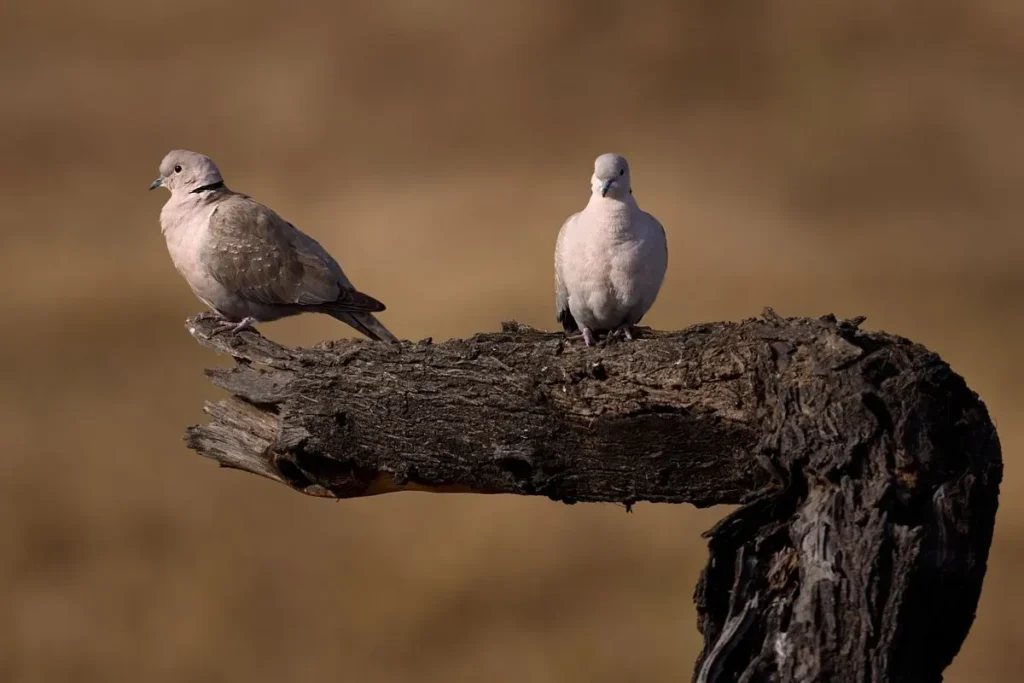
A dove on a wire can look like any other gray bird until you know what to check. Size, tail shape, wing pattern, and voice separate most US species in seconds, and this dove identification chart puts those marks side by side. Use it at a feeder, on a walk, or from a photo, and you will be able to name the bird instead of just calling it a dove.
North America has a small, manageable dove family. A handful of species live across most of the country, a few are regional specialties of the Southwest, Florida, and the Pacific coast, and one, the rock pigeon, is the familiar city bird. The table below covers 20 of them, with the common species first and the rare visitors marked clearly so you do not chase a bird that almost never shows up in your state.
Dove Identification Chart: 20 Common US Doves and Pigeons
Lengths are for an adult bird from bill tip to tail tip. Field marks describe the adult in good light. Where a species is only a rare visitor, the range column says so plainly.
| Species | Size | Key field marks | Range in the US | Call |
|---|---|---|---|---|
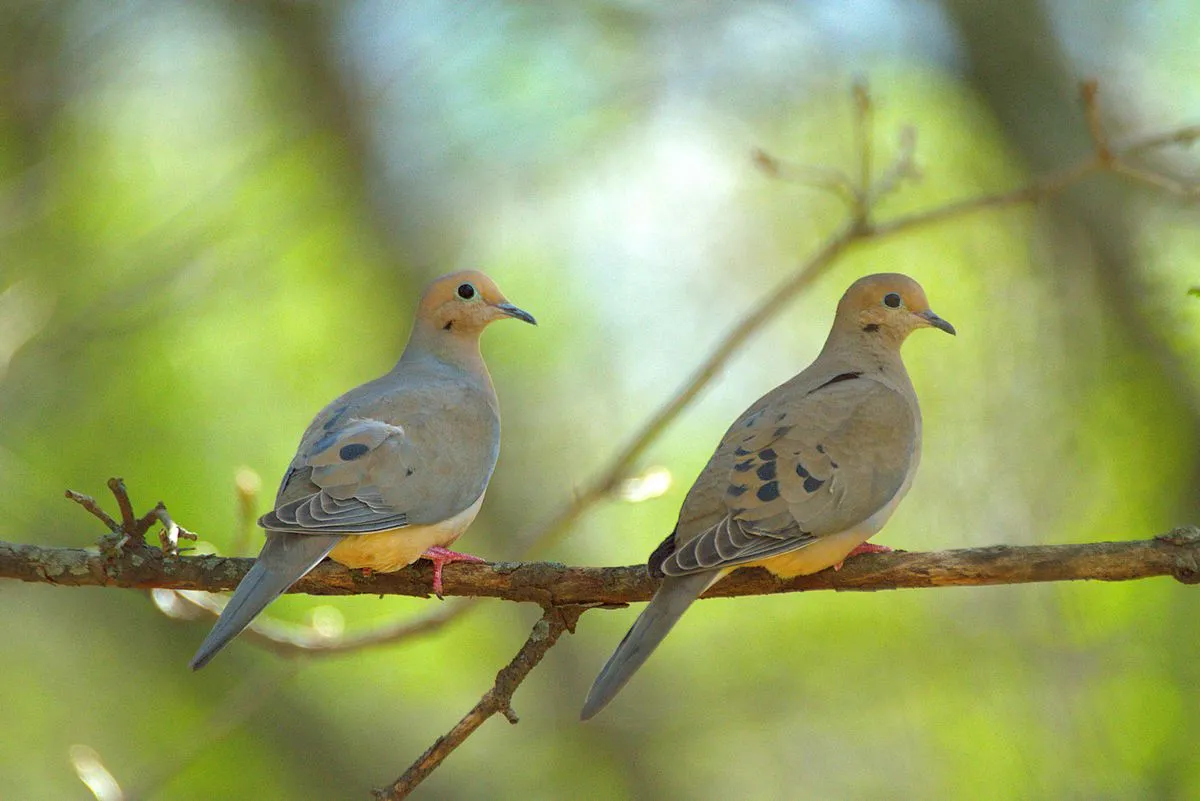
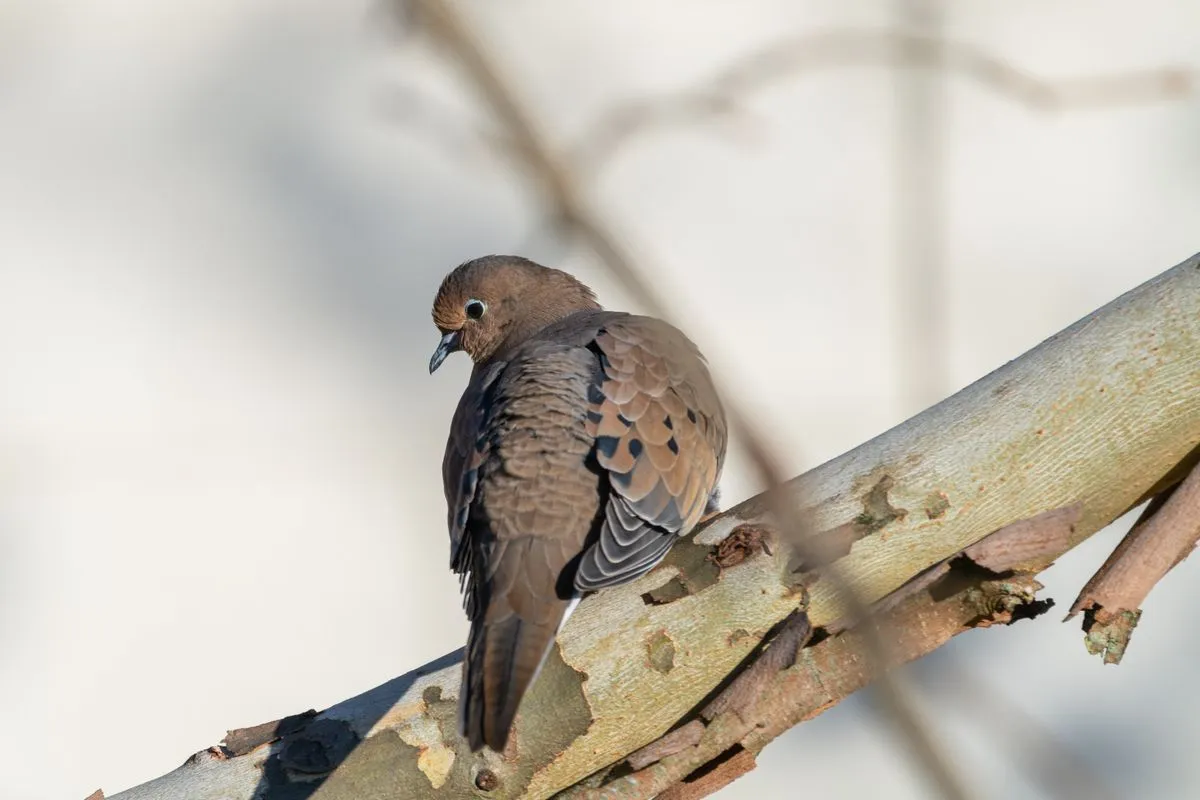
| Mourning Dove | 12 in | Slender, soft gray brown body, long pointed tail with white edges, black spots on the wing | All 48 contiguous states, year round in most areas | Soft, mournful coo-ah, coo, coo, coo |
| White-winged Dove | 12 in | White crescent on the folded wing, bold white wing stripe in flight, black cheek mark, rounded tail with white corners | Texas, Arizona, New Mexico, and the lower Southwest, spreading north | Who cooks for you, repeated slowly |
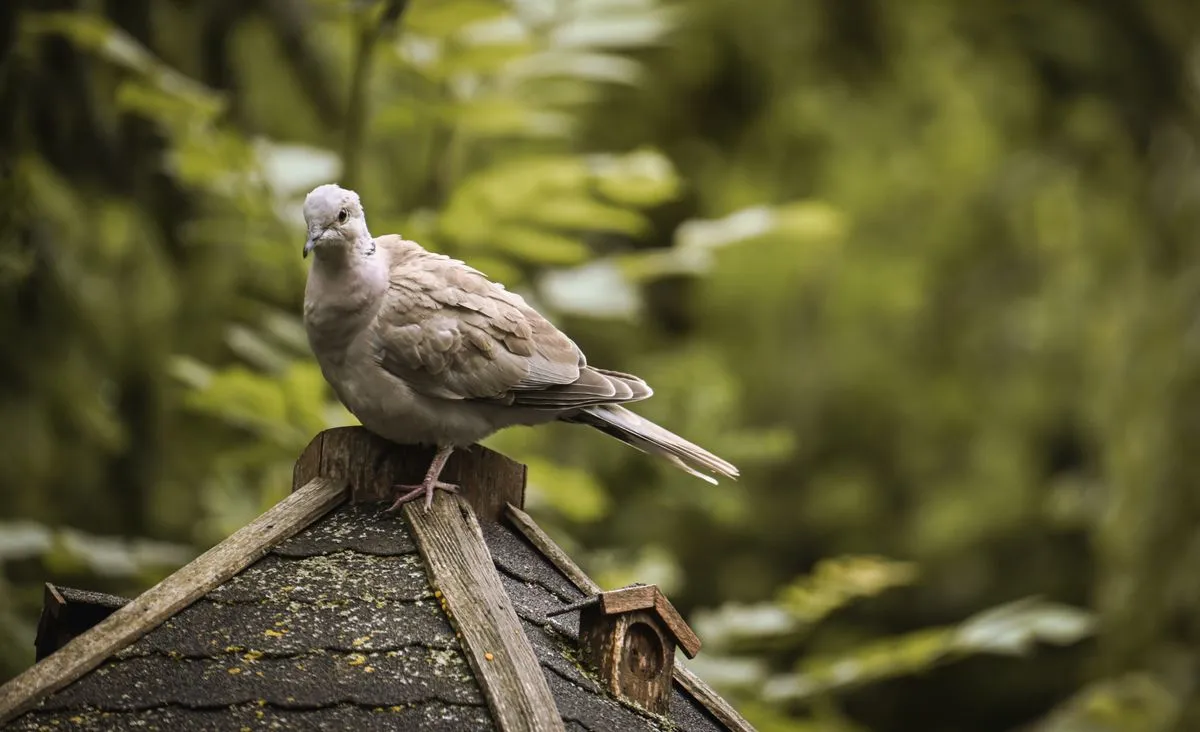
| Eurasian Collared-Dove | 12.5 in | Pale gray, black half collar on the back of the neck, square ended tail with a broad white band | Widespread across the US, most common in the South, Plains, and West | Three part goo-GOO-guh, harsher than a mourning dove |
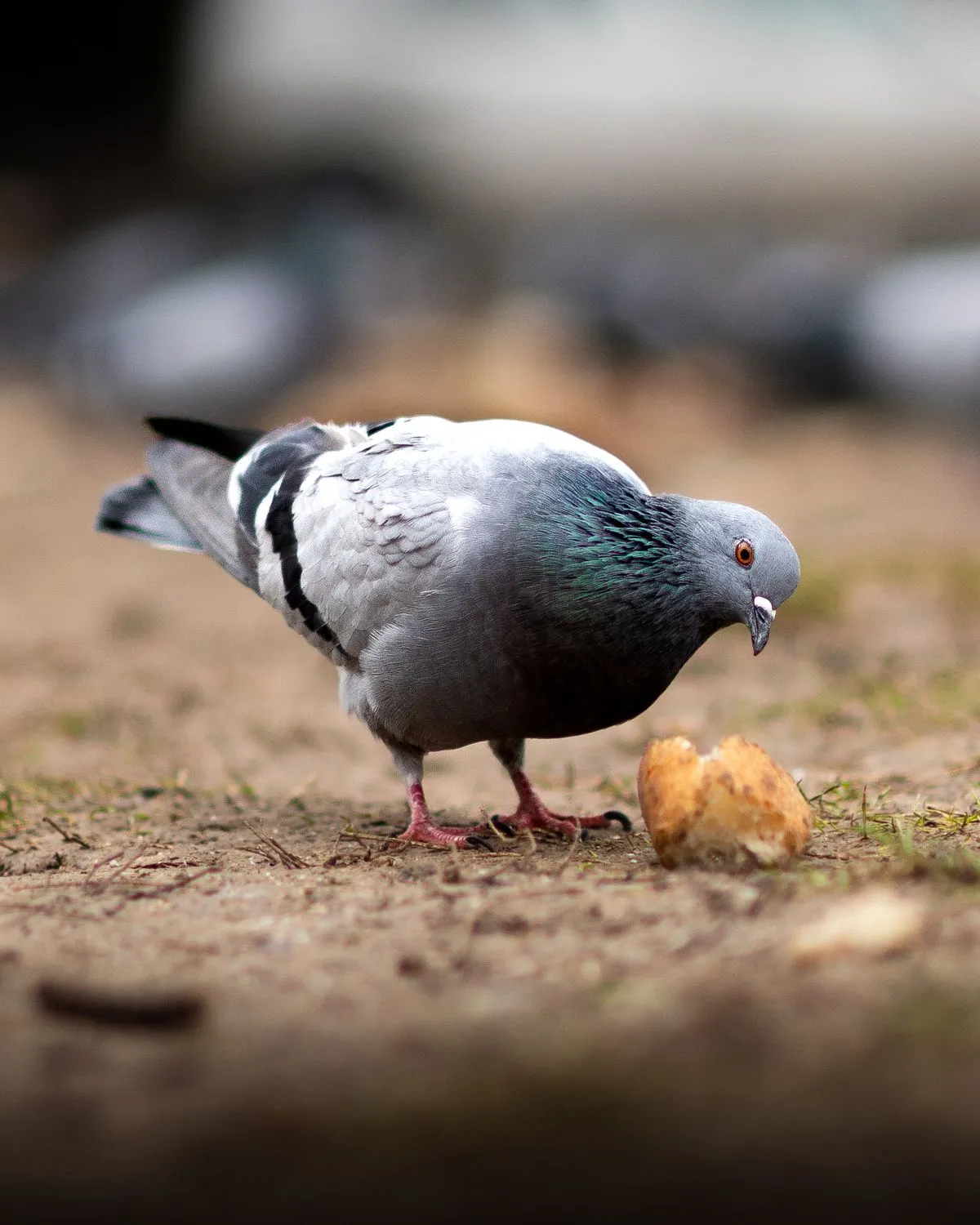
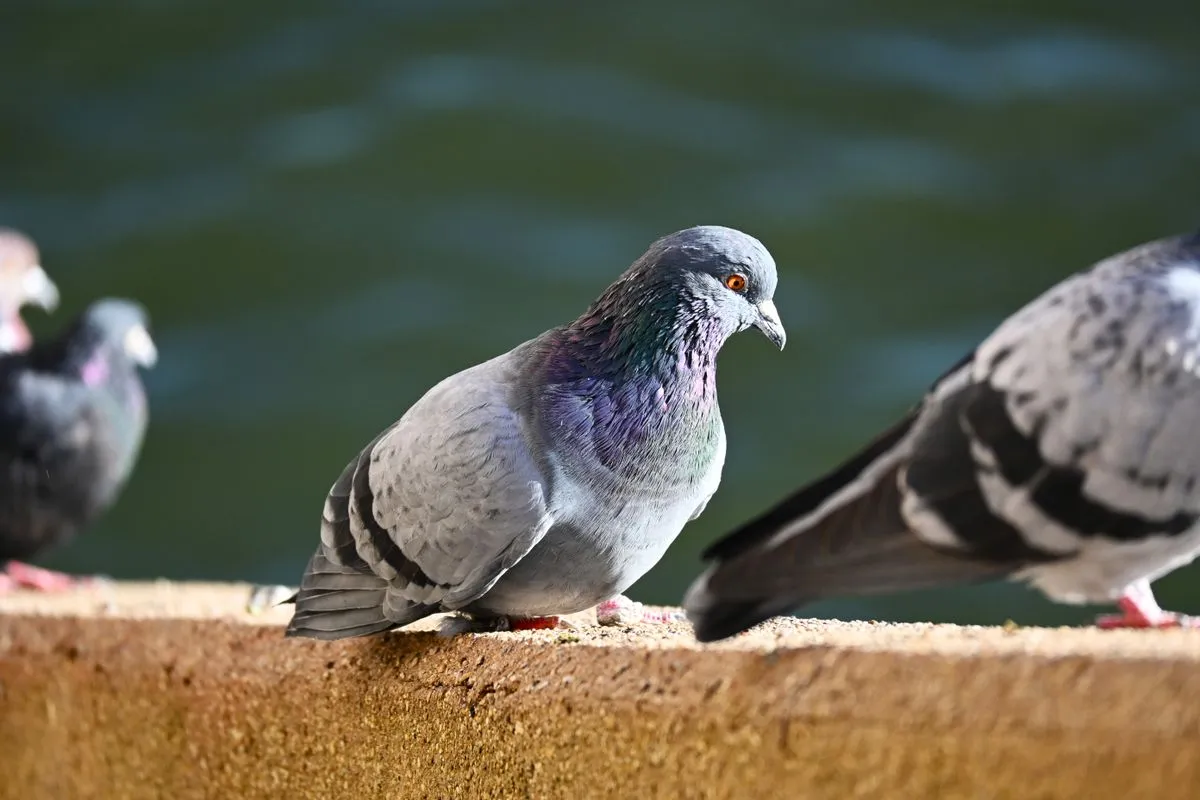
| Rock Pigeon | 13 in | Variable plumage, classic gray form has two black wing bars, white rump, and an iridescent green and purple neck | Cities, towns, farms, and cliffs nationwide | Deep, rolling coo-roo-coo |
| Inca Dove | 8 in | Small and gray brown with a scaly feather pattern, long tail edged in white, rusty color in the wing in flight | South Texas, Arizona, and New Mexico, year round | Soft, repeated coo-coo, like no hope |
| Common Ground Dove | 6.5 in | Tiny, sandy gray brown, scaly head pattern, short tail, pink bill with a dark tip, white spots in the wing in flight | Southern US from Florida to California, year round | Soft, rising coo, repeated several times |
| White-tipped Dove | 11 in | Plain gray brown body, pale forehead, long tail with broad white tips, rufous under the wing in flight | South Texas, mainly the lower Rio Grande Valley | Low, hollow hoo, slow and even |
| Band-tailed Pigeon | 14 in | Large gray pigeon, white crescent on the nape, yellow bill with a dark tip, pale band across the tail tip | Pacific coast forests and the Southwest mountains | Low, owl like coo, softer than a rock pigeon |
| Red-billed Pigeon | 13 in | Rich wine red body, gray head, red bill, dark tail, plain wings | South Texas, a rare but regular visitor | Low, slow coo, usually two notes |
| Ruddy Ground Dove | 6.5 in | Very small, male is warm ruddy brown, female is grayer, dark spots on the wing, short tail | South Texas and south Florida, uncommon | Soft, quick coo-coo |
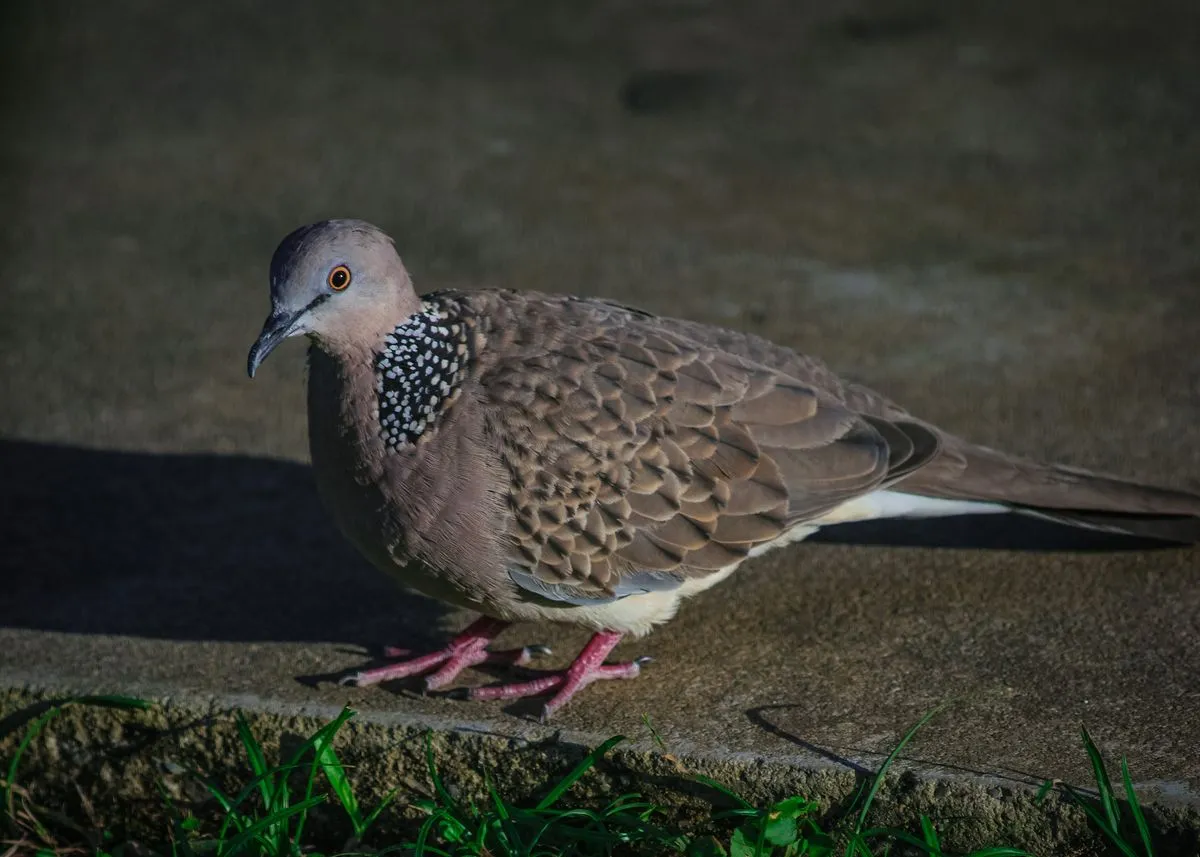
| Spotted Dove | 12 in | Gray brown body, white spotted black patch on the side of the neck, long tail with white edges | Established in the Los Angeles area and parts of Hawaii | Soft coo-croo-coo, slower than a collared dove |
| Zebra Dove | 8.5 in | Small, gray brown with fine dark barring on the breast and sides, blue gray face, long tail with white tips | Hawaii, common on lawns and in parks | Pleasant, cooing coo-coo, coo-coo |
| African Collared-Dove | 11 in | Pale gray, thin black collar, shorter tail than the Eurasian collared dove, often seen near homes as an escapee | South Florida, mostly escaped or released birds | Soft, two note coo, quieter than the Eurasian species |
| Ringed Turtle-Dove | 12 in | Pale, sandy gray, black collar, white undertail, very similar to the African collared dove | Scattered in Florida and California, mostly feral birds | Soft, purring coo |
| Oriental Turtle-Dove | 13 in | Large, scaly wing pattern, striped neck patch, rufous tones on the back | Rare visitor to western Alaska and the Aleutians | Low, rolling coo |
| White-crowned Pigeon | 13 in | Dark slate gray body, bright white crown, white eye ring, pale bill with a dark tip | Florida Keys and south Florida, in hardwood hammocks | Deep, slow coo, often from a hidden perch |
| Plain-breasted Ground Dove | 7 in | Small, plain gray brown breast with no scaling, rusty wing spots in flight, short tail | Rare visitor to south Texas | Soft, low coo |
| Key West Quail-Dove | 12 in | Dark, rufous brown body, white forehead and throat stripe, white line under the eye, walks on the forest floor | Rare visitor to the Florida Keys | Low, moaning coo from dense cover |
| Ruddy Quail-Dove | 8.5 in | Small, rich ruddy brown, pale throat, dark eye line, short tail, shy ground dweller | Rare visitor to south Texas | Soft, low coo, seldom heard |
| Blue Ground Dove | 8 in | Small, male has blue gray plumage with a pinkish wash, female is browner, both show dark wing spots | Rare visitor to south Texas | Soft, high coo |
How to Identify Doves at a Glance
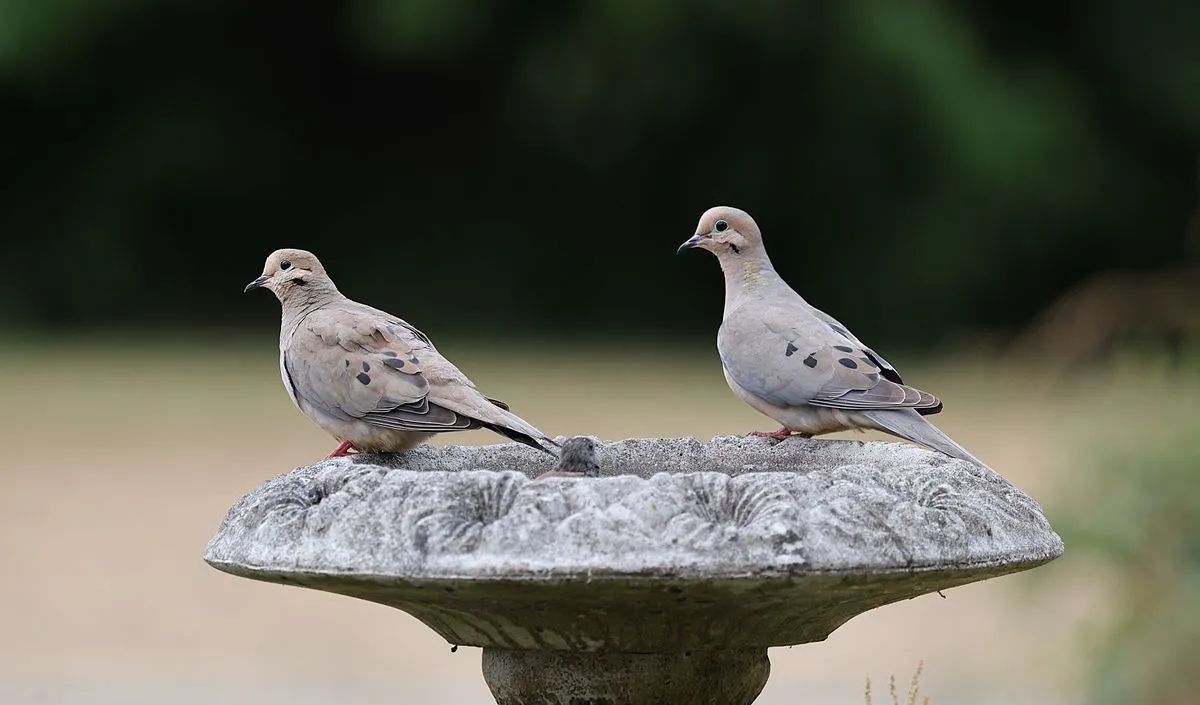
Start with size, because it splits the family fast. Ground doves are sparrow sized, around 6 to 7 inches, and often feed on the ground under feeders. Mid sized doves, including the mourning dove and the collared doves, run 11 to 13 inches. The big birds, band tailed pigeons and white crowned pigeons, reach 13 to 14 inches and look heavy in flight.
Next, look at the tail. A long, pointed tail with white edges points to a mourning dove. A square ended tail with a broad white band points to a Eurasian collared dove. A rounded tail with white corners points to a white winged dove. A short tail on a tiny bird points to a ground dove. Tail shape is often easier to see than plumage detail, especially when the bird flushes.
Then check the neck and wings. A black half collar means a collared dove of some kind. A white spotted neck patch means a spotted dove. A white wing stripe in flight means a white winged dove. Two black wing bars on a gray city bird mean a rock pigeon. If you only get one mark, make it the neck or the wing, since those two areas carry the clearest species clues.
Dove vs Pigeon: What Is the Difference?
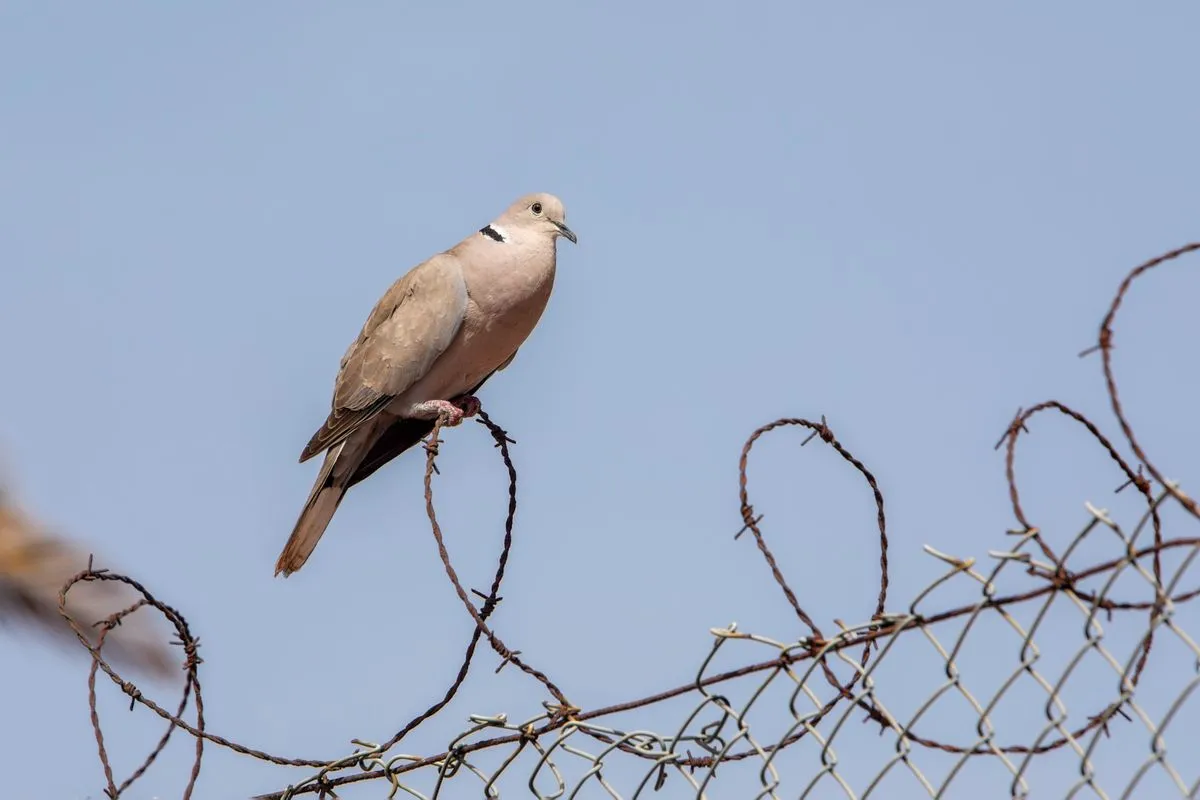
There is no scientific line between a dove and a pigeon. Both belong to the same bird family, Columbidae, and the two words are used by habit rather than by biology. In general, smaller, slimmer species get called doves, and larger, stockier species get called pigeons, but there are exceptions in both directions. The band tailed pigeon is a wild forest bird, while the rock pigeon is the city bird most people picture when they hear the word pigeon.
For identification, ignore the name and use the marks. A bird called a pigeon is not automatically a rock pigeon, and a bird called a dove is not automatically a mourning dove. Compare size, tail, neck pattern, and call against the table, and the right name will follow. If you want more practice with similar water birds first, the duck identification chart and the goose identification chart use the same size and field mark method.

Confusion Species: Doves That Look Alike
Mourning doves and Eurasian collared doves cause the most confusion. Both are common, both are gray brown, and both visit feeders. Tell them apart by the tail and the neck. The mourning dove has a pointed tail and black spots on the wing but no collar. The collared dove has a square tail and a neat black collar. In flight, the collared dove also looks broader winged and heavier.
White winged doves and mourning doves are another tricky pair in the Southwest. At rest, both look gray brown, but the white winged dove shows a white crescent on the folded wing and a black mark on the cheek. In flight, the difference is obvious, since the white winged dove flashes a bold white wing stripe and a rounded tail with white corners.
Ground doves get confused with sparrows, not with other doves, because of their tiny size. Watch how they move. Ground doves walk with the steady, head bobbing gait of the dove family and often feed in pairs on bare ground. Sparrows hop more and flick their tails. A ground dove also shows a short, rounded wing shape when it flushes, and its call is a soft dove coo, not a sparrow chirp.

Dove Calls: Identify by Sound
Dove calls are low, soft, and easy to miss under traffic or wind, so listen for rhythm more than pitch. The mourning dove gives a slow, sad series that sounds like coo ah, coo, coo, coo. The Eurasian collared dove gives a sharper three part call, goo GOO guh, and repeats it from a wire or rooftop. The white winged dove gives a slower, questioning call that birders write as who cooks for you.
Rock pigeons give a deep, rolling coo from ledges and rooftops, often in a long series. Inca doves give a gentle, two note coo that sounds like no hope, repeated patiently. Band tailed pigeons, heard in Pacific coast forests, give a low, owl like coo that can fool a listener into expecting an owl. When you hear a dove but cannot see it, note the rhythm and the number of notes, then match it to the call column in the chart.

Where Doves Live and When to See Them
Most US doves are year round residents in their ranges, which makes them good birds for beginners. Mourning doves and rock pigeons can be found in every season, from city parks to farm country. Eurasian collared doves have spread across most of the country since they arrived in Florida in the 1980s, and they now turn up in small towns and suburbs far from their first foothold.
Habitat narrows the choice fast. Open country, farms, and suburbs suit mourning doves and collared doves. Deserts and dry scrub suit white winged doves and Inca doves. Forests suit band tailed pigeons and white crowned pigeons. Cities suit rock pigeons. Ground doves prefer brushy edges and yards with bare ground and scattered seed. If you are in a forest in Oregon and see a large gray pigeon, start with band tailed. If you are in a Miami yard and see a tiny dove on the ground, start with the ground doves.
Season still matters. Spring brings more singing and displaying, with males puffing their chests and bowing on wires and rooftops. Late summer brings young birds, which look like washed out adults with scaly edges on their feathers. Fall brings some movement in northern mourning dove populations, while southern birds mostly stay put. Winter is a good time to check feeders, since doves gather where seed is scattered on the ground.
Feeding, Nesting, and Behavior
Doves eat almost entirely seeds and grain, picked up from the ground. At feeders they prefer seed scattered on the ground or on a platform, and they often feed in pairs or small groups. Millet, cracked corn, and sunflower chips are favorites. A mourning dove at a feeder will often sit still for a long time, while a rock pigeon will push in with a group and feed fast.
Nests are famously flimsy. A dove nest is a loose platform of twigs, often in a tree, on a ledge, or even on a windowsill, and you can sometimes see daylight through it. Most species lay two white eggs. Both parents feed the young a rich crop milk, a substance produced in the crop, for the first days, then switch to regurgitated seeds. This is one reason dove chicks grow fast and leave the nest in about two weeks.
Dove flight is direct and strong, with quick wingbeats and occasional glides. Mourning doves in particular fly fast and can surprise a watcher with their speed. When a dove flushes, it often gives a whistling sound from its wings, a useful clue when the bird itself is only a blur.
How to Get a Better Look
Binoculars help, but patience helps more. Doves are calm birds, and a bird on a wire will often stay put while you study it. Start with the tail and the neck, then work to the wings. If the bird flies, watch the wing pattern and the tail shape in flight, since those marks are often clearer than plumage at rest.
Photos help too. A phone photo of a dove on a feeder, even a soft one, usually shows tail shape and neck pattern well enough for an ID. Compare your photo to the chart, and check the range column before settling on a rare species. A bird that would be a major rarity in your state is almost always a common species seen badly, not a vagrant. The hummingbird identification chart follows the same rule: check range first, then marks.

Frequently Asked Questions
What is the most common dove in the US?
The mourning dove is the most common and widespread dove in the US. It lives in all 48 contiguous states, visits feeders, and is the dove most people see daily.
How do I tell a mourning dove from a Eurasian collared dove?
Check the tail and the neck. A mourning dove has a long, pointed tail and no collar. A Eurasian collared dove has a square ended tail and a black half collar on the back of the neck.
Are pigeons and doves the same bird?
They belong to the same family, Columbidae, and the words are used by custom rather than by science. Smaller, slimmer species are usually called doves, and larger, stockier species are usually called pigeons.
What do doves eat?
Wild doves eat seeds and grain found on the ground. At a feeder, offer millet, cracked corn, or sunflower chips scattered on the ground or on a platform feeder.
Where is the best place to see doves?
Try a yard feeder with ground seed, a farm edge, or a city park. Morning and late afternoon are best, when doves feed and sing from wires and rooftops.
Conclusion
Once you know the four quick checks, size, tail, neck, and call, most US doves fall into place fast. Keep this dove identification chart handy on your next walk, start with the common species in your area, and check the range column before you claim a rarity. With a little practice, the gray bird on the wire will have a name, and you will know exactly why it fits.


Pingback: Gull Identification Chart: Identify 20 Common US Gulls – Chart Identify
Pingback: Types of Crane Birds: All 15 Species, Sizes and Habitats – Chart Identify
Pingback: Pigeon Color Chart: 15 Colors and Patterns Explained – Chart Identify