

The cockatiel color chart below clears up breeder names like lutino, pearl, pied, cinnamon, and whiteface. Each describes a real genetic change affecting body color, face color, cheek patches, eyes, or wing pattern. Learn them once, and you can spot most common mutations at a glance.
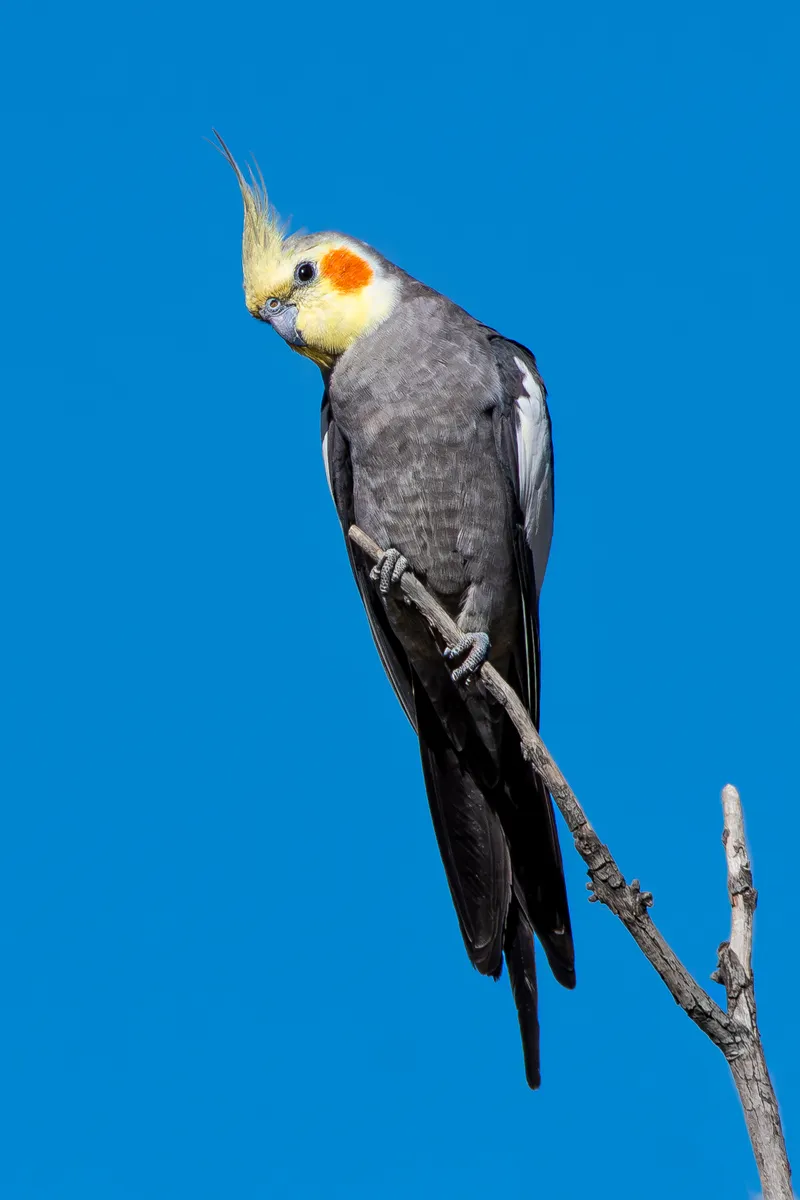
Wild cockatiels are grey, with yellow faces in males and orange cheek patches. Every pet color descends from that wild grey bird, and breeders combined a handful of mutations over decades, so one bird can carry two or three changes at once.
Use the table first, then read the short sections on genetics, sex differences, chick colors, and pale-bird care. Rarity here means frequency in the US pet trade, not pet quality.
Cockatiel Color Chart: 20 Mutations Explained
| Mutation | Appearance | Eye color | Cheek patch | Rarity | Genetics / inheritance |
|---|---|---|---|---|---|
| Normal grey | Grey body, white wing bars, yellow face in adult males, greyer face in females | Dark brown to black | Bright orange in males, duller in females | Very common | Wild type, starting point for all other mutations |
| Lutino | White to soft yellow body, yellow crest, white wing and tail markings | Red or pinkish red | Bright orange | Common | Sex-linked recessive, removes dark melanin pigment |
| Albino (whiteface lutino) | Pure white body, no yellow or orange anywhere | Red | None | Rare | Combination of lutino and whiteface, both recessive |
| Pearl (opaline) | Scalloped or laced pattern on wings and back, pale edging on grey or brown feathers | Dark brown to black | Orange, sometimes softer in females | Common | Sex-linked recessive, males often lose pearling after molts |
| Pied | Random patches of yellow or white breaking up the grey, no two birds alike | Dark brown to black | Orange, may be broken up by pale patches | Common | Autosomal recessive, light pied to heavy pied range |
| Cinnamon | Warm brown where a grey bird would be grey, softer overall | Dark brown, sometimes wine colored when young | Orange, often slightly muted | Common | Sex-linked recessive, changes black melanin to brown |
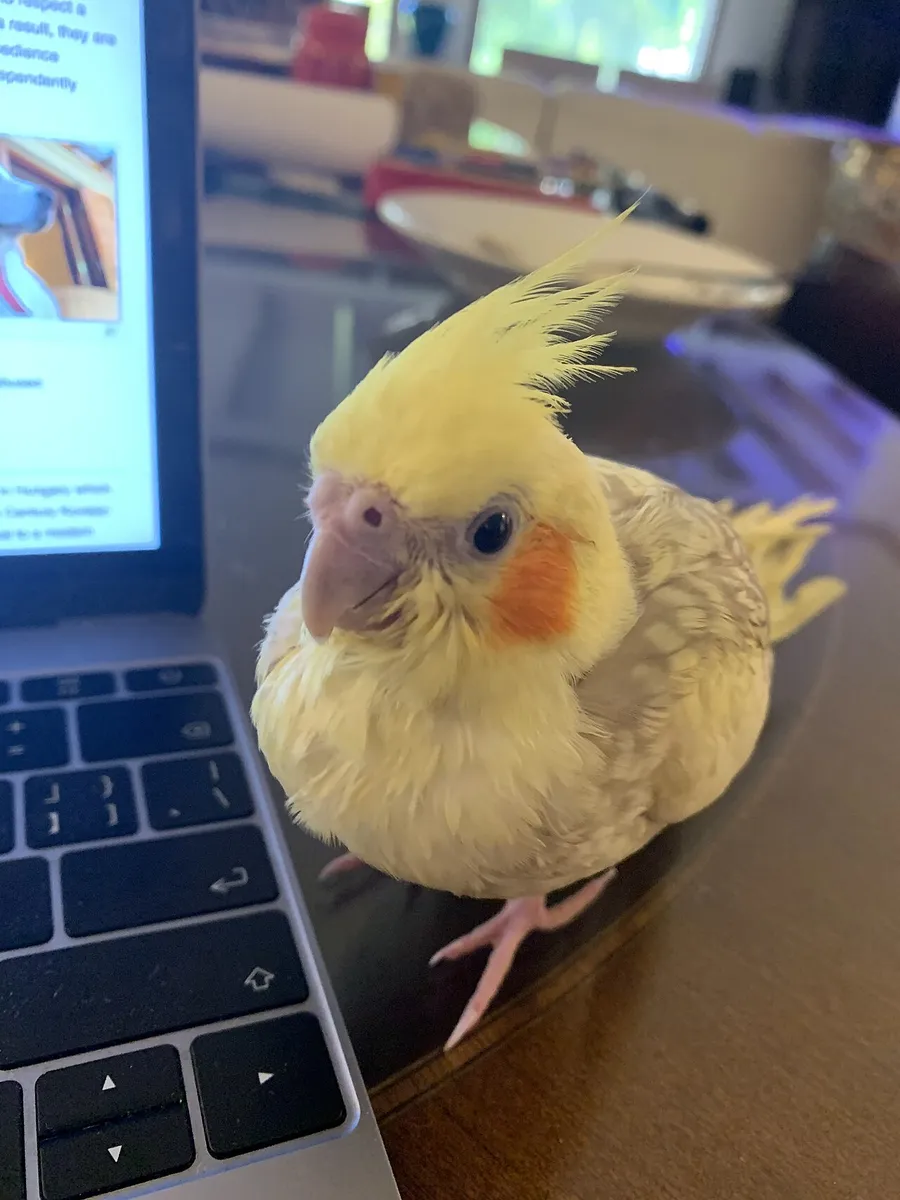
| Whiteface | Grey body with a clean white or pale grey face, no yellow wash | Dark brown to black | None, face stays white or grey | Common | Autosomal recessive, removes yellow and orange pigments |
| Dominant silver | Cool silvery grey, lighter than normal grey | Dark brown to black | Orange, sometimes slightly paler | Uncommon | Autosomal dominant, one copy shows the effect |
| Recessive silver (pastel silver) | Soft, washed out silver grey, diluted and powdery | Dark brown to black | Orange, often paler than normal grey | Uncommon | Autosomal recessive, also called dilute or pastel silver |
| Fallow | Cinnamon brown body with yellow sections, paler than cinnamon alone | Red to ruby, paler than lutino eyes | Orange, often soft | Uncommon | Autosomal recessive, bronze fallow is the common form |
| Emerald (olive) | Olive or yellow green suffusion over grey, muted greenish cast | Dark brown to black | Orange, sometimes dulled by suffusion | Rare | Autosomal recessive, also called yellow-suffused or olive |
| Pastelface | Normal body color, soft peach or pale yellow face instead of bright yellow | Dark brown to black | Soft peach or pale orange | Uncommon | Autosomal recessive, reduces but does not remove yellow pigment |
| Dominant yellowcheek | Body like normal grey, cheek patch yellow instead of orange | Dark brown to black | Yellow | Uncommon | Autosomal dominant face mutation |
| Sex-linked yellowcheek | Yellow cheeks, tone can differ slightly by sex | Dark brown to black | Yellow | Rare | Sex-linked recessive face mutation |
| Goldcheek | Rich golden yellow cheek patch, deeper than standard yellowcheek | Dark brown to black | Deep golden yellow | Rare | Recessive face mutation, yellowcheek family |
| Creamface | Very pale cream face, soft washed out cheek color | Dark brown to black | Pale cream to very light peach | Rare | Recessive face mutation, paler than pastelface |
| Clear pied | Almost entirely yellow or white, only one or two dark feathers if any | Dark brown to black | Orange, may be faint if face is mostly clear | Uncommon | Extreme pied, check eyes to separate from lutino |
| Lutino pearl (lacewing) | White body with soft yellow pearling, delicate lace pattern on wings | Red or pinkish red | Bright orange | Uncommon | Combination of lutino and pearl, both sex-linked |
| Cinnamon pearl | Warm brown feathers with pale pearled edging, softer than grey pearl | Dark brown, sometimes wine colored | Orange, often muted | Uncommon | Combination of cinnamon and pearl |
| Whiteface pied | White face with pied patches of grey and white or yellow | Dark brown to black | None, whiteface removes cheek color | Uncommon | Combination of whiteface and pied |
If a bird sold as rare does not match its row on eyes, cheek patch, and body pattern, ask for the parents’ mutations. That answer matters more than a cage card label.
How Cockatiel Color Genetics Work
Two pigment families explain most of the chart. Melanin makes grey, black, and brown. Psittacofulvins make yellow and orange. Lutino removes melanin, whiteface removes yellow and orange, cinnamon turns black melanin brown, and pearl adds a pale edge to each feather.

Sex-linked mutations, including lutino, pearl, and cinnamon, sit on the sex chromosome, so sons and daughters inherit them differently. A male can carry one invisibly, called split. Autosomal mutations, including whiteface and pied, usually need both parents to carry the gene. Dominant silver shows with only one copy. Note also that there is no true blue cockatiel: cockatiels lack the structural blue color seen in some parrots, so birds sold as blue are usually grey, silver, or whiteface birds under certain light.
Male vs Female Cockatiel Colors
In normal grey birds, color sexing often works after the first molt, at six to nine months. Adult males gain a bright yellow face and vivid cheeks and lose tail barring. Females keep a greyer face, duller cheeks, and barred tails. Young birds of both sexes look female-like.

Some mutations hide these clues. Lutino and albino birds have red eyes and pale bodies in both sexes, so DNA testing is the safe route. Young male pearls show strong pearling, then lose much of it with each molt, while females keep theirs for life.
Baby Cockatiel Colors vs Adult Colors
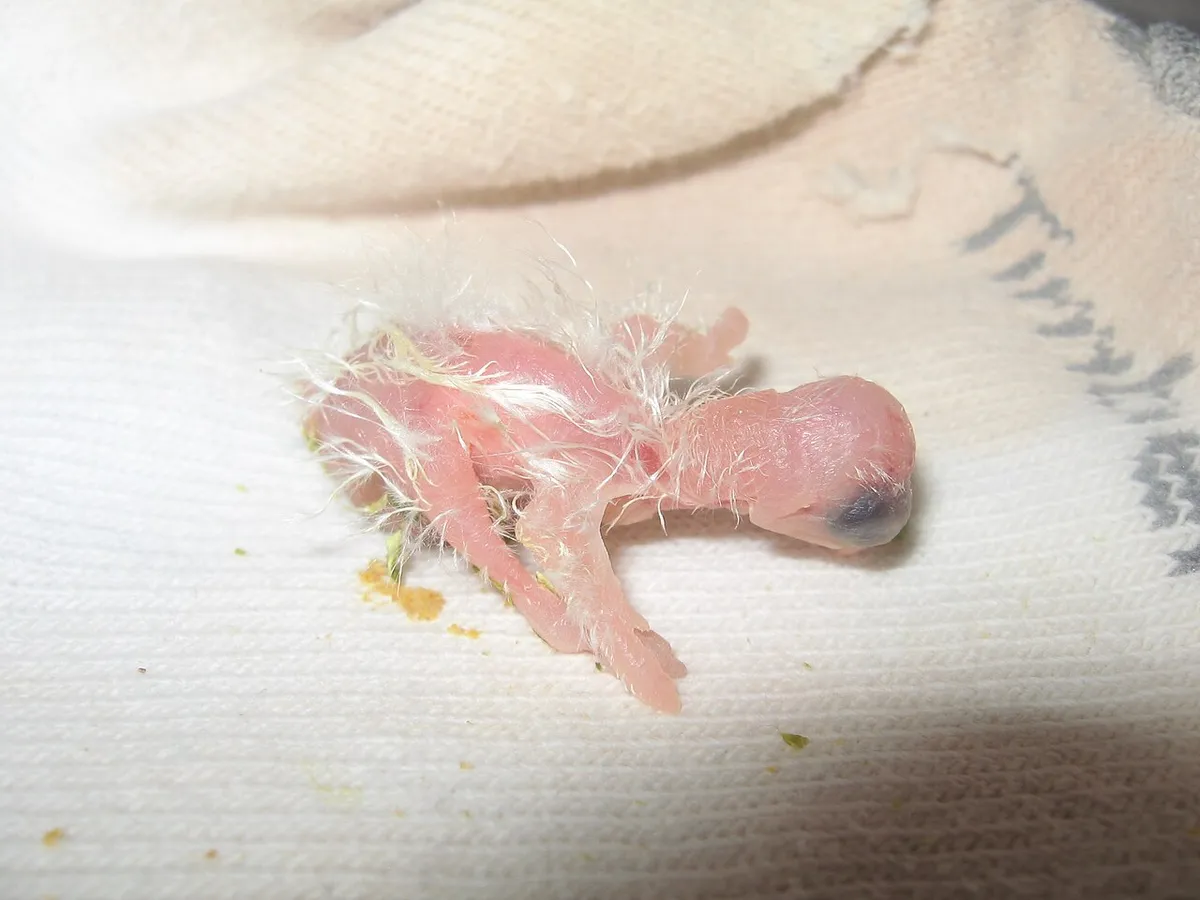
Chicks hatch with sparse yellowish down and match no row in the chart yet. As pin feathers open, the first real colors appear, but they are still a draft. Young greys are duller, young lutinos paler, and young pearls of both sexes show pearling. The first molt, at six to nine months, settles the adult pattern.

That molt explains most “my bird changed color” stories: male pearls fade toward grey and male greys brighten in the face, while pied patches can shift a little. A pied never turns lutino, though. Sudden change outside a molt is a vet question, not a mutation question. See also our bird egg identification chart.
What Is the Rarest Cockatiel Color?
Albino, the whiteface lutino, is the usual answer, and it is fair. It needs two recessive genes at once, with both parents carrying lutino and whiteface, giving a pure white bird with red eyes and no cheek patch. Emerald, goldcheek, and Australian-only platinum and faded are also scarce outside Australia.

Do not confuse rare with better. Very pale birds can be more light-sensitive, and lutino lines have a known tendency toward a small bald patch behind the crest, linked to past inbreeding. Before paying a premium, ask for the parents’ mutations, DNA sexing, and older birds from the same line.
Choosing a Cockatiel Color
Start with temperament and health, then pick a color you enjoy seeing daily. Color does not change personality: a grey can be a chatterbox, a lutino can be shy, and a pied can be the friendliest bird in the room. A calm, curious bird that eats well beats a striking bird that flinches or sits fluffed up.
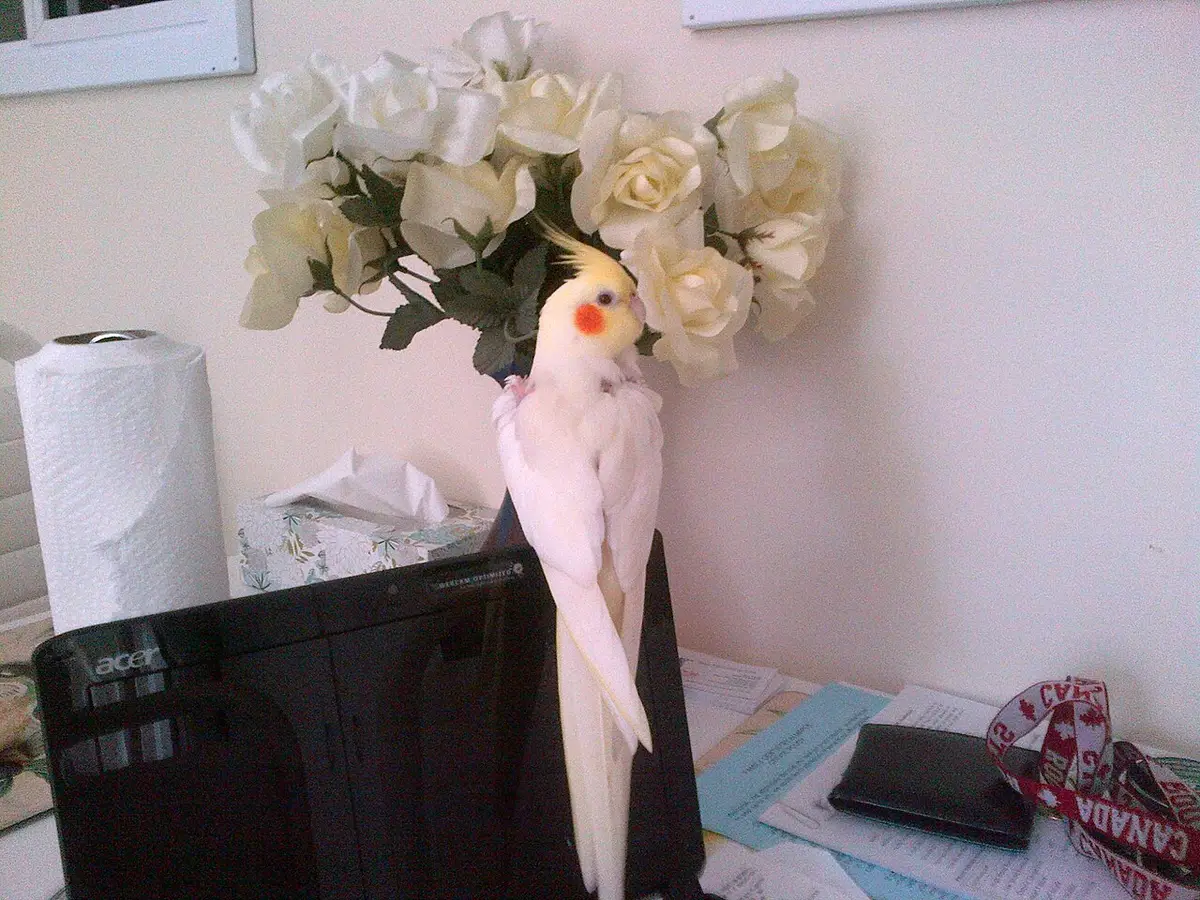
Normal grey, pearl females, and pied birds give more visual sexing clues than lutino or albino. Lutino pearl is brightest, whiteface is quietly classic, and pied is always one of a kind. For a similar puzzle, see our budgie color chart. All cockatiels produce powder down, so use an air filter and clean regularly.
Care Notes for Light-Sensitive Pale Mutations
Lutino, albino, fallow, and other pale mutations have less melanin to shield eyes and skin. They are not fragile, but direct sunlight can bother them more. Give bright indirect light, a shaded cage corner, and a perch out of all-day sunbeams, and watch for squinting.

Night fright affects all cockatiels. A sudden noise in a dark room can send the cage flapping and break feathers, so use a dim night light and a partly uncovered cage front. Feed pellets, seed in moderation, vegetables, and clean water daily.
Frequently Asked Questions
How many cockatiel colors are there?
About 22 established mutations exist worldwide, and combinations push possible looks far higher. The 20 rows here cover what most US buyers will meet, plus the most useful combinations.
Can a cockatiel change color as it grows?
Yes, within limits. The first molt at six to nine months is the big change, especially for males, but a bird does not switch to a different mutation.
How can I tell a clear pied from a lutino?
Check the eyes in good light. Lutinos have red or pinkish eyes, while clear pieds have dark eyes with a brown iris, even when the body is almost all white or yellow.
Do whiteface cockatiels have cheek patches?
No. Whiteface removes yellow and orange pigments, so the face stays white or grey with no orange cheek patch.
Are albino cockatiels blind?
No, but they can be more light-sensitive. Give shaded perches and indirect daylight, and have a vet check frequent squinting.

Which cockatiel color is easiest for beginners?
Normal grey is easiest to find, easiest to sex by sight after the first molt, and usually most affordable. Temperament and breeder quality matter more, though.

Conclusion
This chart works best on what you can see: body color, eye color, cheek patch, and pattern. Grey is the starting point, lutino removes grey, whiteface removes yellow and orange, cinnamon warms grey to brown, pearl adds lace, and pied breaks the pattern into patches.
Choose the bird, not just the color. Check the eyes and cheek patch, ask about the parents, and watch its behavior. That will help you spot a fair price and enjoy your cockatiel for 15 to 25 years. See also our hummingbird identification chart.


