

Most spiders you meet in the US are harmless pest controllers, but telling a black widow from a harmless house spider at a glance takes practice. This spider identification chart makes it easy: 20 common US spiders with the field marks, sizes, habitats, and danger levels that actually matter. Pair it with our caterpillar identification chart for a fuller picture of backyard wildlife.
The chart below focuses on species, not families, since species marks are what let you name the spider on your porch. Body size means body length without legs. Only two US spiders, the black widow and the brown recluse, are medically significant to healthy adults.
Spider Identification Chart: 20 Common US Spiders at a Glance
| Species | Identifying Marks | Body Size | Range / Habitat | Danger | Telling Fact |
|---|---|---|---|---|---|
| Southern Black Widow (Latrodectus mactans) | Glossy black; red hourglass under the round abdomen | 8-13 mm | Southeast, Midwest; woodpiles, sheds, garages | Dangerous (neurotoxic venom; bites rare) | Females eat males after mating |
| Brown Recluse (Loxosceles reclusa) | Plain tan-brown; dark violin on the head; 6 eyes in pairs | 6-12 mm | Midwest and South; boxes, closets, woodpiles | Dangerous (can cause necrotic lesions; bites uncommon) | Most “recluse bites” reported outside its range are misidentified |
| Wolf Spider (Hogna carolinensis and relatives) | Mottled brown-gray; pale back stripe; big front eyes | 18-35 mm | All states; ground, leaf litter, gardens | Harmless (brief sting at most) | Mothers carry the egg sac, then babies ride on her back |
| Bold Jumping Spider (Phidippus audax) | Black with white spots (sometimes orange); huge front eyes | 8-15 mm | Nationwide; sunny walls, fences, gardens | Harmless | Among the sharpest invertebrate eyes |
| Zebra Jumping Spider (Salticus scenicus) | Black-and-white zebra stripes on body and legs | 4-7 mm | Nationwide; house walls, fences, windowsills | Harmless | It can leap 50 times its body length to catch flies |
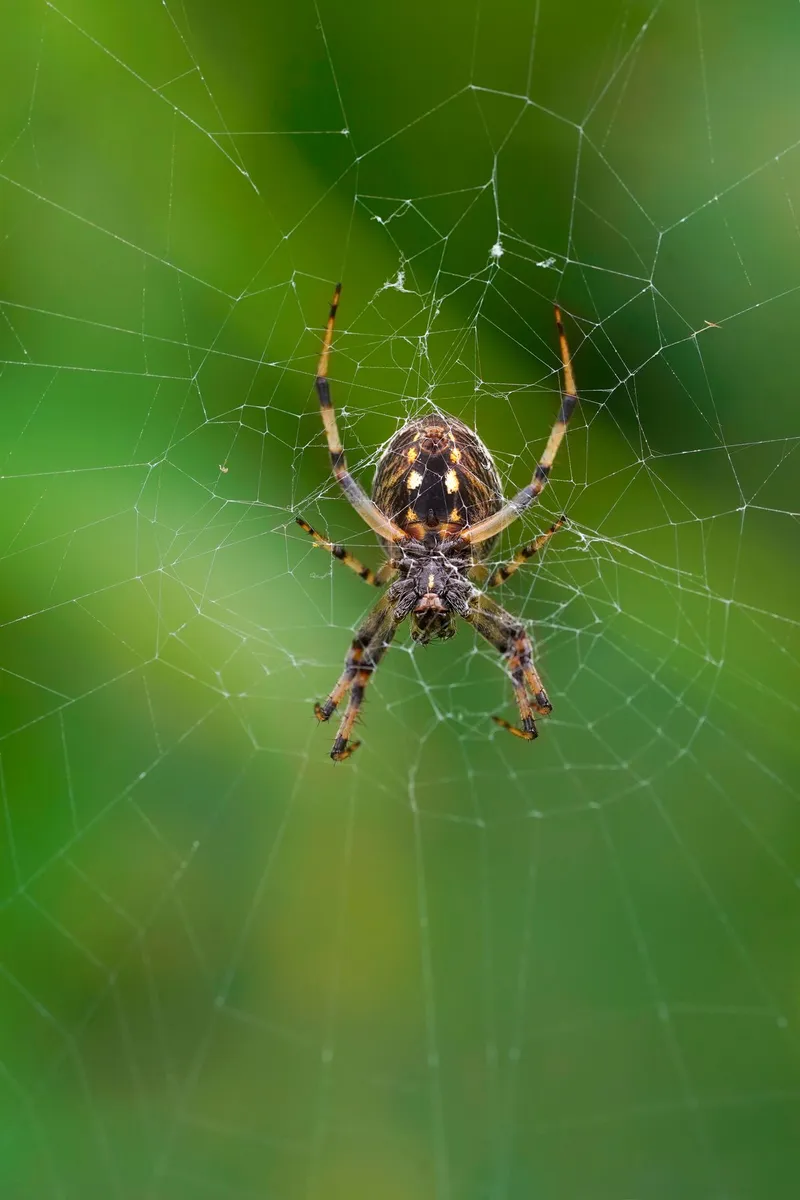
| Yellow Garden Spider (Argiope aurantia) | Black abdomen, bold yellow marks; banded legs | 19-28 mm (females) | Nationwide; gardens, tall grass, shrubs | Harmless | Its web has a zigzag silk band called a stabilimentum |
| Spotted Orbweaver (Araneus marmoreus) | Marbled orange, yellow, or white round abdomen | 7-14 mm | Northern and central US; gardens, bushes, forest edges | Harmless | It often eats and rebuilds its whole web nightly |
| Common House Spider (Parasteatoda tepidariorum) | Mottled gray-brown; round abdomen, pale chevrons | 5-8 mm | Nationwide indoors; corners, windows, basements | Harmless | One female can lay up to 17 egg sacs |
| Cellar Spider (Pholcus phalangioides) | Tiny pale body; extremely long legs; loose messy webs | 7-10 mm body; legspan to 50 mm | Nationwide indoors; basements, cellars, closets | Harmless | It hunts and eats other spiders, even recluses |
| Hobo Spider (Eratigena agrestis) | Brown, pale chevrons on abdomen; long legs | 7-14 mm | Pacific Northwest; basements, woodpiles, ground cracks | Harmless | Often mistaken for a brown recluse, which shares none of its range |
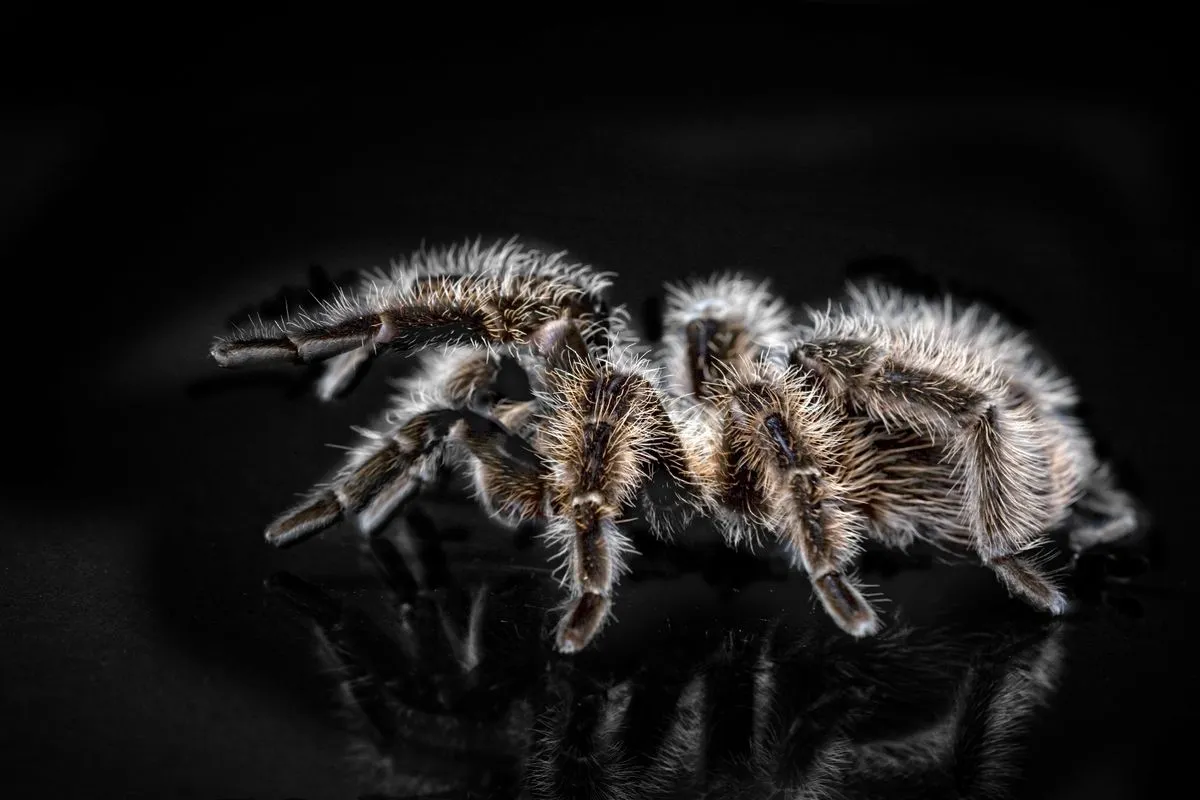
| Desert Tarantula (Aphonopelma chalcodes) | Stocky blonde-tan and hairy; thick legs | 50-70 mm body; legspan to 100 mm | Desert Southwest; burrows in dry soil | Mild (bee-sting-like bite; itchy hairs) | Males wander for miles each late summer seeking mates |
| Goldenrod Crab Spider (Misumena vatia) | Crab-like; white or yellow; long front legs | 8-10 mm (females) | Nationwide; flowers, especially goldenrod and daisies | Harmless | Shifts between white and yellow to match flowers |
| Dark Fishing Spider (Dolomedes tenebrosus) | Large brown; pale chevrons; banded legs | 15-26 mm body; legspan to 75 mm | Eastern, central US; ponds, streams, docks | Harmless (defensive bite hurts, not dangerous) | It runs on water and dives for tadpoles and minnows |
| Grass Spider (Agelenopsis spp.) | Brown; two dark head stripes; long rear spinnerets | 10-20 mm | Nationwide; lawns, meadows, low shrubs | Harmless | It waits in its funnel, sprinting out to grab prey |
| Nursery Web Spider (Pisaurina mira) | Slender brown; long legs; often pale back stripe | 10-15 mm | Eastern, central US; tall grass near water | Harmless | Mothers carry the egg sac in their jaws, then guard the nursery |
| Green Lynx Spider (Peucetia viridans) | Bright lime green; long leg spines | 12-20 mm | Southeast, TX, CA; shrubs, gardens, crops | Harmless | Spits venom to pin prey |
| Spitting Spider (Scytodes thoracica) | Dome-shaped head; pale with dark spots | 3-6 mm | Nationwide indoors; under furniture, closets | Harmless | It fires zigzag glue strands from its fangs to lasso prey |
| Woodlouse Spider (Dysdera crocata) | Mahogany-red head, cream abdomen; huge fangs | 8-11 mm | Nationwide; under logs, stones, damp basements | Painful bite, not dangerous | Its fangs evolved to pierce woodlice armor |
| Yellow Sac Spider (Cheiracanthium mildei) | Pale yellow-beige; darker legs; dark feet | 7-10 mm | Nationwide indoors; wall corners in silk sacs | Mild (necrosis link debunked) | It hunts at night and sleeps in a silk sac by day |
| Daddy Longlegs (harvestman, Phalangium opilio) | One fused oval body, no waist; very long legs | 5-7 mm body | Nationwide; gardens, under logs, on walls | Harmless (not a true spider; no venom) | Not a spider; has no venom at all |
How to Identify a Spider in 5 Steps
Work through these in order, and never handle a spider you cannot identify.

Step 1: Note where you found it
Round web between plants: orbweaver. Sprinting across the lawn: wolf or grass spider. Basement corner: cellar or house spider. Indoor vs. outdoor and web vs. ground narrows the field fast.
Step 2: Look at the web, or the lack of one
Round spirals mean orbweavers, messy tangles mean cobweb spiders, flat sheets with a funnel mean grass spiders, and no web means hunters like wolf or jumping spiders.
Step 3: Check the standout marks
Look for the chart’s key marks: the red hourglass, the violin, zebra stripes, a green body, or crab-like front legs. Jumping spiders show two huge front eyes; wolf spiders have three eye rows; recluses have six eyes in pairs.
Step 4: Estimate the size
A grain of rice is about 6 mm, a dime is 18 mm (body only, not legs). Dime-sized on the ground suggests a wolf spider; rice-sized in a corner web suggests a house or cellar spider.
Step 5: Rule out the dangerous two first
Check for the widow’s red hourglass and the recluse’s violin plus six eyes. If neither is present, it is almost certainly harmless. When in doubt, photograph from a safe distance and compare.
Dangerous Spiders vs. Harmless Lookalikes
Only the black widow and brown recluse demand real caution in the US, and both are confused with harmless species. Compare before you worry.

- Black widow vs. false widow: True widows are glossy black with a crisp red hourglass underneath. False widows are duller with pale marbled marks, no hourglass, and much weaker venom.
- Brown recluse vs. hobo and grass spiders: The recluse has a plain abdomen, a violin on its head, and six eyes in pairs. Hobo and grass spiders have patterned abdomens and eight eyes, which rules the recluse out.
- Wolf spider vs. brown recluse: Wolf spiders are big, hairy, and boldly patterned with eight eyes in three rows. Scary looking but harmless; the recluse is smaller, plain, and shy.
- Cellar spider vs. brown recluse: The cellar spider has a tiny body with extremely long delicate legs and hangs upside down in loose webs. It preys on recluses.
- Daddy longlegs vs. cellar spider: Harvestmen have one fused body segment with no waist; cellar spiders have the two-part spider body. Neither is dangerous.
Spider Web Types at a Glance
Here are the six web styles you will see most often in the US. Orb weavers are the master engineers, and they prey heavily on flying insects, including the species in our bee identification chart.
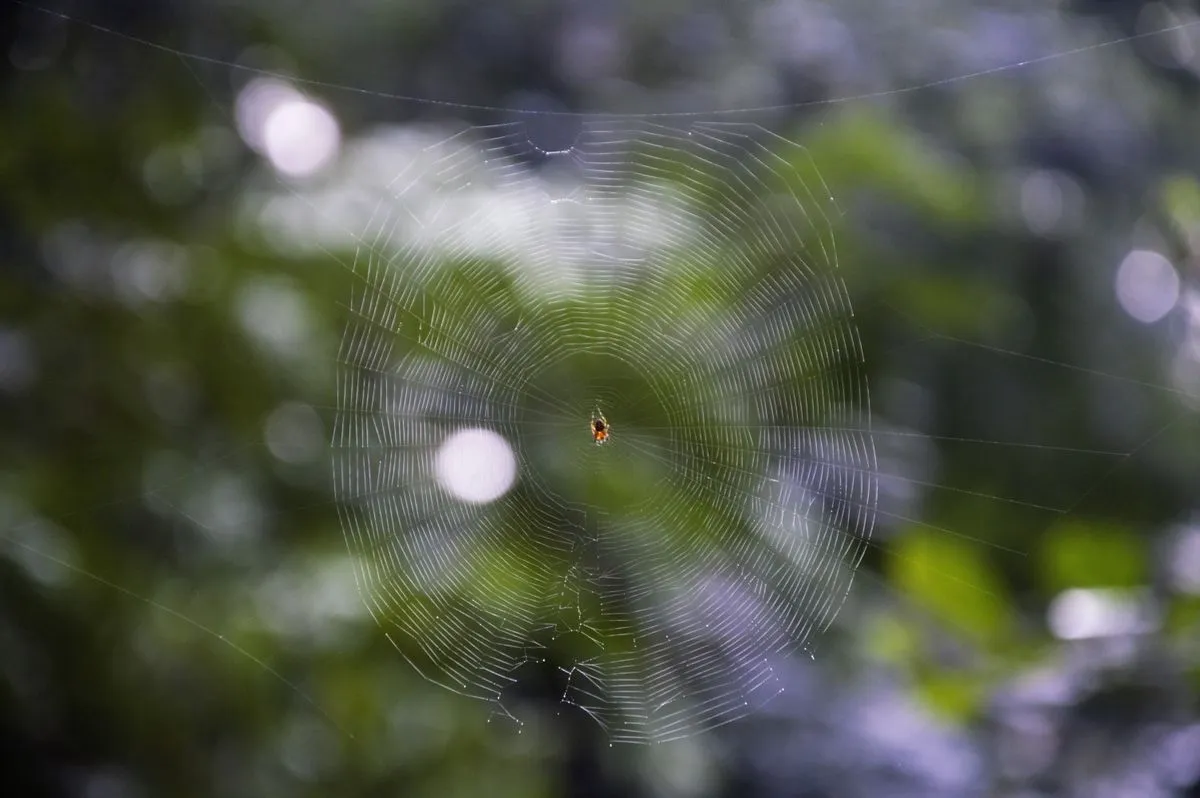
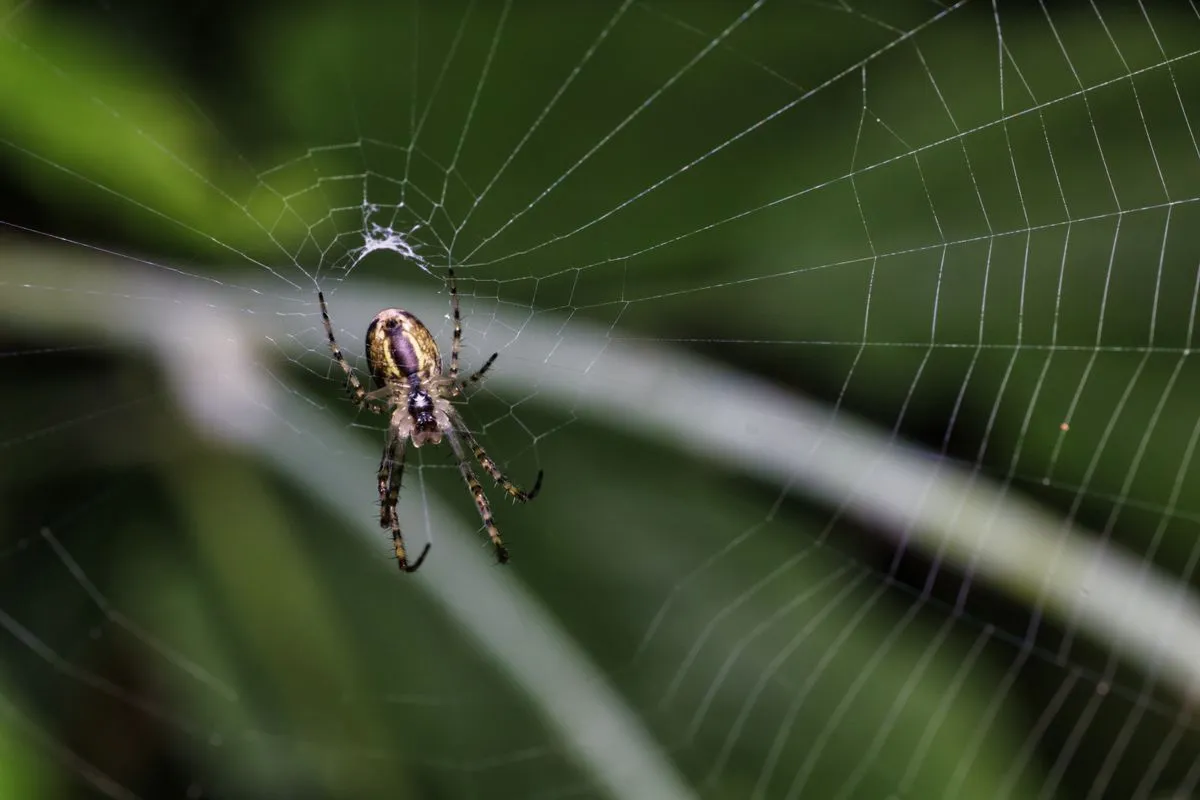
- Orb webs: The classic round spiral, built in vegetation by garden spiders, spotted orbweavers, and golden orb weavers. Yellow garden spider webs often show a zigzag stabilimentum.
- Funnel webs: A flat sheet narrowing into a silk tunnel. Grass spiders build these across lawns, waiting inside the funnel to rush out at prey.
- Cobwebs: Irregular three-dimensional tangles. House spiders and black widows both make them, which is why the spider’s markings matter.
- Sheet webs: Horizontal silk sheets, often with threads above that knock insects down onto the sheet. Tiny money spiders specialize in these.
- Silk sacs: Small daytime retreats in room corners or under bark. Yellow sac spiders rest in these by day and hunt at night.
- Nursery webs: Tent-like silk shelters where nursery web spider mothers guard their spiderlings for their first days.

Spider Bite Safety: What to Do
Most spiders cannot pierce human skin, and even the dangerous species bite only when pressed against skin. Wolf spiders and other ground hunters eat the insects in our beetle identification chart, so they earn their keep outdoors.
- Prevent bites: Shake out shoes and clothing stored in garages or basements, wear gloves when moving firewood or boxes, and move beds slightly away from walls in recluse territory.
- If bitten: Wash with soap and water, apply a cold pack for 10 minutes at a time, keep the area elevated, and avoid scratching.
- Get medical care for spreading redness, severe pain, muscle cramps, fever, or a growing dark sore, especially if you suspect a widow or recluse.
- Photograph the spider only if you can do it safely. A clear photo helps medical staff and lets you confirm the species with this chart later.
- Skip old remedies: No tourniquets, no cutting, no sucking out venom. They cause harm and do not help.
Frequently Asked Questions
How can I tell a black widow from a harmless black spider?
The red hourglass on the belly is the definitive mark. The body is also unusually glossy, like polished black glass, and the web is a messy tangle rather than a neat orb.
Are brown recluse spiders really that common?
No. Their range is limited to the Midwest and South, and even there they rarely bite. Spiders blamed on recluses elsewhere are almost always hobo, grass, or woodlouse spiders.
What is the biggest spider in the US?
The desert tarantula of the Southwest: body up to 70 mm, legspan to 100 mm. Among non-tarantulas, the dark fishing spider has the widest legspan at about 75 mm.
Do daddy longlegs have the most powerful venom?
No, this is a persistent myth. True daddy longlegs (harvestmen) are not spiders and have no venom glands. Cellar spiders, which share the nickname, have very weak venom.
Should I kill spiders I find in my house?
Usually not. House, cellar, and jumping spiders eat flies, mosquitoes, and even other spiders. Catch harmless ones in a cup and release them outside.
Conclusion
A quick look at markings, web style, and size is all it takes to name the spiders around your home. Remember the two that matter, the black widow’s hourglass and the brown recluse’s violin, and let the other eighteen handle your pests.


Pingback: Types of House Spiders: 20 Species, Sizes and How to ID Them – Chart Identify