
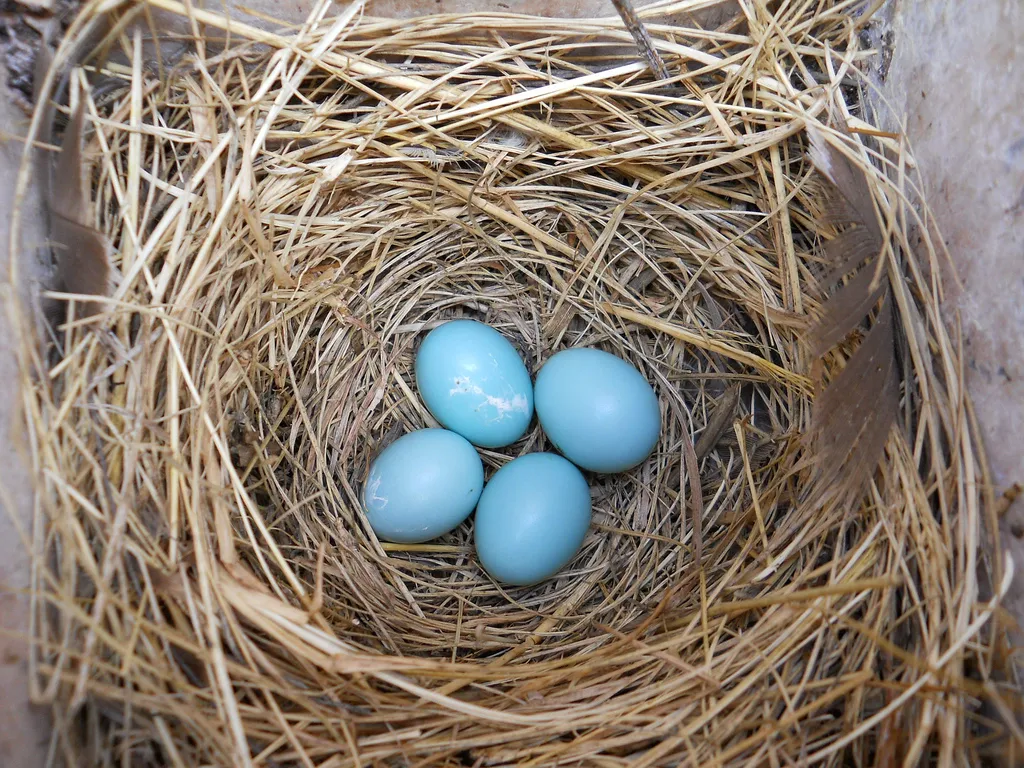
Finding a speckled egg in a hedge or a plain blue one in a nest box is a small puzzle, and this british bird eggs identification chart solves it properly. Instead of guessing from colour alone, you will compare size in millimetres, shell colour, markings, clutch size and the nesting place, because those five clues together point to one species far more reliably than any single feature.
One rule comes before all the fun. In the UK, the Wildlife and Countryside Act 1981 protects the eggs of every wild bird. Taking, possessing or selling a wild bird egg is an offence, and so is disturbing a nest while it is in use. So enjoy this chart the legal way: look, photograph from a respectful distance, and leave every egg exactly where you found it.
British Bird Eggs Identification Chart: 20 Species Compared
The chart below covers the garden, woodland, wetland and farmyard species you are most likely to meet in Britain. Sizes are average length by width in millimetres. If you enjoy comparing eggs across the animal world, our snake egg identification chart shows how differently reptiles do the same job.
| Species | Egg size (mm) | Colour | Markings | Clutch | Nesting place |
|---|---|---|---|---|---|
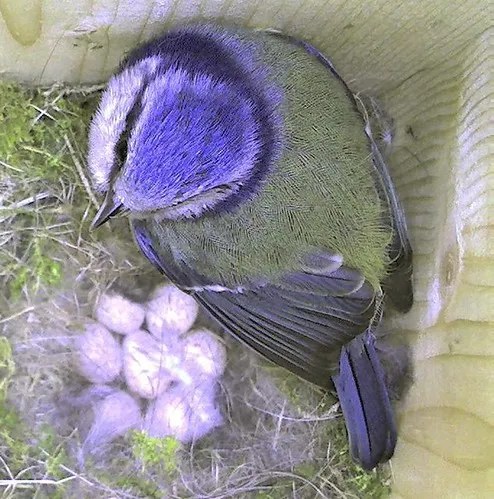
| Blue Tit | 16 x 12 | White | Fine red brown speckles | 7 to 12 | Tree hole or nest box |
| Great Tit | 18 x 14 | White | Red brown speckles | 5 to 11 | Tree hole or nest box |
| Wren | 17 x 13 | White | Fine speckles at the wide end | 5 to 8 | Domed nest in a bank or wall |
| Long-tailed Tit | 14 x 11 | White | Faint reddish flecks | 8 to 12 | Domed feather lined nest in a bush |
| Robin | 20 x 15 | Creamy white | Reddish brown speckles and blotches | 4 to 6 | Low cup nest in a bank, shed or ivy |
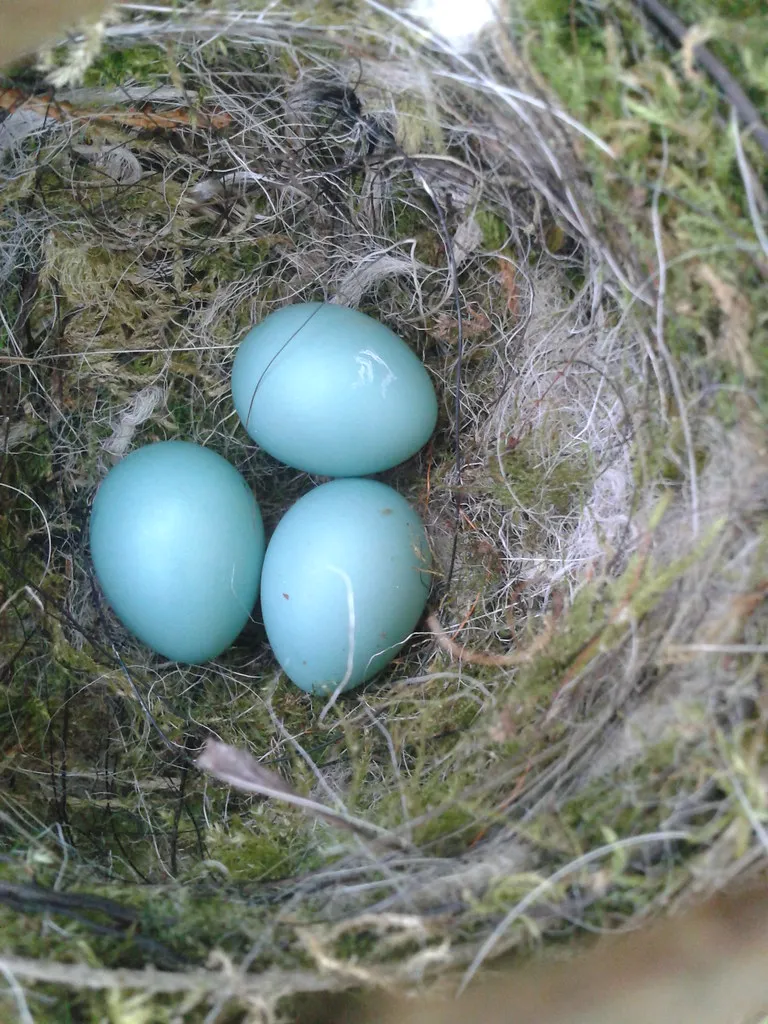
| Dunnock | 19 x 14 | Bright blue | None, completely plain | 3 to 5 | Cup nest deep in a hedge |
| House Sparrow | 22 x 16 | White to grey green | Grey and brown speckles | 3 to 5 | Hole in a building or nest box |
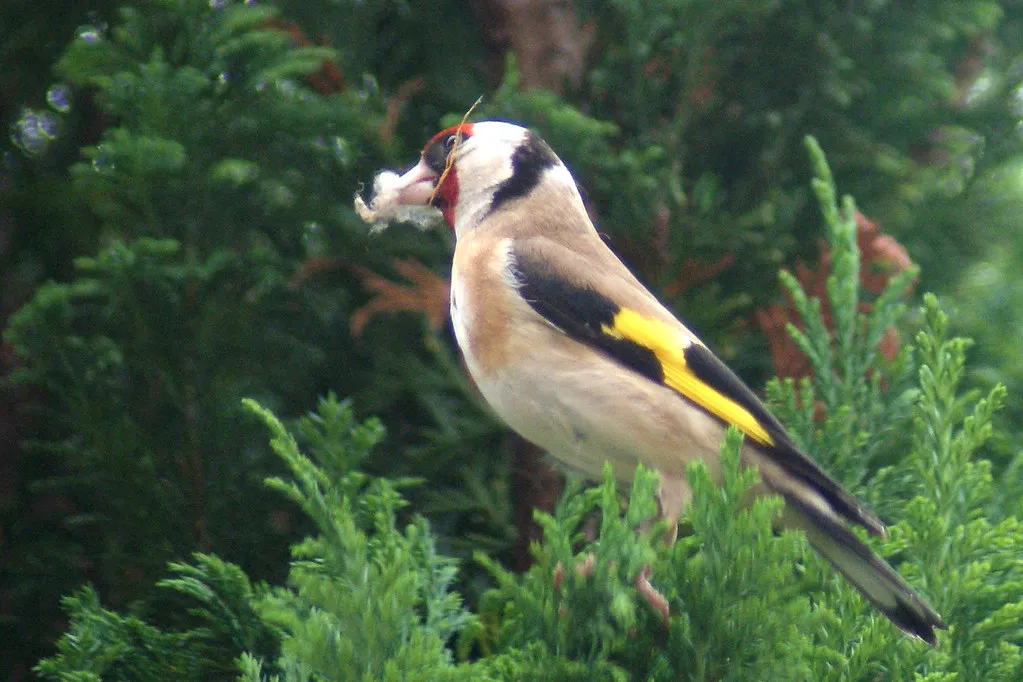
| Goldfinch | 17 x 13 | Pale blue white | Dark spots and short scribbles | 4 to 6 | Neat cup in a tree fork |
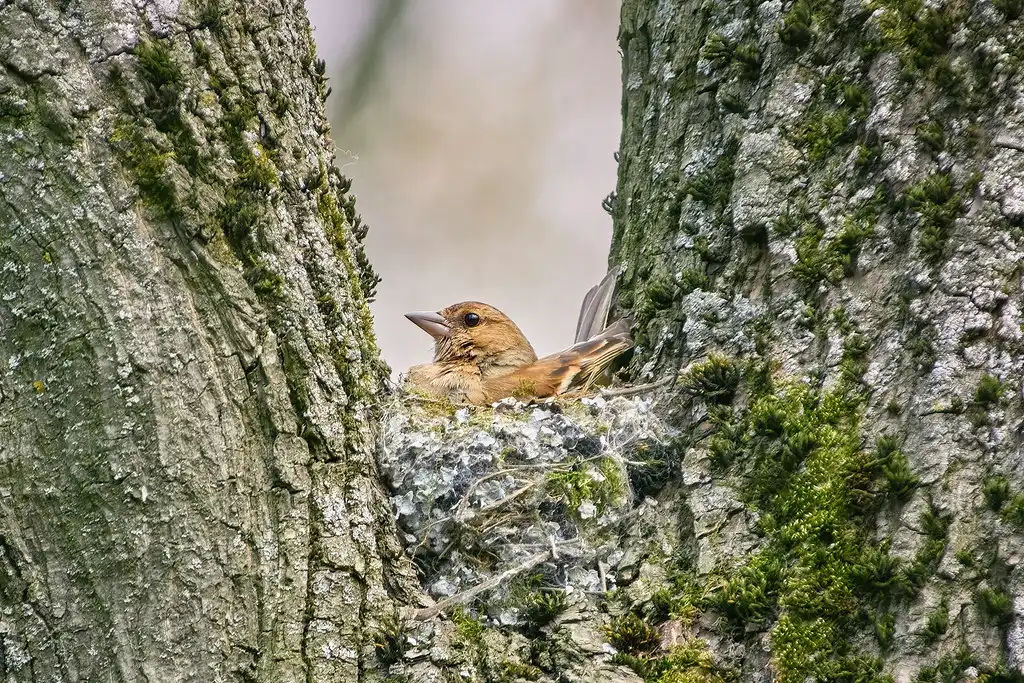
| Chaffinch | 19 x 15 | Pale blue to grey | Purple brown blotches | 4 to 5 | Mossy cup in a tree or hedge fork |
| Swallow | 19 x 13 | White | Red brown speckles | 4 to 5 | Mud cup on a beam in a barn |
| Pied Wagtail | 19 x 14 | Grey white | Dense grey brown speckles | 4 to 6 | Crevice in a wall, bank or log pile |
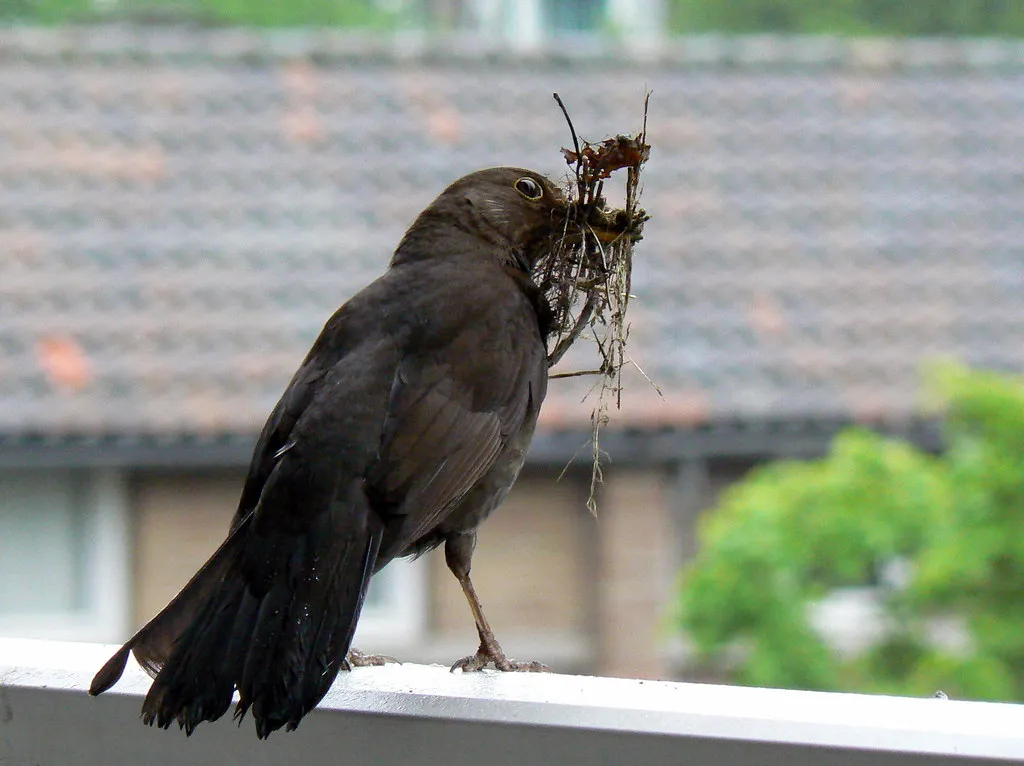
| Blackbird | 29 x 22 | Blue green | Reddish brown speckles | 3 to 5 | Large cup nest in a hedge or shrub |
| Song Thrush | 27 x 21 | Bright blue | Bold black spots | 3 to 5 | Cup nest with a smooth mud lining |
| Starling | 30 x 21 | Pale blue | None, completely plain | 4 to 6 | Hole in a tree, roof or wall |
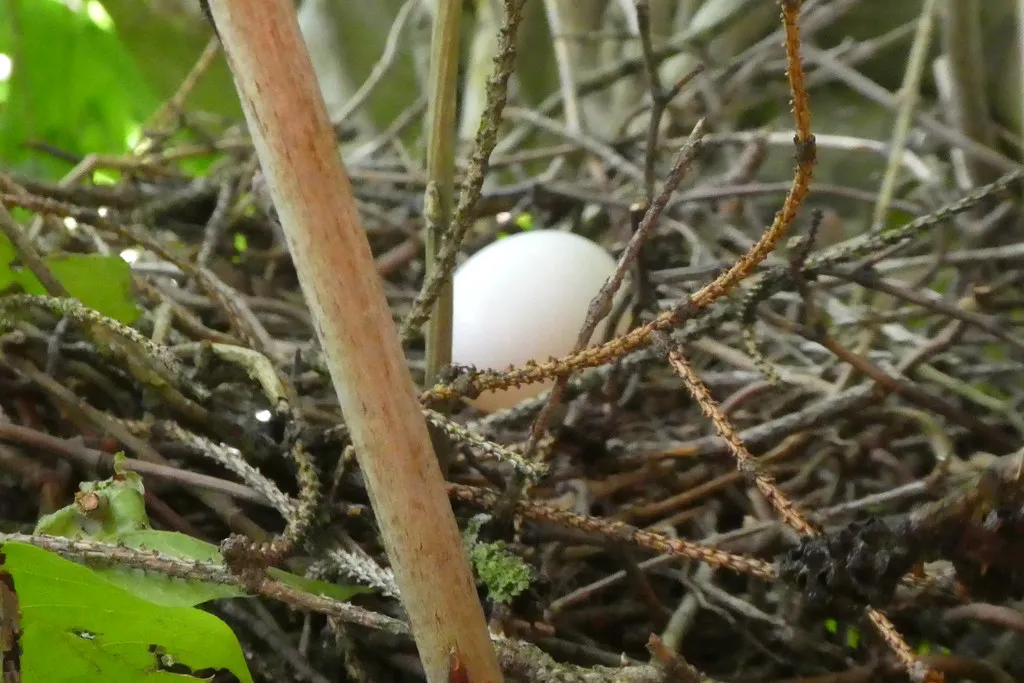
| Woodpigeon | 39 x 29 | White | None, glossy and plain | 2 | Flimsy twig platform in a tree |
| Magpie | 35 x 24 | Pale blue green | Brown speckles and blotches | 3 to 7 | Large domed stick nest in a tree |
| Carrion Crow | 43 x 31 | Blue green | Heavy brown and grey blotches | 3 to 5 | Big stick nest high in a tree |
| Kestrel | 39 x 32 | Cream | Heavy red brown mottling | 3 to 6 | Cliff ledge, tree hole or nest box |
| Tawny Owl | 47 x 39 | White | None, plain and almost round | 2 to 4 | Tree hole or owl nest box |
| Mallard | 57 x 41 | Pale grey green to cream | None, plain | 9 to 13 | Ground nest near water, hidden in plants |
How to Identify an Egg in 4 Steps
Step 1: Size it against your thumb. A wren egg is about the length of a thumbnail, a blackbird egg matches your whole thumb, and a mallard egg fills your palm. Size alone removes half the chart at once, which is why the table leads with millimetres rather than colour.
Step 2: Read the markings, not just the colour. Speckles concentrated at the wide end suggest a tit or a wren. Bold black spots on bright blue can only be a song thrush. A completely plain blue egg is a dunnock or a starling, and size then separates those two easily. Short dark scribbles, like pen flicks, are the goldfinch signature.
Step 3: Count the clutch. Two large white eggs on a flimsy platform means woodpigeon. Nine or more pale eggs on the ground near water means mallard. Seven to twelve tiny speckled eggs in a box means blue tit, the biggest regular clutch of any British garden bird.
Step 4: Let the nest finish the job. A mud cup on a barn beam is a swallow home. A domed nest woven with feathers points to a long-tailed tit or a wren. A cup with a smooth, hard mud lining, like a tiny bowl of plaster, belongs to a song thrush and confirms those blue eggs instantly.
The Blue Egg Problem: 5 Species That Confuse Everyone
Blue causes more wrong guesses than every other colour combined. Dunnock eggs are a rich, even blue with no marks at all, and they sit in a small neat cup deep inside a hedge. Starling eggs are paler, larger and laid in a hole, so the location settles it. Song thrush eggs are blue too, but the black spots give them away at a glance. Blackbird eggs lean green, carry reddish speckles and come in a much bigger nest. And if the blue egg is tiny and inside a nest box, check again: you may be looking at a pale blue tit egg in poor light, because tit eggs are white with speckles, never truly blue.
White and Speckled Eggs: Tits, Wrens and Sparrows
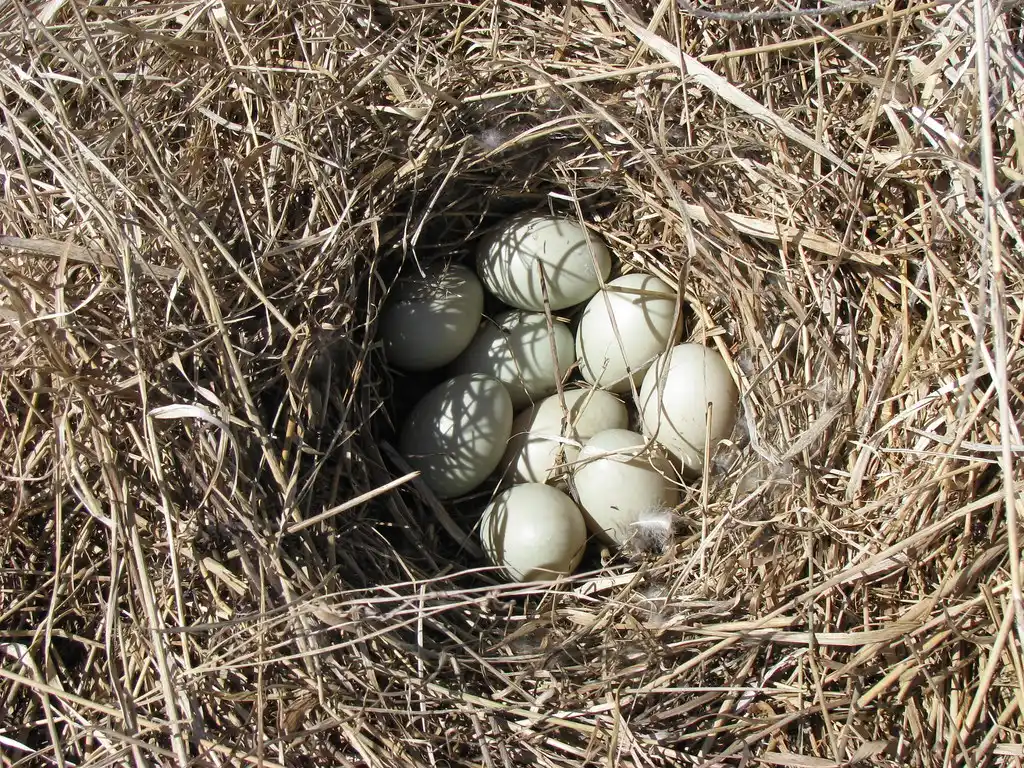
Most small white eggs belong to hole nesters, and the speckles do the talking. Blue tit and great tit eggs look nearly identical, but the great tit egg is about 2 mm longer, and a mixed box is rare enough that the attending adult usually settles the question. Wren eggs crowd their speckles at the wide end and sit in a domed nest with a side entrance. House sparrow eggs are bigger, greyer and blotchier, and they turn up under roofs and in wall cavities rather than in trees. For a very different speckled challenge, try our insect egg identification chart, where the eggs are smaller than a pinhead.
Big Eggs: Waterbirds, Owls and Birds of Prey
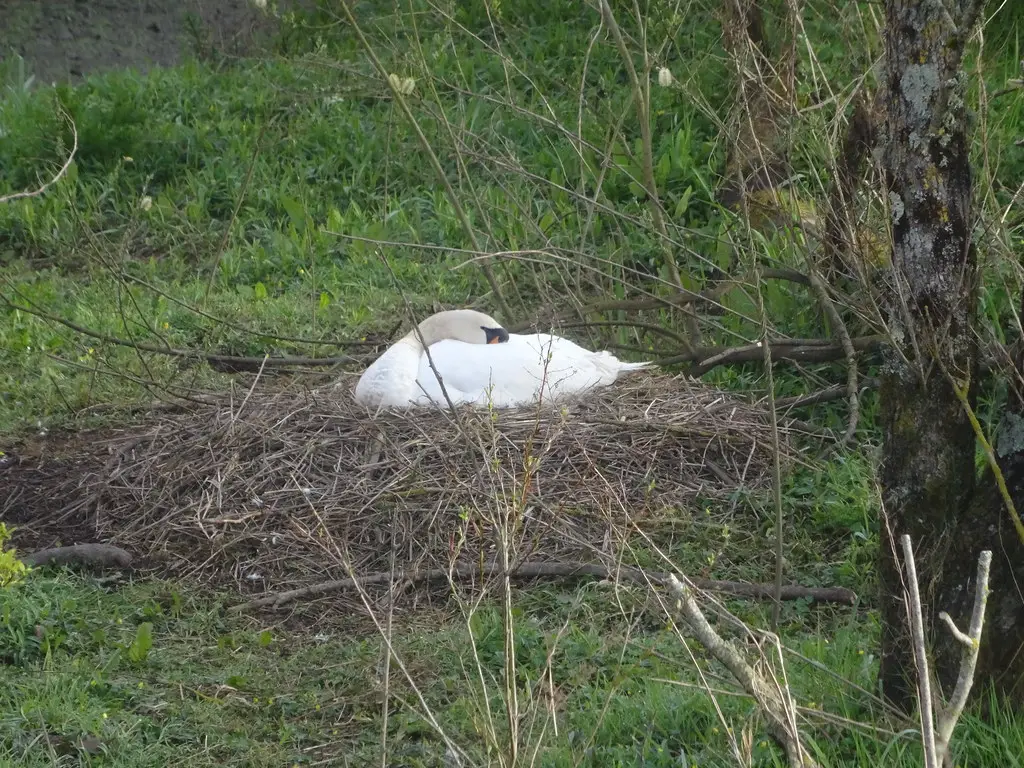
Scale changes everything at the top of the chart. A mallard egg is nearly three times the length of a blue tit egg, plain coloured because the female covers the clutch with down whenever she leaves. Owl eggs break the usual egg shape: tawny owl eggs are almost spherical, plain white and laid in a dark hole, where camouflage is pointless. Kestrel eggs go the opposite way, cream shells buried under so much red brown mottling that they look carved from stone. If you love British wildlife at full size, our British butterflies chart and endangered birds chart cover the species worth watching once these eggs hatch.
Why Eggs Look the Way They Do
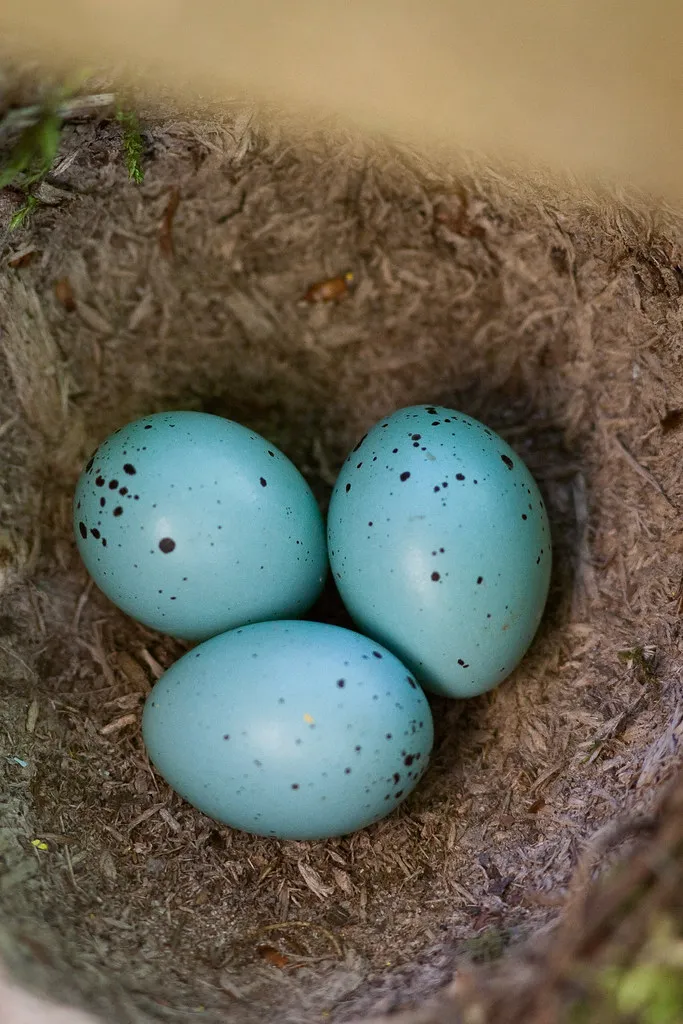
Shell colour is chemistry plus camouflage. The blue green tint comes from a pigment called biliverdin, laid down as the shell forms, while brown speckles come from protoporphyrin, added near the end like a coat of paint. Ground and open nesters, such as pipits and mallards, tend toward speckled or plain dull shells that blend with grass and soil. Hole nesters can afford plain white eggs, because darkness hides them and white helps the parents see the clutch in the gloom. Speckles may also strengthen thin spots in the shell.
What to Do If You Find an Egg on the Ground
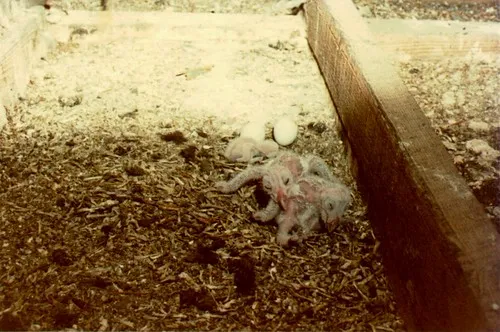
Leave it alone. A single egg on grass is often a failed or ejected egg that the parents have already written off, and moving it helps nobody. Never put an egg back into a nest you cannot identify, and never take one home to hatch: hand rearing wild birds without a licence is illegal, and incubator attempts fail. If the egg sits somewhere it will be stepped on, such as a footpath, you may nudge it gently onto the grass beside the path with a leaf. Then walk away and let the chart, not your pockets, do the collecting.

Found Eggs You Should Never Confuse
Three lookalike pairs trip people up every spring. First, dunnock versus starling: both plain blue, but the starling egg is half as long again and sits in a hole. Second, robin versus chaffinch: both speckled and blotchy at 20 mm, but the robin nest hugs the ground in a bank or shed, while the chaffinch builds higher, in a fork, and lines the cup with hair and feathers. Third, blackbird versus song thrush: similar size and both in hedges, but the thrush egg is brighter blue with black spots, and its nest has that unmistakable smooth mud lining.
Frequently Asked Questions
What colour are robin eggs in the UK?
British robin eggs are creamy white with reddish brown speckles and blotches, about 20 x 15 mm. The bright blue robin eggs you see in photos online belong to the American robin, a different and much larger species.
Which British bird lays plain blue eggs?
The dunnock and the starling both lay completely plain blue eggs. Dunnock eggs are smaller at 19 x 14 mm and sit in a hedge cup, while starling eggs measure 30 x 21 mm and are laid in a hole or cavity.
Is it illegal to collect bird eggs in the UK?
Yes. Under the Wildlife and Countryside Act 1981, taking or possessing the egg of any wild British bird is an offence, and old collections are tightly controlled too. Photograph eggs in place and leave them untouched.
How can I tell a blackbird egg from a song thrush egg?
Blackbird eggs are blue green with reddish brown speckles, while song thrush eggs are a brighter blue with bold black spots. The thrush nest also has a smooth mud lining, which the blackbird nest lacks.
What should I do if I find a nest with eggs in my garden?
Enjoy it from a distance and keep pets away from the area. Do not trim the hedge or move anything near the nest until the young have fledged, which usually takes only a few weeks.
Conclusion
A good identification is a short chain of evidence: measure the egg, read its markings, count the clutch and read the nest. Work through those four steps with the chart above and most British eggs name themselves, from the thumbnail tiny blue tit to the palm filling mallard. Keep your camera ready, your hands off, and this chart bookmarked for spring.

