Most cats from a shelter, a rescue, or a neighbor’s litter come with no papers and no history, just clues written into their coat, ears, and build. This cat breed identifier chart pulls those clues together in one place, so you can work through them in order and land on the two or three breeds your cat most likely resembles. No chart can give you a pedigree. What it gives you is an honest shortlist, with the famous lookalike pairs separated, so you stop confusing a Russian Blue with a Chartreux or calling every striped cat a Bengal.
One honest note first: most cats are not any breed at all. They are domestic shorthairs and longhairs, mixed cats with no pedigree breed behind them; only a small share of cats, roughly 2 percent by most registry estimates, are pedigree cats. Use this chart to find the closest match, not to force a label.

How to Use This Cat Breed Identifier Chart: A 6-Step Check
Work through these six checks in order. Each one knocks out a group of breeds, and by the end your shortlist is down to two or three names.
Step 1: Coat length. Is it hairless, wavy, short, medium, or long? A wavy coat points only to the Rex breeds, and a nearly bare, suede-like coat only to the Sphynx.
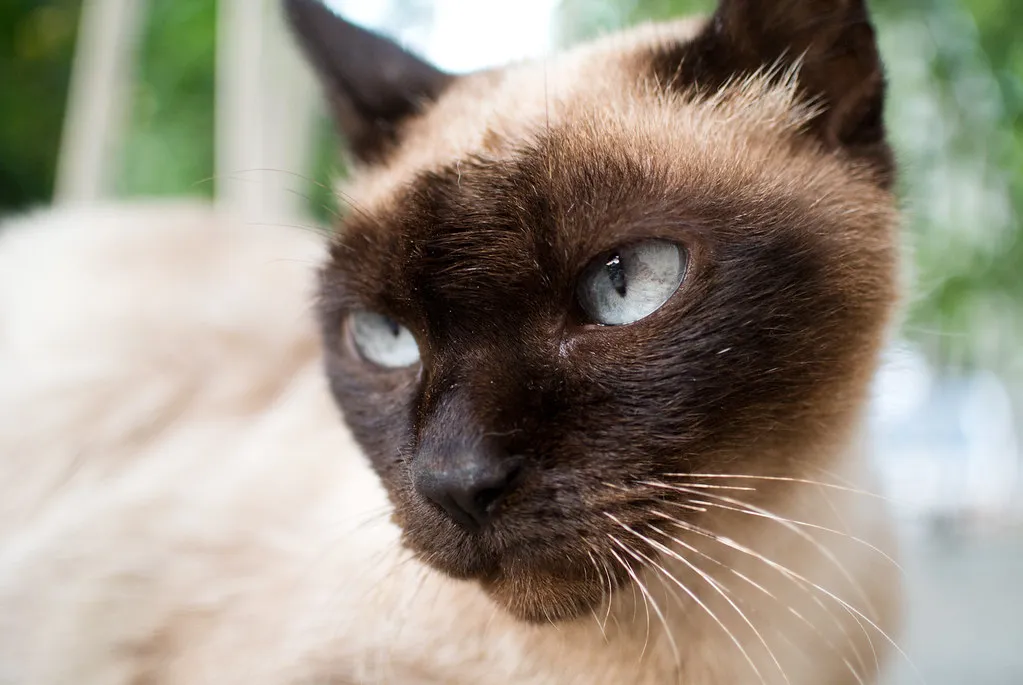
Step 2: Pattern and color. Look for points (darker ears, face, legs, and tail on a paler body), spots or rosettes, ticking (each hair banded with color), or a van pattern (white body, color only on head and tail). Pattern rules out more breeds than plain color does.
Step 3: Size and build. Weigh your cat if you can. A 5 pound adult and a 17 pound adult cannot be the same breed. Note the build too: slender, balanced, or stocky. Our cat breed size chart gives height and weight for 20 breeds to cross-check.
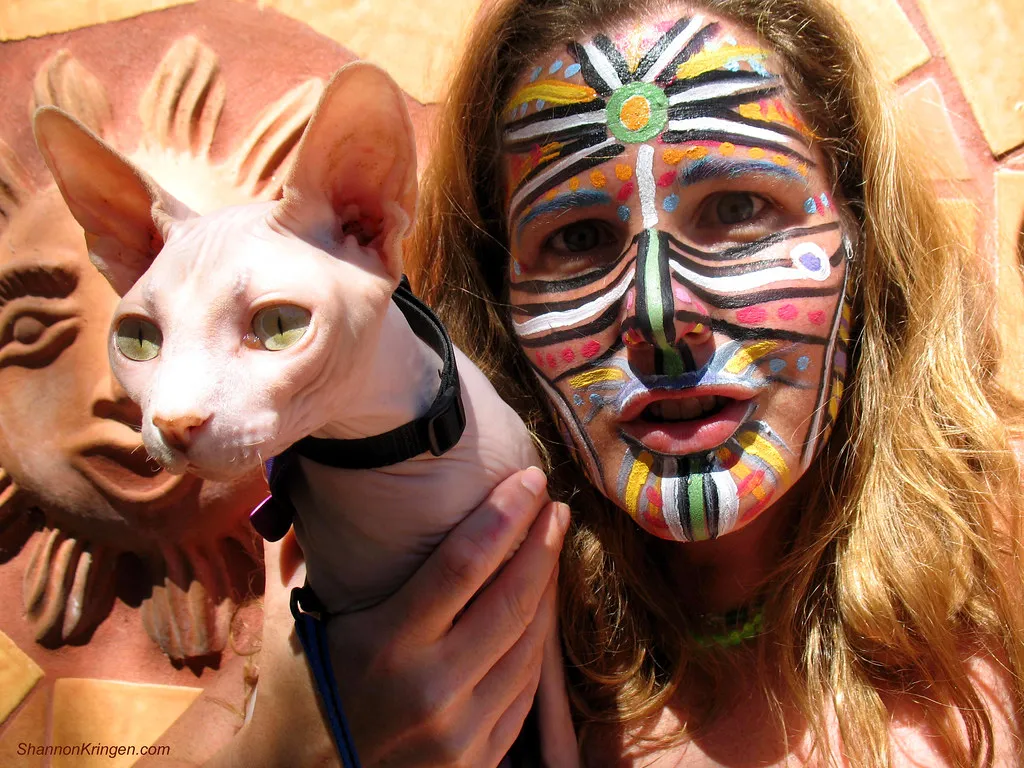
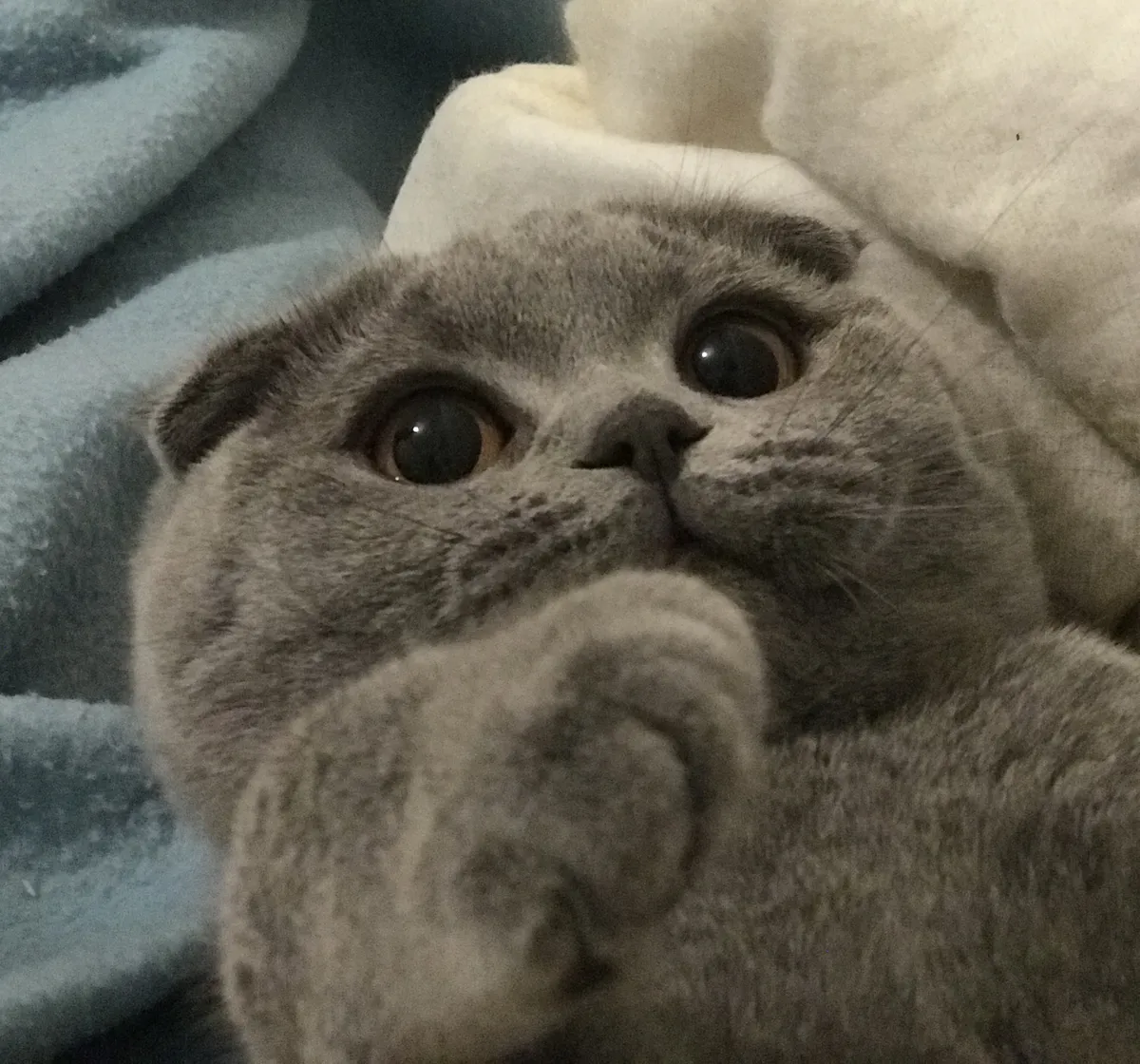
Step 4: Ears. Folded forward means Scottish Fold. Huge and bat-like on a hairless cat means Sphynx. Very large ears on a slim cat suggest a Devon Rex, Oriental, or Abyssinian. Ear tufts point to the forest breeds.
Step 5: Tail. No tail, or just a stump, means Manx blood. A short, bent pom-pom tail suggests a Japanese Bobtail type. A long, whip-thin tail fits the Siamese family and the Rex breeds, while a huge plume fits the forest breeds.
Step 6: Eyes and face. Finish with the head. A flat face is Persian type; a long wedge head is Siamese or Oriental. Green eyes on a solid blue-gray coat point to the Russian Blue; copper or gold eyes on the same color point to the Chartreux.
The Chart: 24 Breeds Compared by Coat, Size, Ears, and Tail
Adult weights are typical ranges; males sit at the heavier end. Find the coat group first, then match pattern, size, ears, and tail across the row.
| Breed | Coat | Pattern and Colors | Size | Ears | Tail | Key Tell |
|---|---|---|---|---|---|---|
| Abyssinian | Short, ticked | Ruddy, red, blue, fawn | 6 to 10 lb, slender | Large, pointed | Long, tapering | Ticked coat, almond eyes |
| American Shorthair | Short, dense | Many; silver tabby classic | 11 to 15 lb, muscular | Medium, rounded | Medium, thick base | Round face, sturdy build |
| Bengal | Short, sleek | Rosettes or marble | 8 to 15 lb, muscular | Small, rounded | Medium, thick | Wild rosettes, glittered coat |
| Birman | Semi-long, silky | Colorpoint, white gloves | 10 to 12 lb, stocky | Medium, wide set | Medium, bushy | White-gloved paws, blue eyes |
| British Shorthair | Short, plush | Solid blue classic; many | 9 to 17 lb, stocky | Small, rounded | Medium, thick | Round face, eyes, and body |
| Burmese | Short, glossy | Sable, champagne, blue, platinum | 8 to 12 lb, compact | Medium, wide set | Medium, straight | Heavy for its size, gold eyes |
| Chartreux | Medium-short, woolly | Blue-gray only | 7 to 16 lb, robust | Small, high set | Medium, thick base | Copper eyes, woolly coat |
| Cornish Rex | Very short, wavy | Many colors | 5 to 10 lb, slender | Very large, high set | Long, whip-like | Tight waves, egg-shaped head |
| Devon Rex | Short, loose waves | Many colors | 5 to 10 lb, slender | Huge, low set | Long, tapering | Pixie face, giant ears |
| Egyptian Mau | Short, silky | Naturally spotted; silver, bronze | 7 to 11 lb, athletic | Large, broad base | Medium, dark tip | Natural spots, green eyes |
| Maine Coon | Long, shaggy | Many; brown tabby classic | 10 to 18 lb, very large | Large, lynx-tipped | Very long, bushy | Huge size, ear tufts, chirps |
| Manx | Short or long, double | Many colors | 8 to 12 lb, round | Medium, rounded | None, or a stump | Tailless, round rump |
| Norwegian Forest Cat | Long, thick double | Many colors | 12 to 16 lb, large | Large, lynx tips | Long, bushy | Straight profile, triangular head |
| Oriental Shorthair | Short, fine, glossy | Hundreds of colors | 8 to 12 lb, tubular | Huge, flared | Long, thin, whip-like | Siamese body, non-pointed coat |
| Persian | Very long, thick | Many colors | 7 to 12 lb, cobby | Small, low set | Short, bushy | Flat face, short nose |
| Ragdoll | Semi-long, silky | Colorpoint, mitted, bicolor | 10 to 20 lb, large | Medium, tilted | Long, bushy | Always blue eyes, relaxes when held |
| Russian Blue | Short, dense double | Blue-gray, silver tips only | 7 to 12 lb, elegant | Large, pointed | Medium, tapering | Green eyes, silvery sheen |
| Scottish Fold | Short or long, dense | Many colors | 9 to 13 lb, rounded | Folded forward | Medium, flexible | Folded ears are the giveaway |
| Siamese | Short, fine | Colorpoint: seal, blue, chocolate, lilac | 8 to 12 lb, tubular | Huge, wide base | Long, thin, whip-like | Wedge head, blue eyes, vocal |
| Singapura | Short, fine, ticked | Sepia agouti only | 4 to 8 lb, smallest breed | Large, cupped | Medium, blunt tip | Tiny size, huge eyes |
| Somali | Semi-long, ticked | Ruddy, red, blue, fawn | 8 to 12 lb, athletic | Large, cupped | Full, fox-like brush | Longhaired Abyssinian, plumed tail |
| Sphynx | Hairless, suede skin | Skin shows many colors | 6 to 12 lb, muscular | Huge, bat-like | Long, whip-like | Wrinkled skin, no coat at all |
| Tonkinese | Short, silky | Point, mink, or solid | 6 to 12 lb, balanced | Medium, oval tips | Medium, tapering | Aqua eyes in mink pattern |
| Turkish Van | Semi-long, cashmere-like | White, color on head and tail | 10 to 20 lb, large | Medium-large, feathered | Full brush, often ringed | Van pattern is the tell |
Lookalikes Separated: The Pairs Everyone Mixes Up
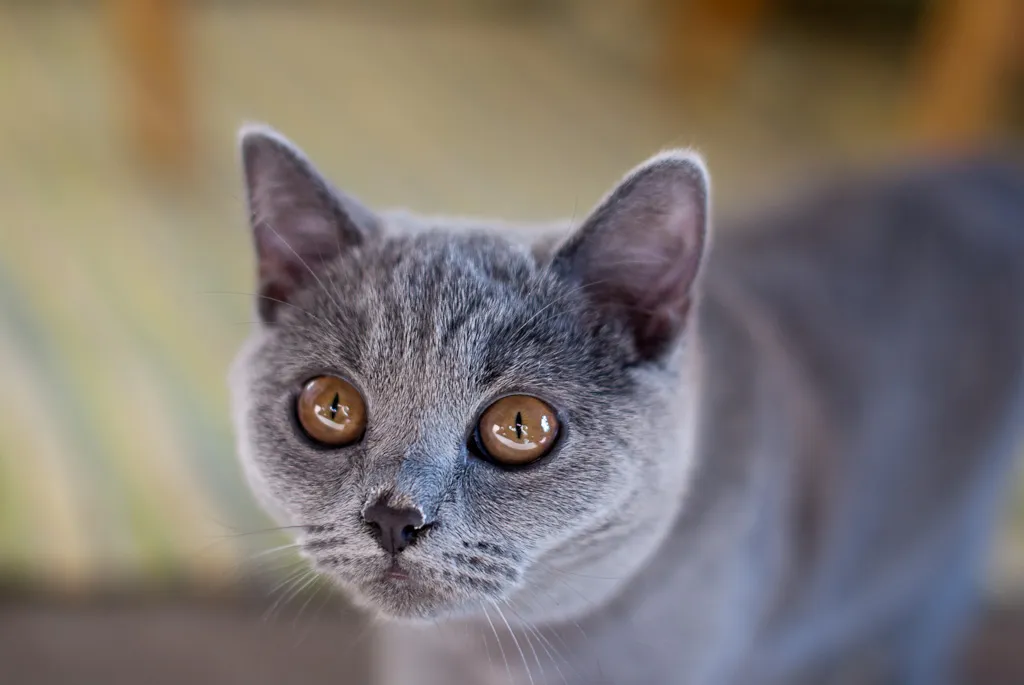
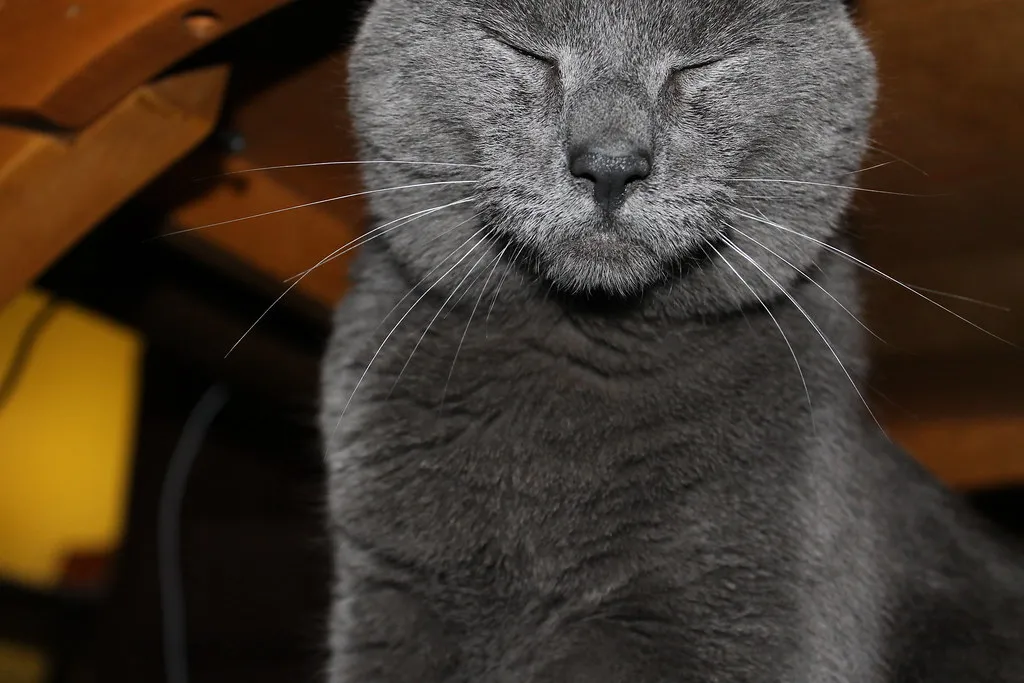
Russian Blue vs Chartreux vs British Shorthair. All three are blue-gray, the most common mix-up on any identifier chart. Check the eyes: green means Russian Blue, copper or gold means Chartreux, deep orange on a rounder, heavier cat means British Shorthair. Then the build: slim Russian Blue, robust woolly Chartreux, stockiest British.
Maine Coon vs Norwegian Forest Cat. Both are large, longhaired, and tufted. Look at the head in profile: the Maine Coon has a squared muzzle and a slight dip; the Norwegian has a straight profile, a triangular head, and more slanted eyes. Size alone will not separate them.
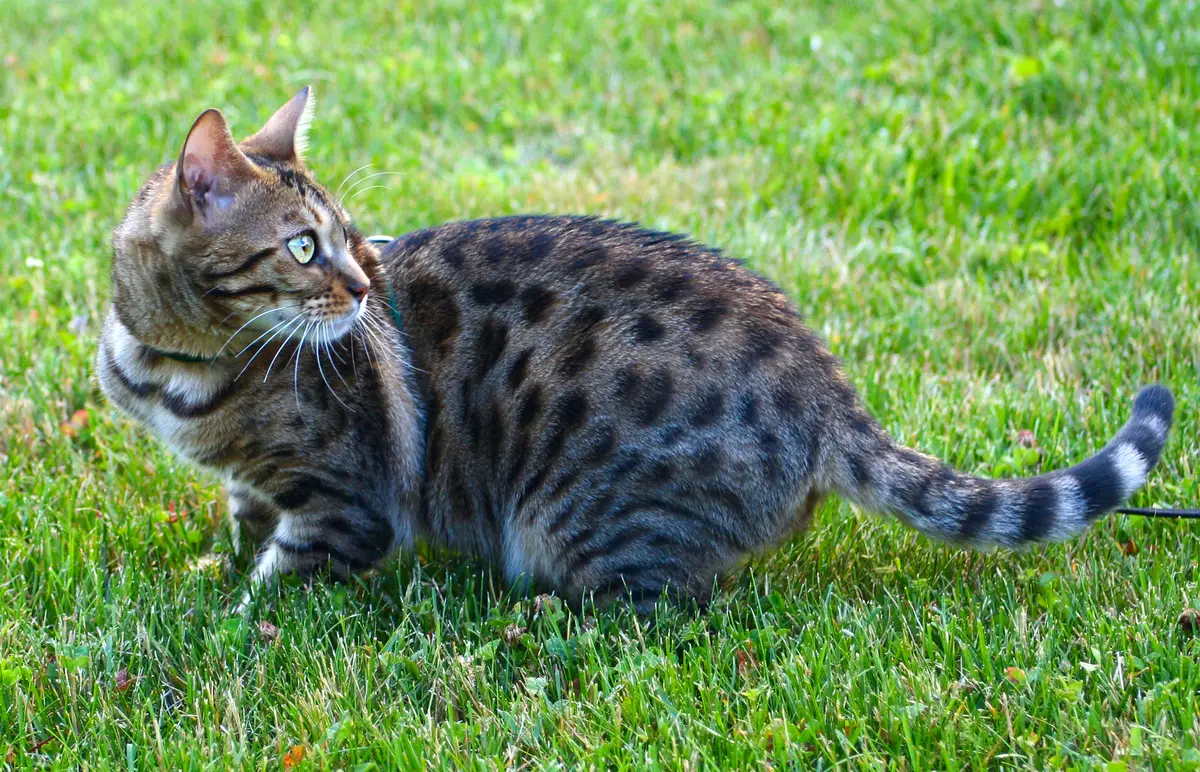
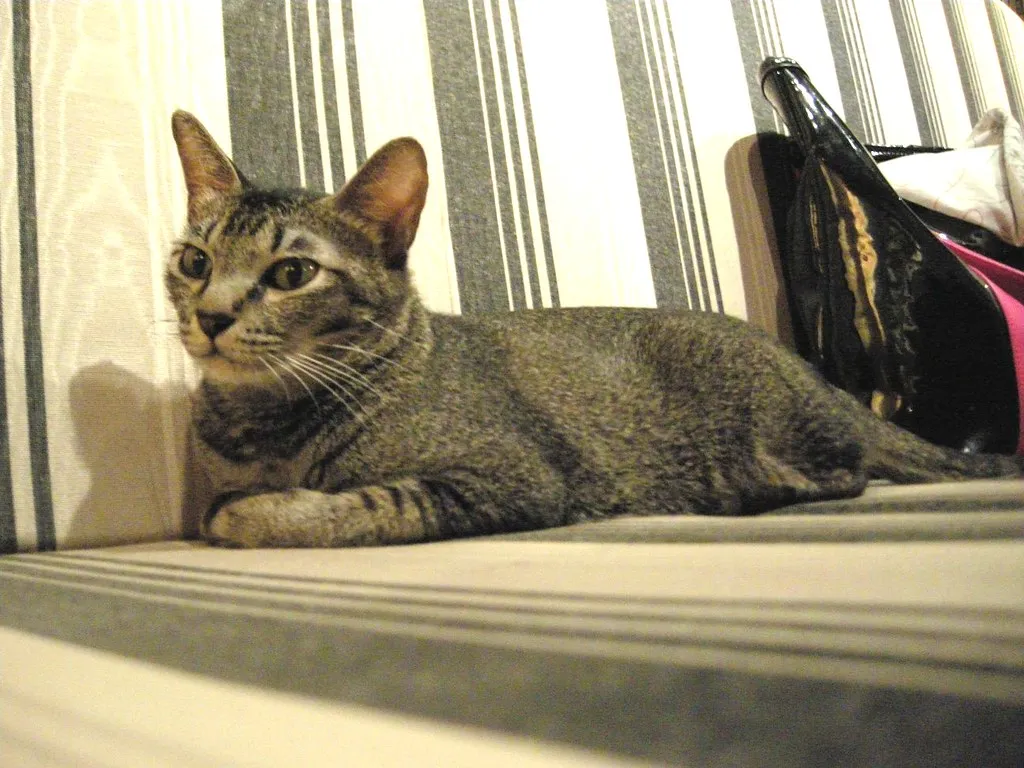
Bengal vs ordinary tabby. A tabby is a pattern, not a breed. A Bengal’s markings are rosettes (rings with a darker outline and lighter center) or bold marble, its coat often has a glittered sheen, and its body is long and heavily muscled. A classic tabby has stripes or swirls without rosettes.
Siamese vs Tonkinese vs Oriental. Same body family, three coats. A Siamese has sharp points and deep blue eyes. A Tonkinese softens the contrast, and mink comes with aqua eyes. An Oriental wears the same wedge head and huge ears in almost any other color or pattern.
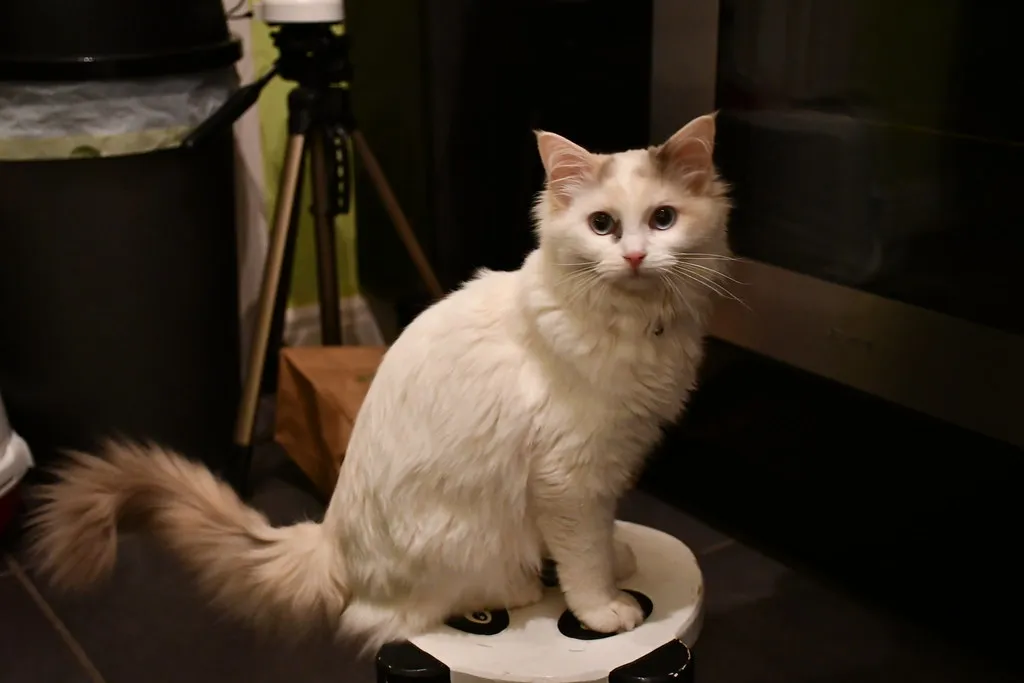
Ragdoll vs Birman. Both are pointed and blue-eyed. Check the feet: a Birman has four neat white gloves. A bicolor Ragdoll instead has an inverted white V on the face, and Ragdolls grow much larger, up to 20 pounds.
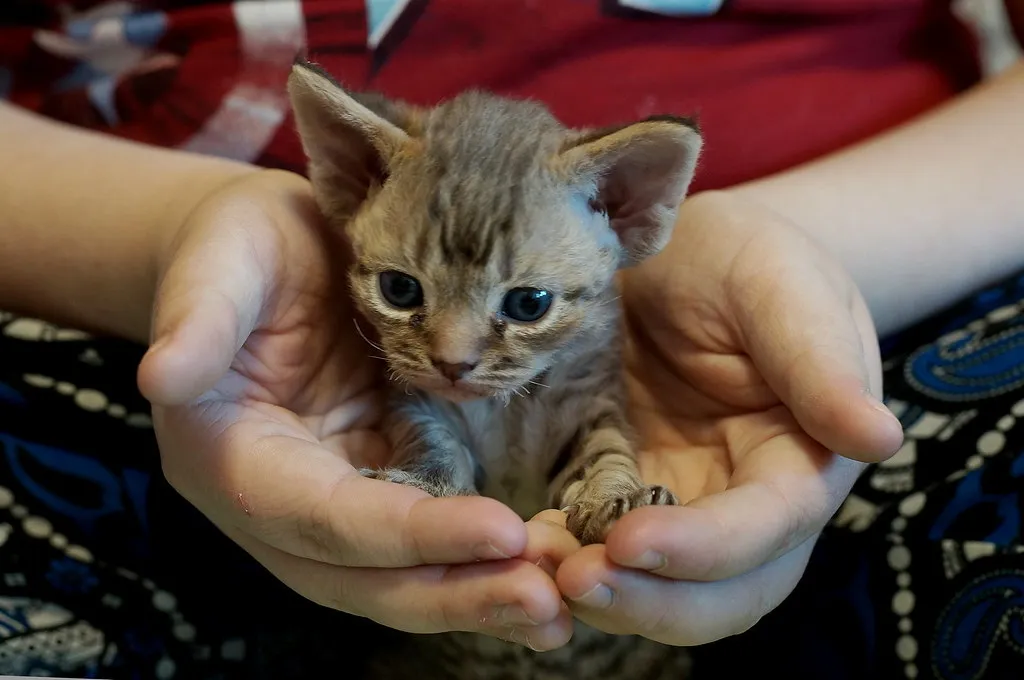
Devon Rex vs Cornish Rex. Both are wavy and light. The Devon has huge, low-set ears, a short wedge face, and loose waves. The Cornish has higher-set ears, a longer egg-shaped head, and tight, uniform waves.
Patterns Are Not Breeds: Tabby, Calico, and Tortoiseshell
Three words cause more wrong identifications than any others. Tabby describes a striped, swirled, spotted, or ticked pattern found in dozens of breeds and in mixed cats. Calico (white with orange and black patches) and tortoiseshell (orange and black mottled together) are color patterns, almost always on females, and neither is a breed. If your cat is a calico, the breed question is still open; start with coat length and build. Temperament can support a match too, and our cat behavior chart covers body language across common types.
What About Identifier Apps and DNA Tests?
Photo apps such as Cat Scanner are a decent first pass. They flag obvious traits (folded ears, rosettes, a flat face) well and separate lookalikes poorly, because a photo hides weight and coat texture. Treat an app result as a suggestion, not an answer.
A feline DNA test is the most reliable route for a mixed cat. It compares your cat’s DNA against breed reference panels and reports breed percentages and health markers. Its limits: panels only cover breeds in their database, distant ancestry is estimated, and no test can turn a domestic shorthair into a pedigree cat. Pairing a likely mix with the ranges in our cat lifespan chart gives a realistic picture of the years ahead.
Why Bother Identifying the Breed?
Breed is not about status. It is about care. Longhaired matches need regular combing to stop mats. Flat-faced cats need their eyes wiped and breathing watched in heat. High-energy matches such as Bengals and Abyssinians need daily play and climbing space. Some breeds carry known inherited risks, and a likely mix tells your vet what to screen for.
Frequently Asked Questions
Can I identify my cat’s breed from a photo alone?
Partly. A clear photo shows coat, pattern, ears, and face shape, enough to build a shortlist. It cannot show weight or coat texture, so weigh your cat and check the coat by hand before settling on a match.
Is a tabby cat a breed?
No. Tabby is a coat pattern, not a breed. It appears in many pedigree breeds and in most mixed cats. Breed depends on build, coat, ears, tail, and head shape.
How accurate is a cat breed identifier chart?
It is accurate for narrowing down, not for proving pedigree. Distinctive breeds such as the Sphynx, Scottish Fold, and Manx can be matched with confidence. Common-looking cats can only be matched to the closest type, and most are domestic shorthairs with no breed.
What is the most common result for a shelter cat?
A domestic shorthair. Most shelter cats are mixed cats with no pedigree breed, often with a tabby pattern. That describes coat length, not a lesser status.
Are cat DNA tests worth it?
Yes, if you want breed percentages for a mixed cat or screening for known genetic markers. Not if you expect a pedigree certificate, because a DNA result cannot provide one.

Conclusion
Start with the coat, then pattern, size, ears, tail, and eyes, and this cat breed identifier chart will take you from a mystery cat to a short, sensible shortlist. Separate the lookalikes by eye color, head shape, and feet, remember that tabby and calico are patterns rather than breeds, and accept the most common answer with good humor: a domestic shorthair who looks a lot like something fancier.