

A wasp nest identification chart is the fastest way to work out what is buzzing around your home before you get too close. A nest that looks quiet from ten feet away can hold thousands of defenders, so learning to read its shape, material, and location is a skill worth having. This guide covers 20 common wasp nests.
How to Identify a Wasp Nest in 4 Steps
Do not walk up to a nest. Stand 10 to 15 feet away and watch for a minute.
1. Look at the shape. Open umbrella combs are paper wasps. Big enclosed gray balls are yellowjackets or hornets. Mud tubes are mud daubers, and a hole with steady traffic is almost always a yellowjacket nest.
2. Check the material. Paper nests feel like gray cardboard. Mud nests are hard, rough, and earth colored. Ground nests may show only a small hole with loose soil.
3. Note the location. Eaves point to paper wasps or hornets. Wall voids and attics point to hornets and German yellowjackets. Lawns point to ground nesters.
4. Watch the traffic. Social nests have wasps coming and going all day. Solitary nests have one visitor now and then. Heavy traffic plus a large nest means a big colony, so keep your distance.
Wasp Nest Identification Chart: 20 Common Nests
Find the shape and location that matches what you see.
| Nest and Species | Nest Shape | Material | Typical Location | Size |
|---|---|---|---|---|
| Common yellowjacket (Vespula vulgaris) | Enclosed oval ball | Gray paper pulp | Underground burrows, wall voids | 12-24 in |
| German yellowjacket (Vespula germanica) | Enclosed layered ball | Gray paper pulp | Wall voids, attics, sheds | 12-24 in |
| Eastern yellowjacket (Vespula maculifrons) | Enclosed underground ball | Paper pulp | Underground burrows | 10-20 in |
| Western yellowjacket (Vespula pensylvanica) | Enclosed underground ball | Paper pulp | Lawns, gardens | 10-20 in |
| Southern yellowjacket (Vespula squamosa) | Enclosed layered ball | Paper pulp | Ground, trees, bushes | 12-24 in |
| Aerial yellowjacket (Dolichovespula arenaria) | Enclosed gray ball | Gray paper pulp | Trees, shrubs, under eaves | 6-12 in |
| Bald-faced hornet (Dolichovespula maculata) | Large football shape | Gray marbled paper | Trees, high eaves | 14-24 in |
| European hornet (Vespa crabro) | Bulky enclosed mass | Brownish paper pulp | Attics, barns, hollow trees | 12-24 in |
| Asian giant hornet (Vespa mandarinia) | Large enclosed nest | Paper pulp | Ground burrows or tree cavities | Up to 36 in |
| Median wasp (Dolichovespula media) | Enclosed oval ball | Gray paper pulp | Bushes, trees, eaves | 8-16 in |
| European paper wasp (Polistes dominula) | Open umbrella comb | Gray paper, open cells | Under eaves, porches, fences | 3-8 in |
| Northern paper wasp (Polistes fuscatus) | Open umbrella comb | Gray paper, open cells | Eaves, windows, sheds | 3-8 in |
| Red paper wasp (Polistes carolina) | Open umbrella comb | Reddish brown paper | Eaves, hollow trees | 4-8 in |
| Common paper wasp (Polistes exclamans) | Open umbrella comb | Gray paper, open cells | Eaves, branches | 3-8 in |
| Black and yellow mud dauber (Sceliphron caementarium) | Cluster of mud tubes | Dried mud | Sheds, garages, porches | 2-4 in |
| Blue mud dauber (Chalybion californicum) | Reused mud tubes | Mud, often borrowed nests | Garages, cracks, walls | 2-4 in |
| Organ pipe mud dauber (Trypoxylon politum) | Rows of parallel mud pipes | Dried mud | Bridges, eaves, porches | 4-8 in a set |
| Potter wasp (Eumenes fraternus) | Tiny clay pot or vase | Smooth mud | Leaves, twigs, walls | 0.5 in |
| Cicada killer (Sphecius speciosus) | Ground burrow with soil mound | Loose soil | Lawns, garden beds | 2-4 in mound |
| Great golden digger wasp (Sphex ichneumoneus) | Ground burrow with soil mound | Loose soil | Lawns, bare soil | 1-3 in mound |
Paper Wasp Nests: Open Umbrella Combs
Paper wasp nests are the easiest to recognize. They hang from a single short stalk like an upside down umbrella, with open hexagonal cells underneath, so you can often see the wasps and pale larvae inside. Colonies are small, usually 20 to 200 wasps.
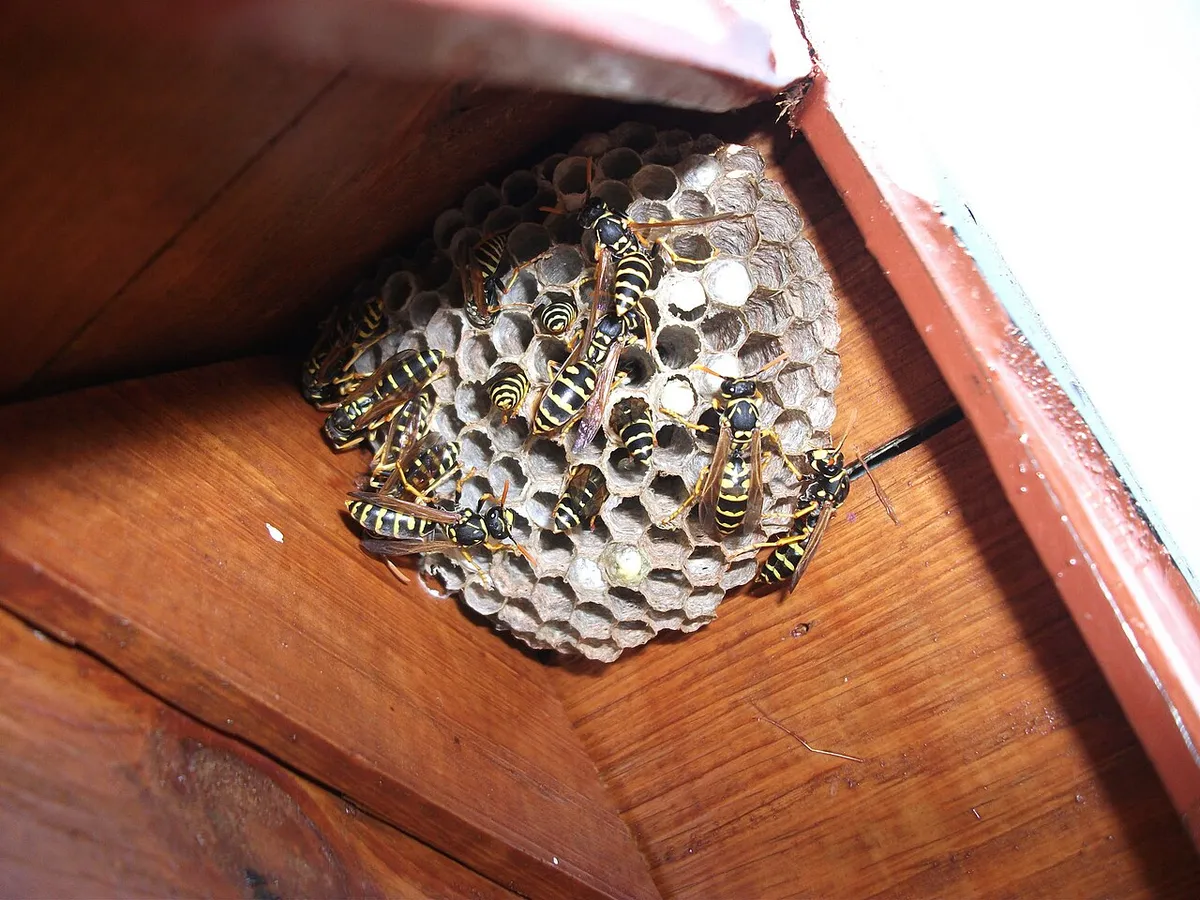
European paper wasps build gray combs under eaves, porch roofs, and fence rails. Red paper wasps favor hollow trees and attics in the south. Paper wasps are calmer than yellowjackets, but they sting if you bump the nest, and a nest the size of a coin in spring can reach the size of a dinner plate by late summer.
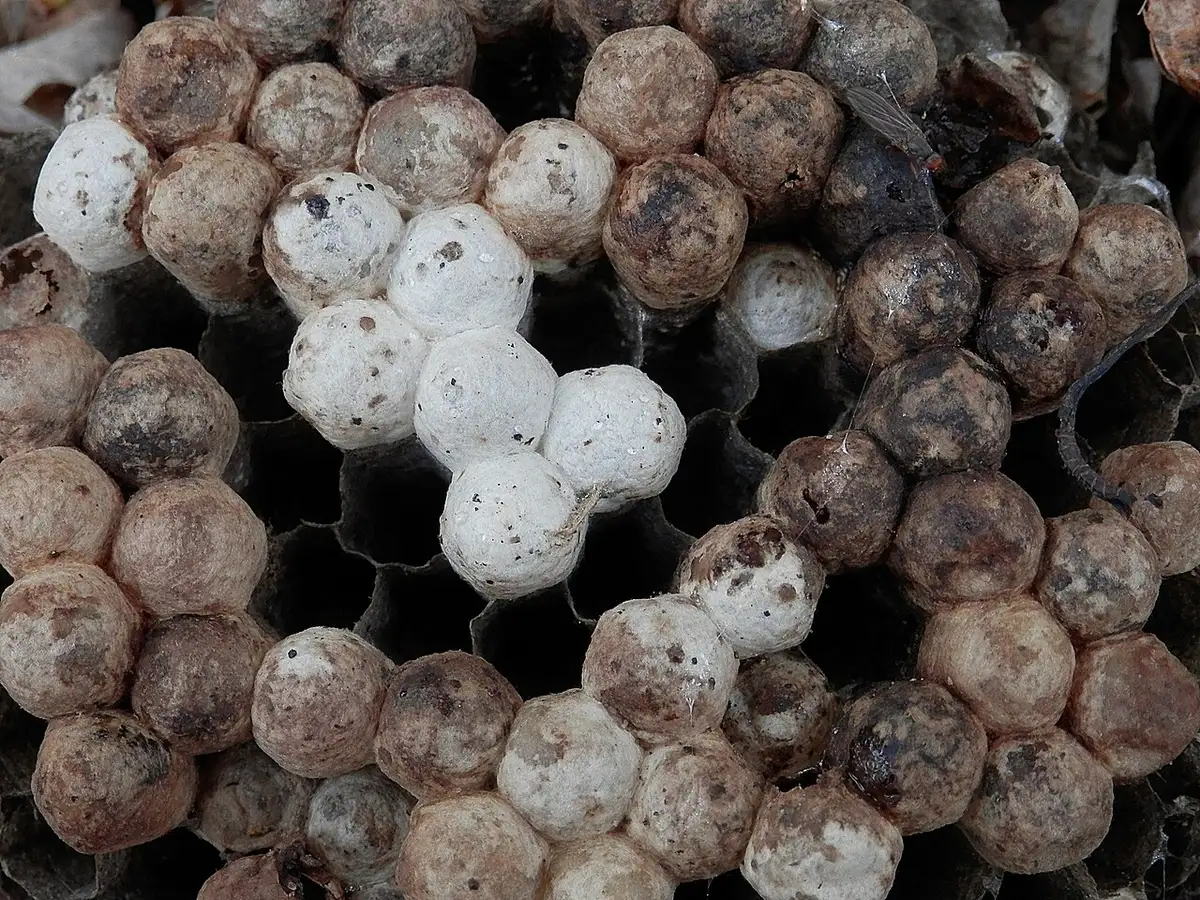
Yellowjacket Nests: Hidden, Enclosed, and Aggressive
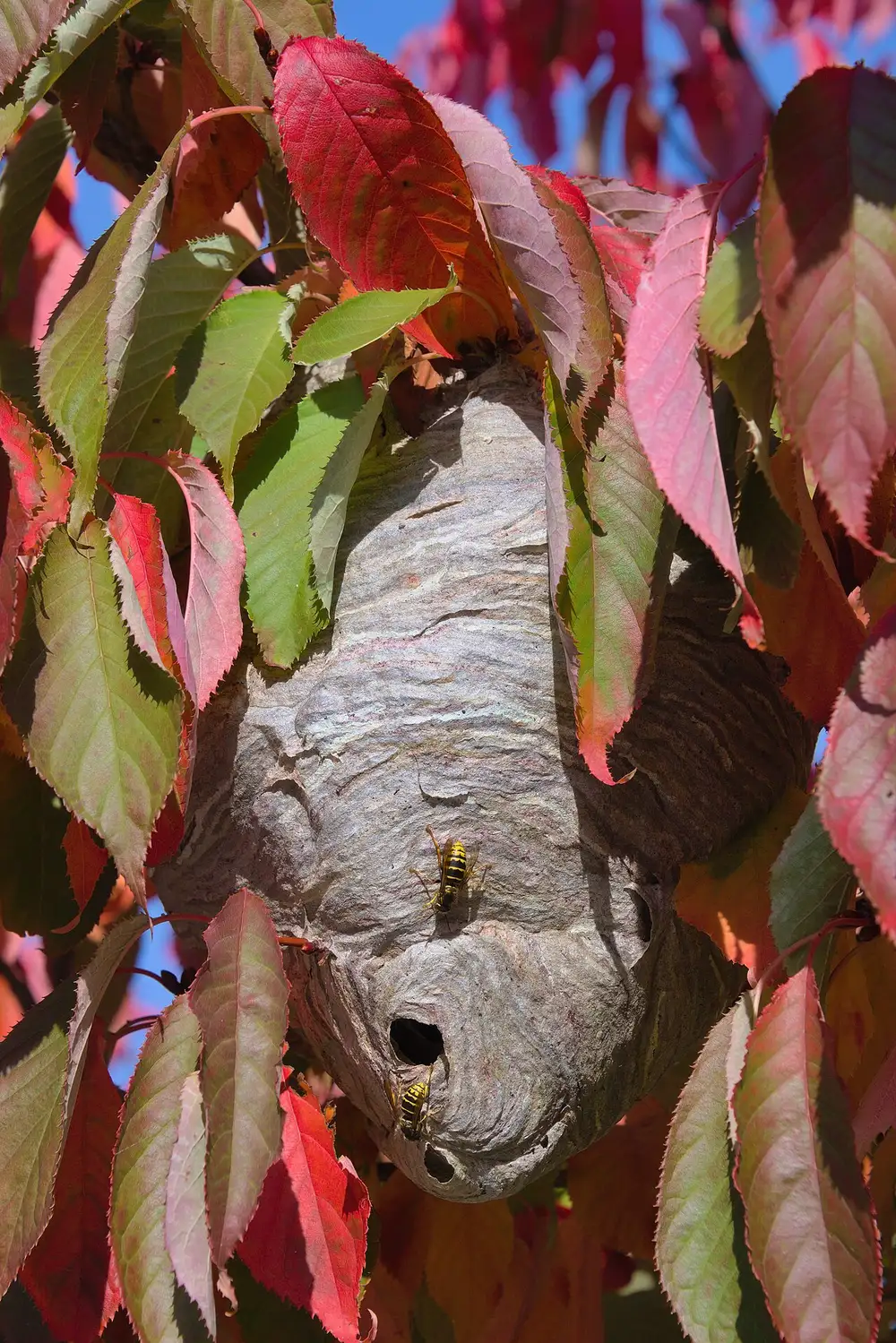
Yellowjacket nests cause the most trouble because they are often hidden. The nest is a big enclosed ball of gray paper with one small entrance hole near the bottom. Colonies can hold 1,000 to 5,000 wasps.
Most nests sit underground in old rodent burrows, which is why people step on them while mowing. All you see is a hole in the grass with wasps streaming in and out. German yellowjackets prefer wall voids and attics, while aerial yellowjackets build gray balls in trees, often at eye level. See our types of yellow jackets guide and our wasp identification chart.
Yellowjackets are scavengers. They visit picnics and trash cans, and get bolder as summer ends. They sting more than once and defend the nest in large numbers. If you find a ground nest, mark it from a distance and call a professional. Never seal the entrance: trapped wasps will chew a new exit, often into your home.
Hornet Nests: Big Football Shaped Paper Balls
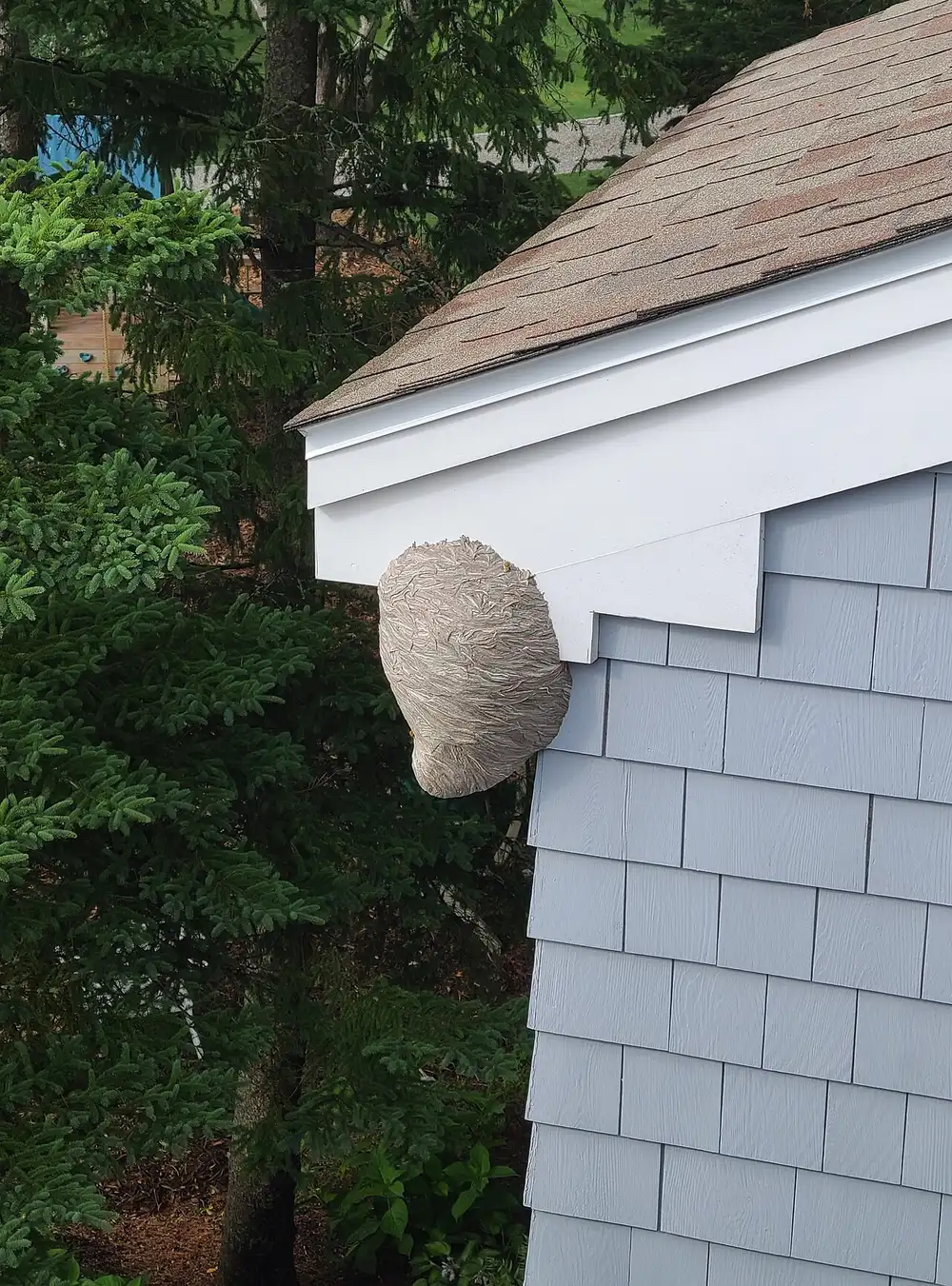
Hornet nests look like yellowjacket nests turned up to full size. The bald-faced hornet builds a smooth, football shaped nest with a marbled gray pattern, high in a tree or under a tall eave. It can reach 24 inches long and hold 400 to 1,000 hornets.
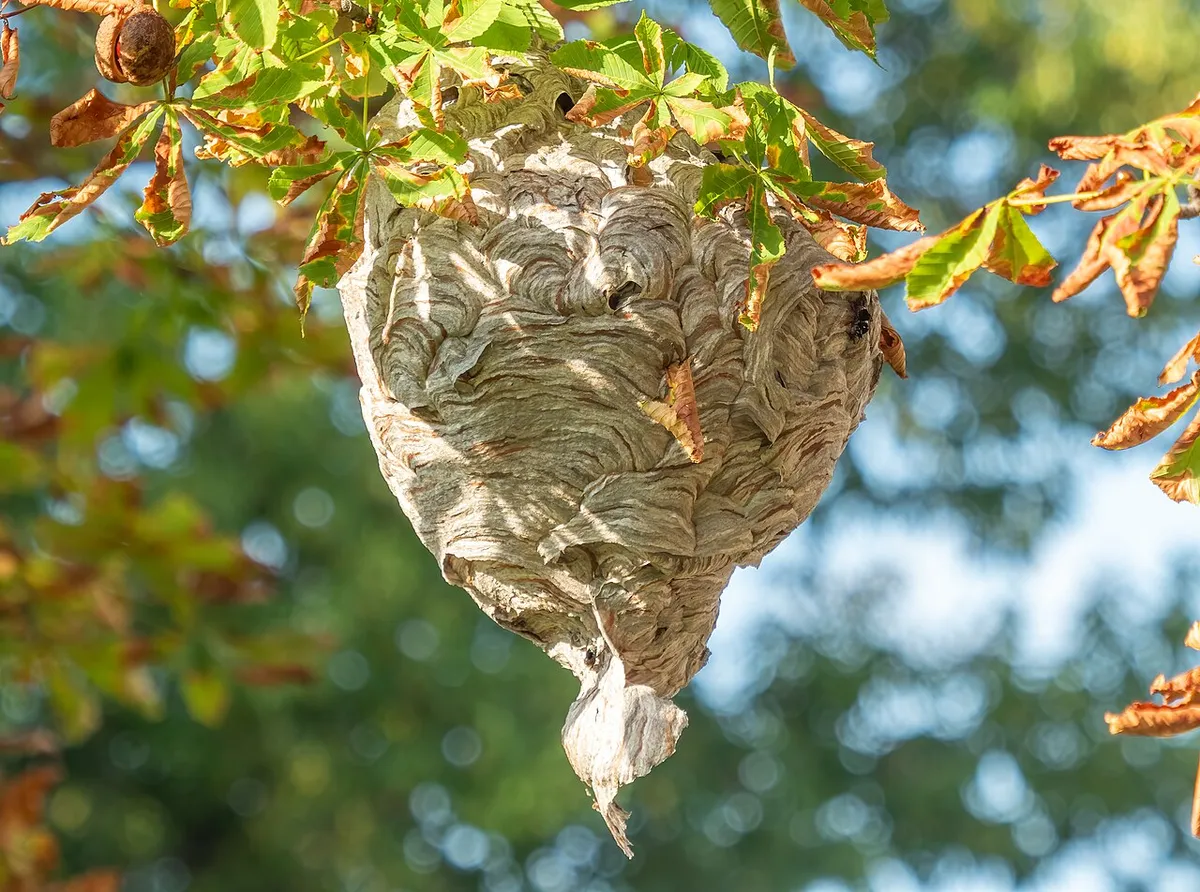
European hornets build bulkier nests from brownish paper, usually inside attics, barns, and hollow trees. They are often partly hidden, so you may notice only wasps flying in and out of a gap in the siding.
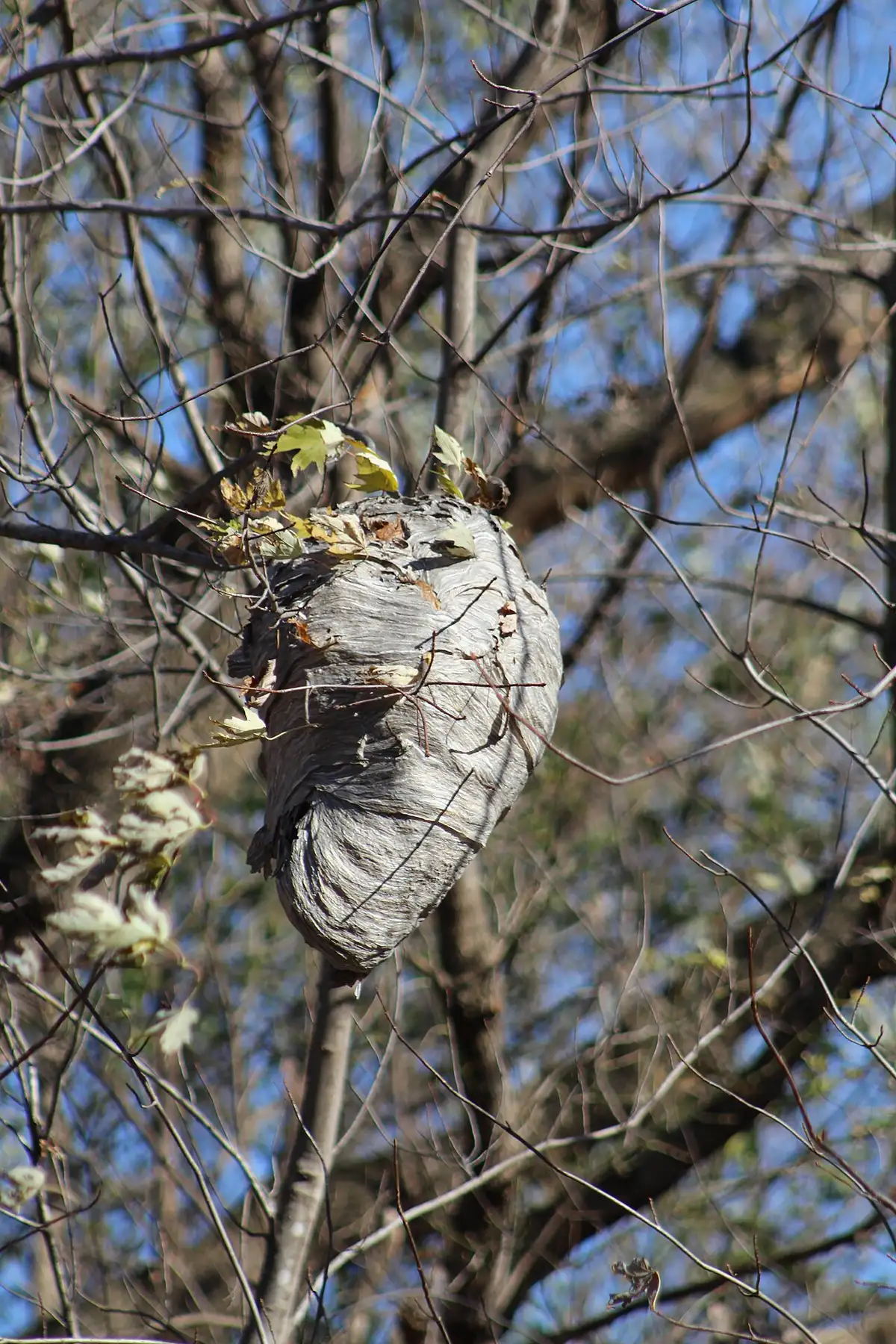
The Asian giant hornet builds nests up to 36 inches across in the ground or in tree cavities. It is rare in North America, so report sightings to agriculture officials. The median wasp builds smaller gray balls in bushes and under eaves.
Mud Nests: Mud Daubers and Potter Wasps
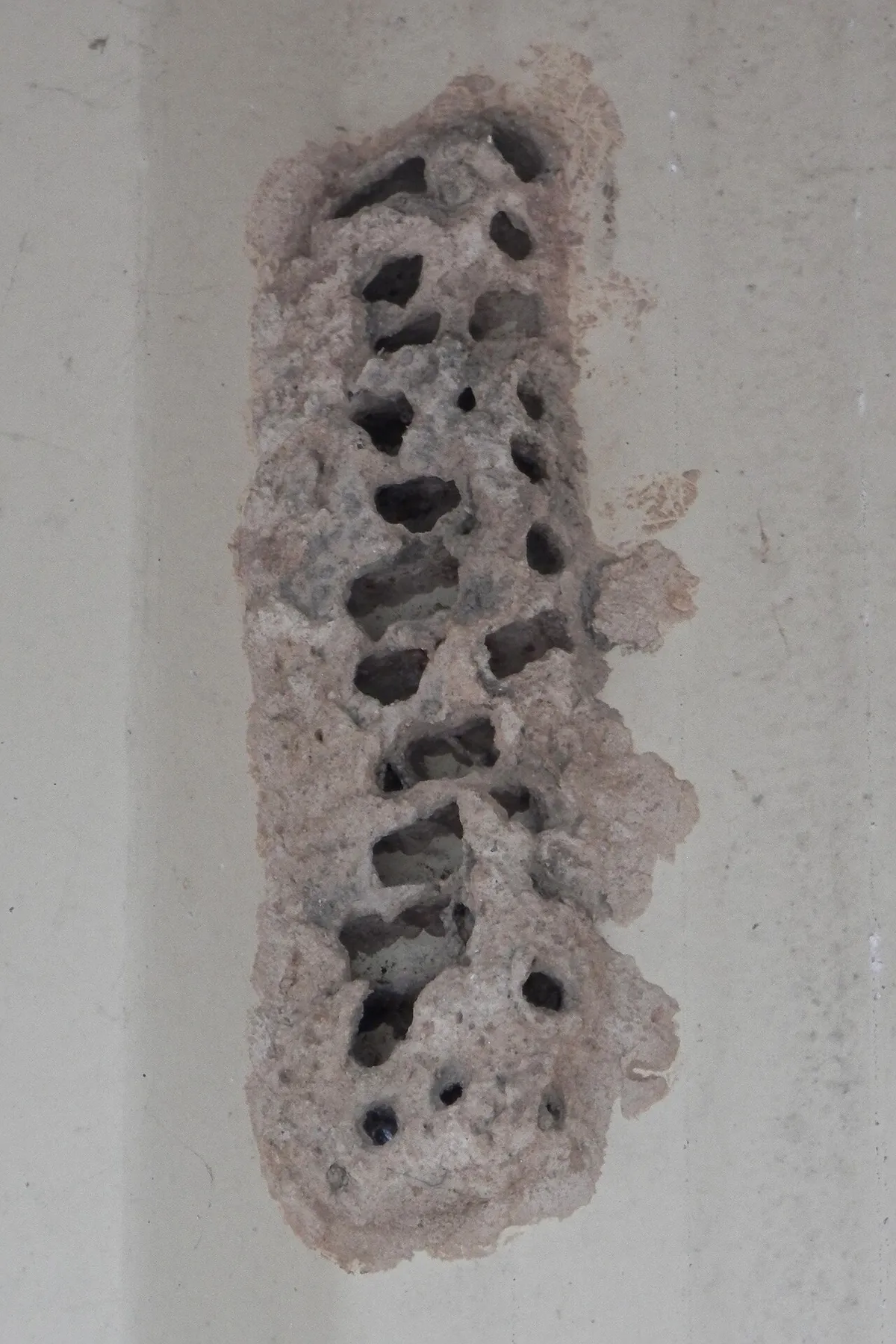
Mud nests look nothing like paper nests, which is why people mistake them for dirt. Mud daubers carry wet mud home pellet by pellet and shape it into tubes or neat rows of pipes on sheltered walls. Each tube holds one egg plus a few paralyzed spiders.
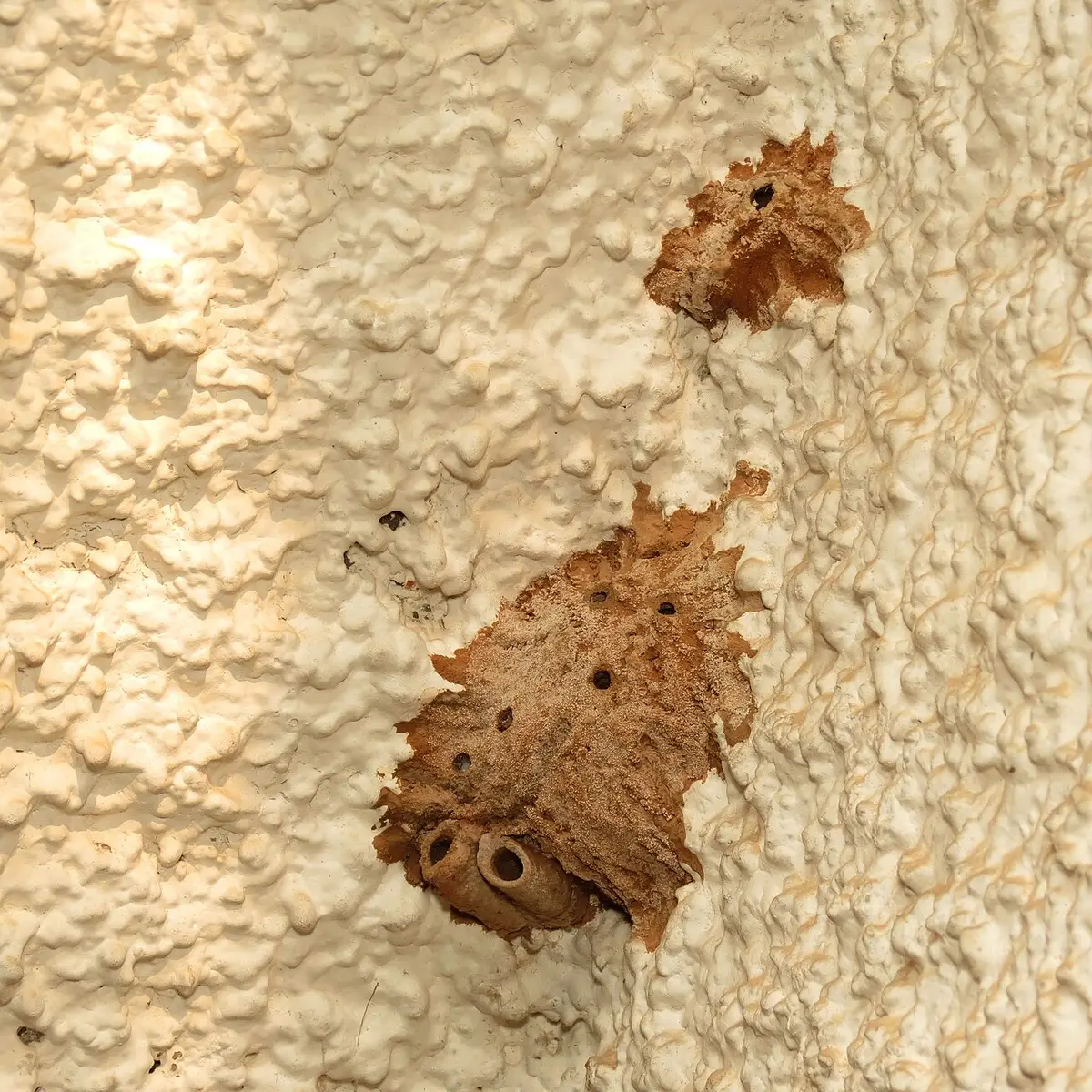
Black and yellow mud daubers build short tubes in sheds and garages. Blue mud daubers often reuse abandoned nests. Organ pipe mud daubers build rows of tubes like tiny panpipes. All three are solitary, and the females almost never sting.
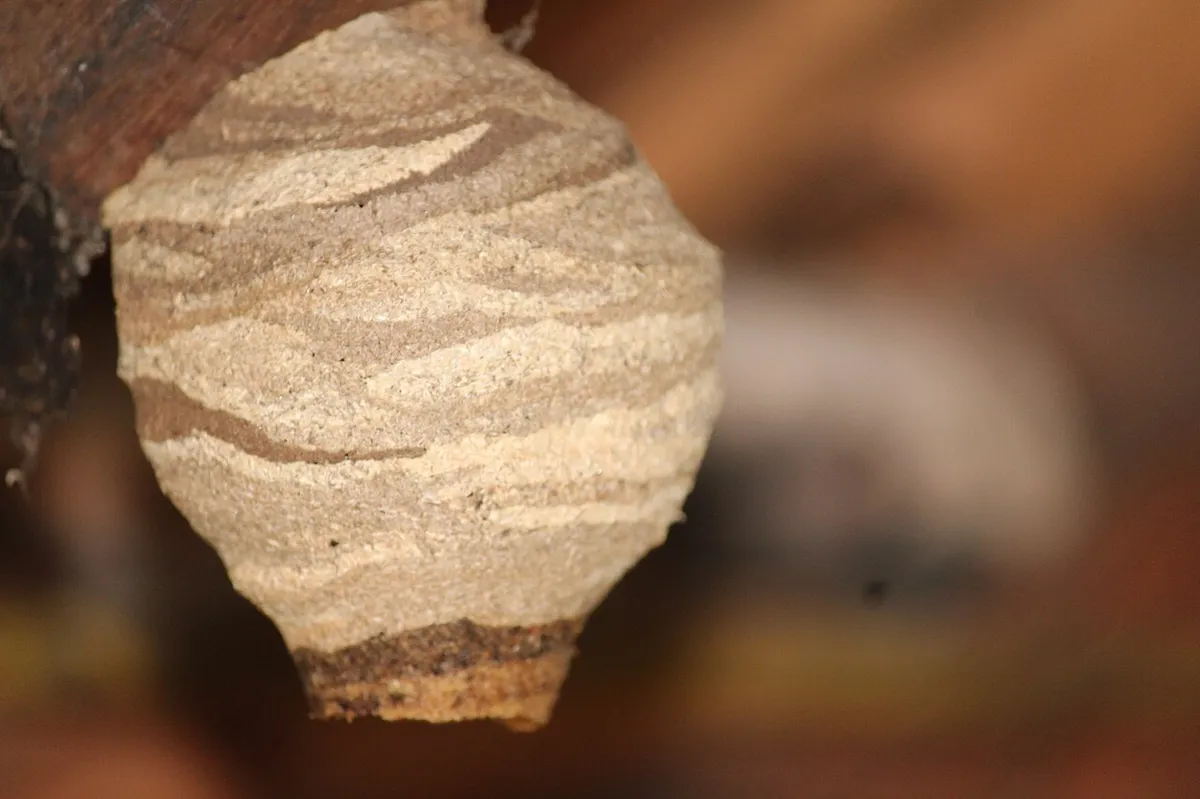
Potter wasps make the smallest nests here: smooth clay pots about half an inch across, stuck to leaves and walls. Each holds one egg and a few paralyzed caterpillars. They are harmless and a sign of a healthy garden.
Ground Nests and Solitary Hunters
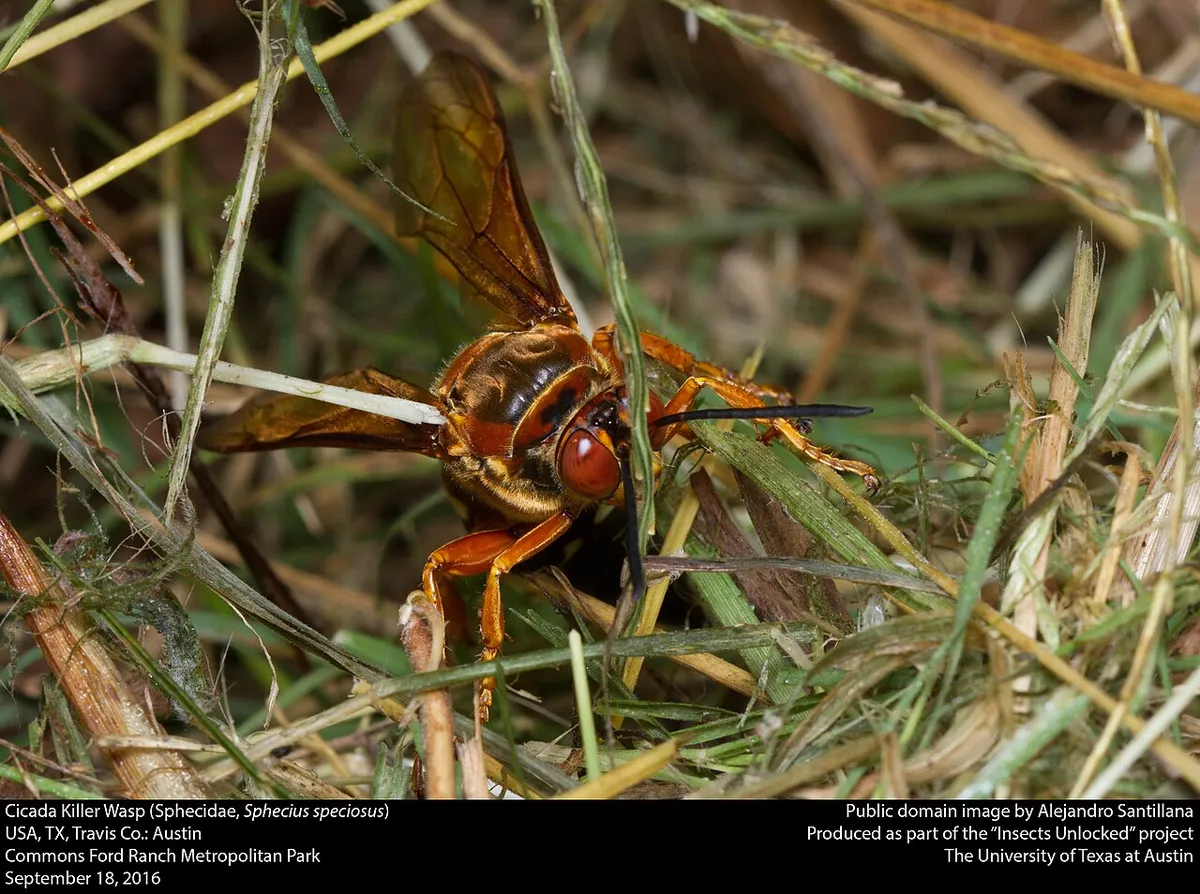
Not every ground nest belongs to a yellowjacket colony. Cicada killers dig burrows in lawns, leaving a mound of loose soil. The wasps are huge, up to two inches long, but they are solitary hunters that rarely sting. A female catches a cicada, drags it underground, and lays an egg on it.
Great golden digger wasps dig similar burrows and hunt crickets and katydids. Most lawns only need the mounds raked flat.
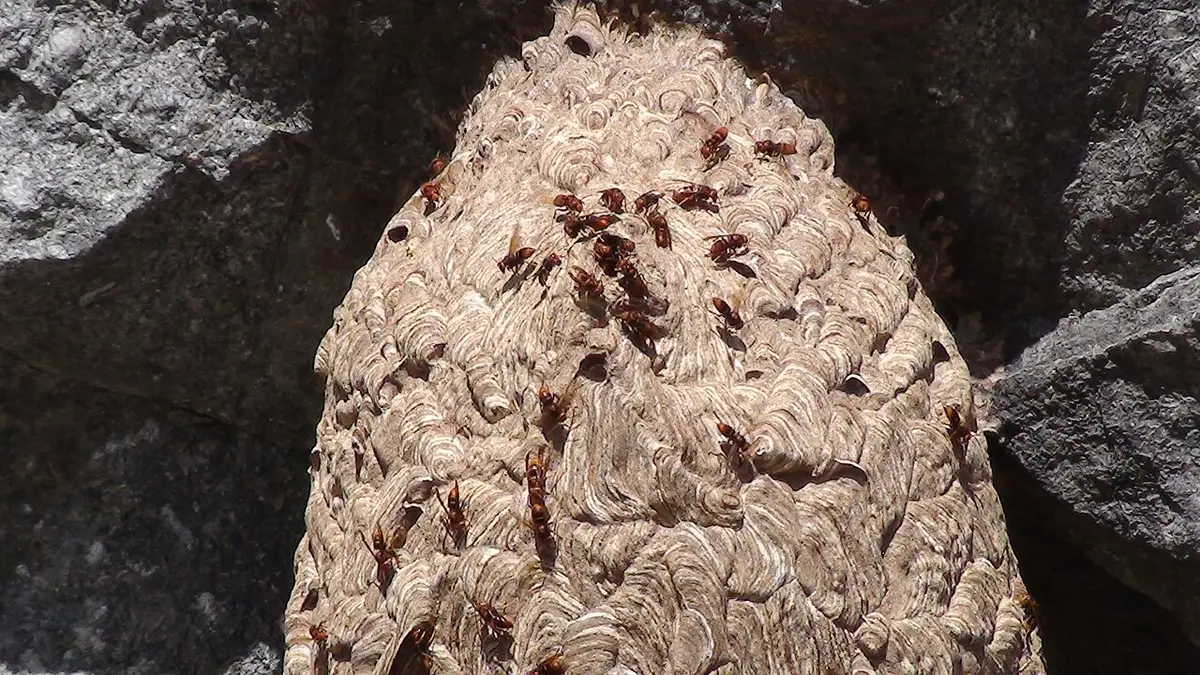
To tell a solitary burrow from a yellowjacket colony, count the traffic. A solitary burrow has one wasp every few minutes, while a colony nest has a constant stream, dozens per minute at midday. Heavy traffic means a colony, so keep your distance.
Wasp Nest vs Bee Nest: How to Tell Them Apart
People often call every stinging insect a bee, but the nests give them away. Honey bees build wax combs in hives or hollow trees, and bumble bees nest in old mouse burrows. Neither builds a gray paper ball or a mud tube.
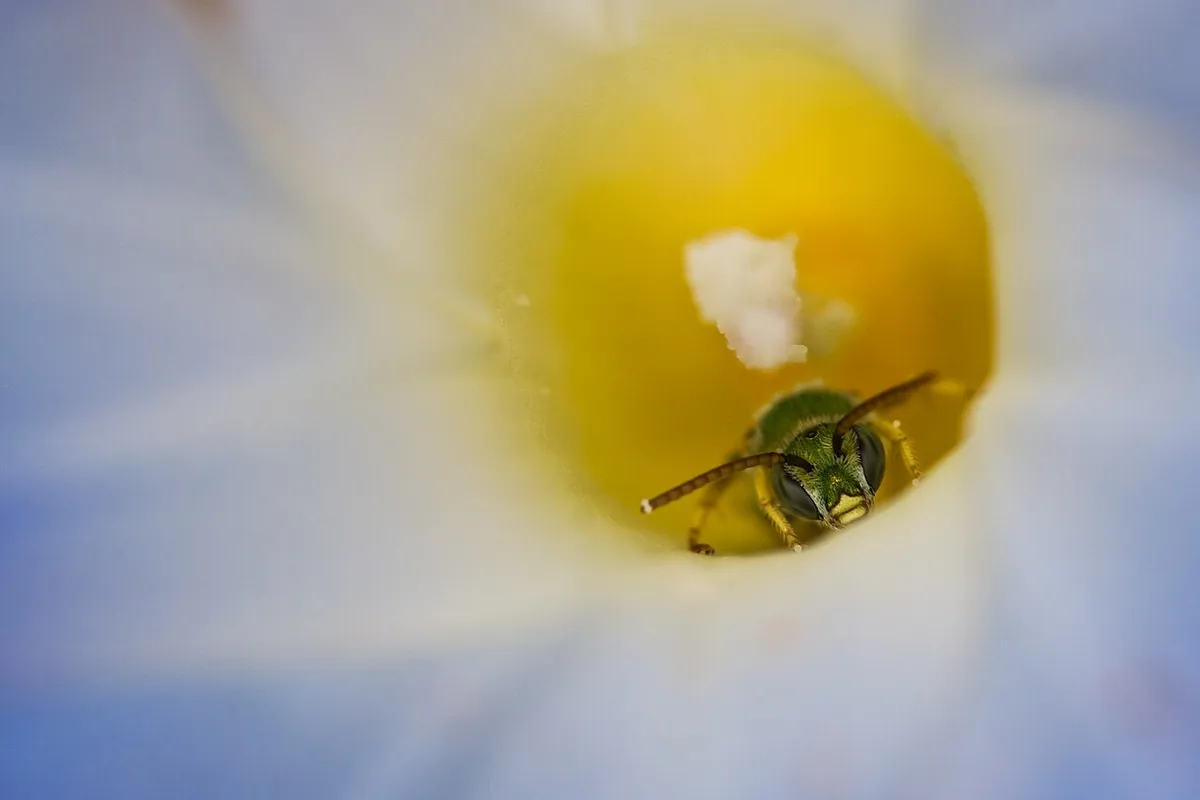
Wasps have smooth, shiny bodies with a narrow waist and bright yellow and black markings. Bees are hairy, rounder, and carry pollen. Our types of honey bees guide shows bee colonies side by side with wasps.
Is the Nest Active or Abandoned?
A nest with wasps flying in and out on a warm afternoon is active. One with no traffic for several days may be abandoned, but check twice before you touch it. Watch from a safe distance for ten minutes, morning and evening.
Last year’s paper nests are always empty. Colonies die in winter, and only mated queens survive in sheltered spots. Old nests are never reused, though a queen may build a new one in the same spot next spring. Mud tubes can sit empty for years.
What to Do When You Find a Wasp Nest
First, decide whether the nest is a real problem. A paper wasp nest under a high eave that nobody walks past can be left alone until winter. Wasps eat caterpillars, flies, and aphids, so a quiet nest does more good than harm.
If the nest is near a door, play area, or walkway, call a pest control professional. This matters most for ground, wall, and hornet nests, where home removal can end with dozens of stings. Anyone allergic to stings should never attempt a removal.
For small, early season paper wasp nests, some homeowners remove them at night, wearing long sleeves, gloves, and eye protection, and using a wasp spray. Do this only with a nest the size of a golf ball or smaller, with a clear escape route, and never alone. To keep nests away next year, seal gaps in siding, repair torn screens, cover trash cans, and check eaves in early spring.
Frequently Asked Questions
How can I tell if a wasp nest is active?
Watch for wasps flying in and out on a warm day. An active nest has steady traffic.
Do wasps reuse old nests?
No. Colonies die in winter and only queens survive. A queen may build in the same spot, but never in the old nest.
What does a wasp nest look like at the start?
Tiny. A queen starts with a small stalk and a few open cells, about the size of a walnut.
Can I remove a small wasp nest myself?
A small early spring nest can sometimes be removed at night with protective clothing and spray. Large, ground, and hornet nests need professionals.
How long does a wasp nest last?
One season. Colonies peak in late summer and die in autumn. The empty nest may stay on the wall, but it is never used again.
What should I do if I disturb a wasp nest?
Walk away quickly and calmly, covering your face, and get indoors or at least 50 feet away.
Conclusion
A wasp nest identification chart turns a scary gray lump into useful information. Shape tells you the family, material tells you the builder, and traffic tells you how careful to be. Keep this chart saved and let professionals handle the big ones.

