

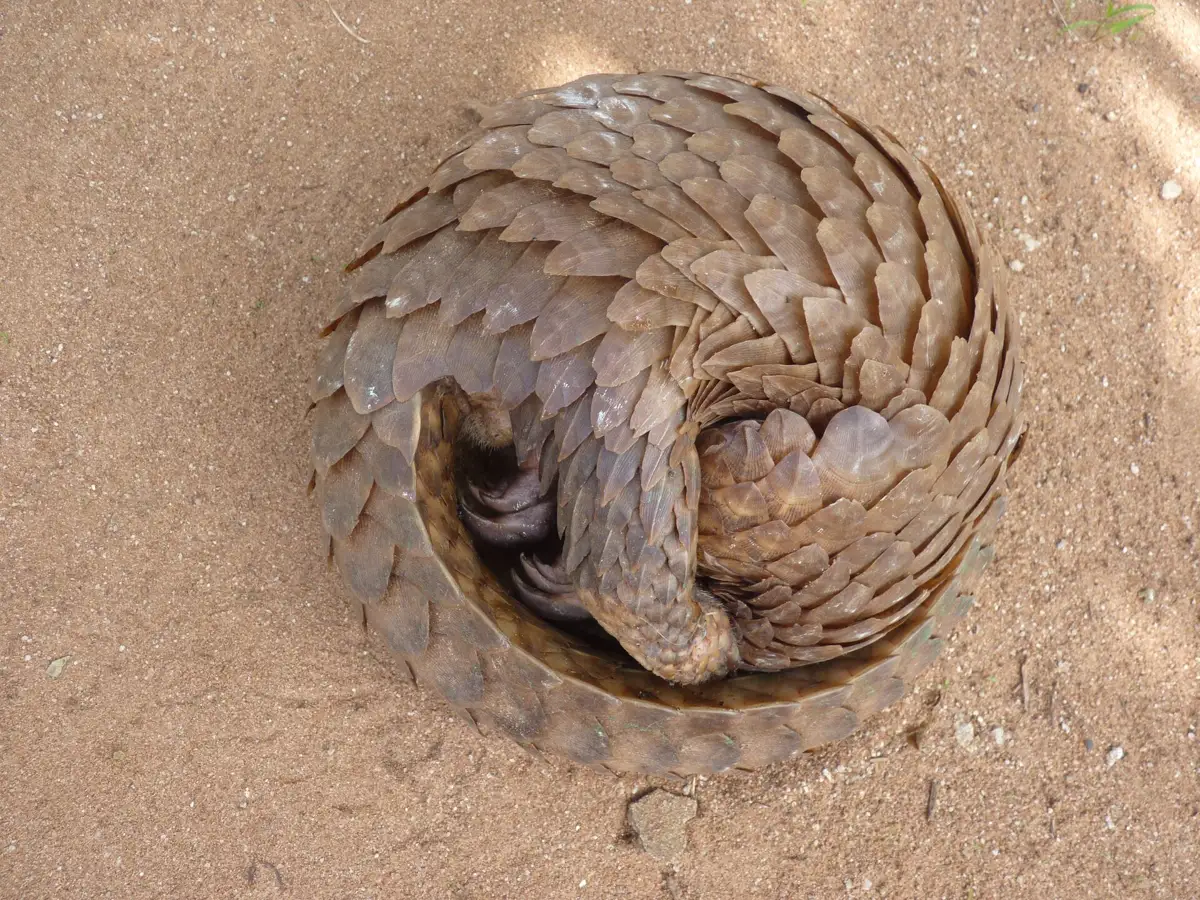
If you picture a pangolin, you probably picture one animal: a shy, scaly mammal curled into a tight ball. The surprise is that there is not just one kind. The types of pangolins found around the world add up to eight living species, split evenly between Africa and Asia, and each one has its own size, habitat, and way of life. Some climb trees with a tail that grips like a hand. Others dig deep burrows and walk long distances across open savanna at night. All of them eat ants and termites, and all of them are now threatened, which makes telling them apart more than a trivia exercise. It helps you understand why conservation work cannot treat them as a single animal.
This guide starts with a quick comparison chart, then profiles every species, explains the African and Asian differences, and answers the most common questions.
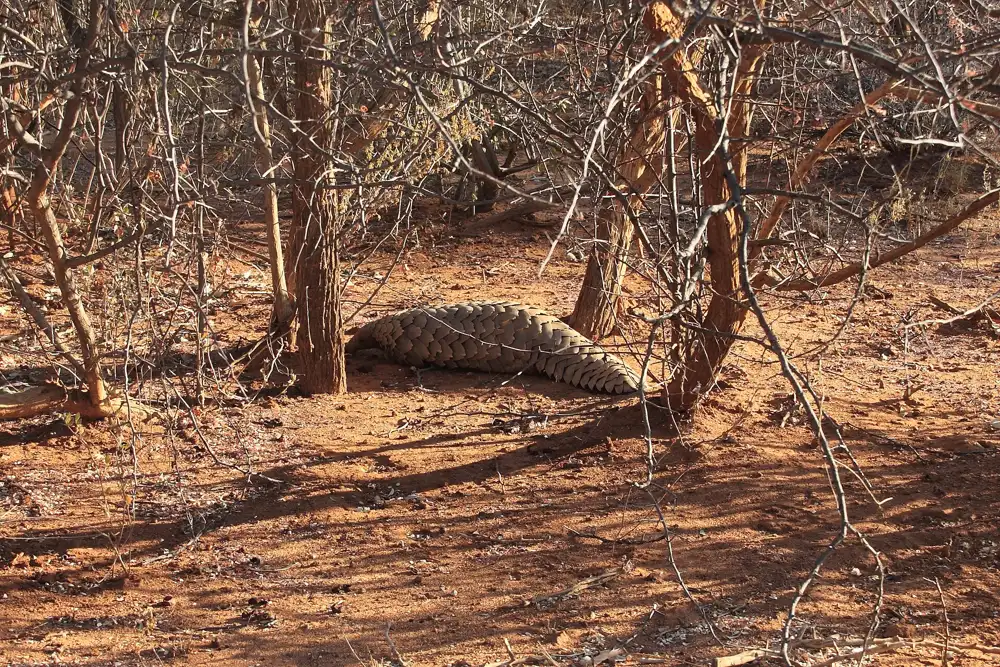
Types of Pangolins Chart: All 8 Species at a Glance
The table below compares all eight types of pangolins at a glance. Sizes are approximate, since weight varies with age, sex, and season. Conservation status comes from the IUCN Red List.
| Species | Where it lives | Lifestyle | Typical weight | IUCN status |
|---|---|---|---|---|
| Indian pangolin | India, Pakistan, Sri Lanka, Nepal | Mostly ground dwelling, good climber | About 10 to 16 kg | Endangered |
| Chinese pangolin | Southern China, northern India, Nepal, Myanmar, Laos, Vietnam, Taiwan | Ground dwelling, strong burrower | About 2 to 7 kg | Critically Endangered |
| Sunda pangolin | Southeast Asia, including Malaysia, Indonesia, Thailand, and Vietnam | Semi arboreal, climbs and forages on the ground | About 3 to 10 kg | Critically Endangered |
| Philippine pangolin | Palawan, Philippines only | Semi arboreal | About 2 to 7 kg | Critically Endangered |
| Giant ground pangolin | West and Central Africa | Ground dwelling | About 30 kg, sometimes more | Vulnerable |
| Temminck’s ground pangolin | Eastern and southern Africa | Ground dwelling | About 7 to 18 kg | Vulnerable |
| White-bellied pangolin | West and Central Africa | Tree dwelling | About 2 to 3 kg | Endangered |
| Black-bellied pangolin | West and Central Africa | Tree dwelling, long tailed | About 2 to 3 kg | Vulnerable |
One correction matters here. Temminck’s ground pangolin and the white-bellied pangolin are two different species, not one animal with two names. The first lives on the ground in eastern and southern Africa, the second in trees in West and Central Africa.
Asian Pangolins: The Four Species of Asia
Asia has four pangolin species, all in the genus Manis. They tend to have visible external ears and large, overlapping scales. They are nocturnal, solitary, and famously secretive, so even researchers rarely see them in the wild.
Indian Pangolin
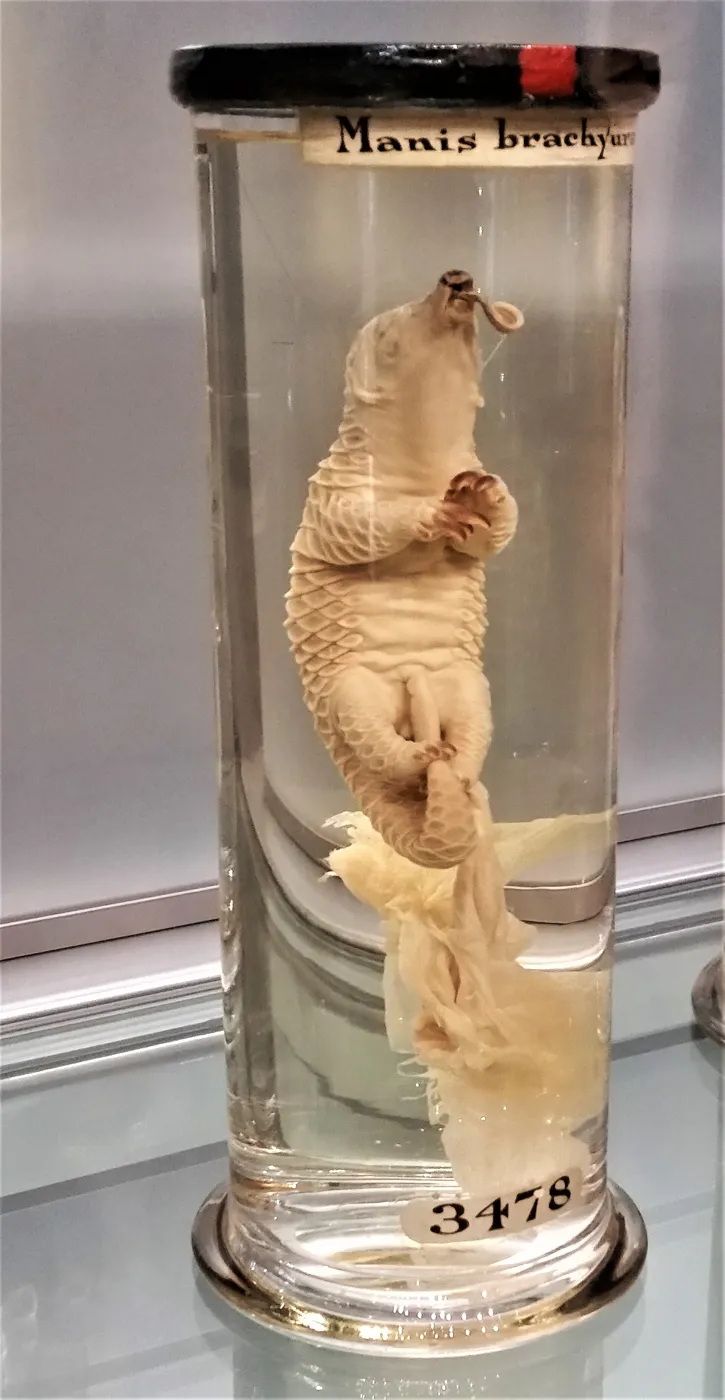
The Indian pangolin (Manis crassicaudata) is the largest Asian species and one of the easiest to place on a map. It lives across much of India and Sri Lanka, with populations in Pakistan and Nepal. It uses forests, grasslands, and farmland, and digs burrows several metres long. Its thick tail and heavy scales give it a robust look beside its smaller Asian relatives. It feeds at night on ants and termites, using a long, sticky tongue to reach insects inside mounds. Habitat loss and poaching have pushed it to Endangered status, even though its range looks large on paper.
Chinese Pangolin
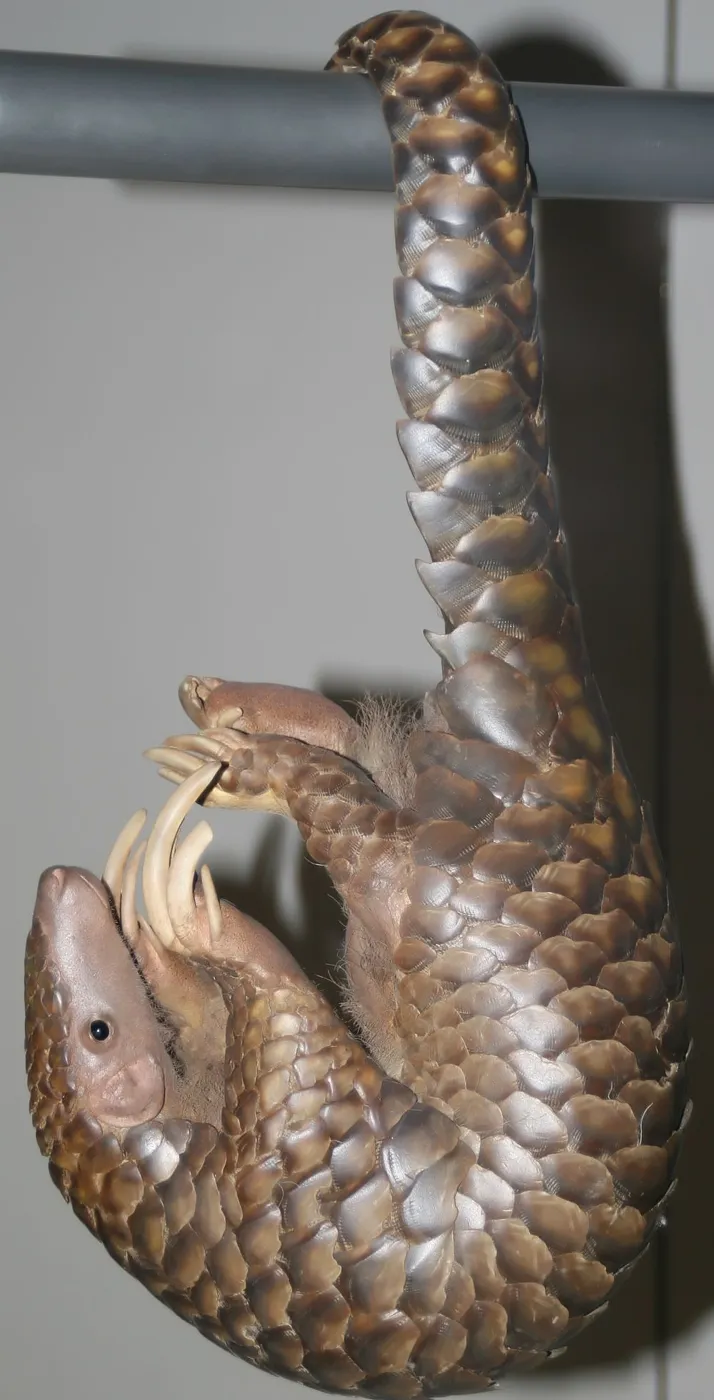
The Chinese pangolin (Manis pentadactyla) is smaller, slimmer, and more reclusive than the Indian species. It lives in forested hills and subtropical woodland in southern China and neighbouring countries, including northern India and Nepal. It is a powerful burrower that spends much of its life underground or hidden in dense cover, which is why sightings are rare. Its scales are narrower and more pointed than the Indian pangolin’s. It is Critically Endangered, mainly because of illegal hunting and trade.
Sunda Pangolin
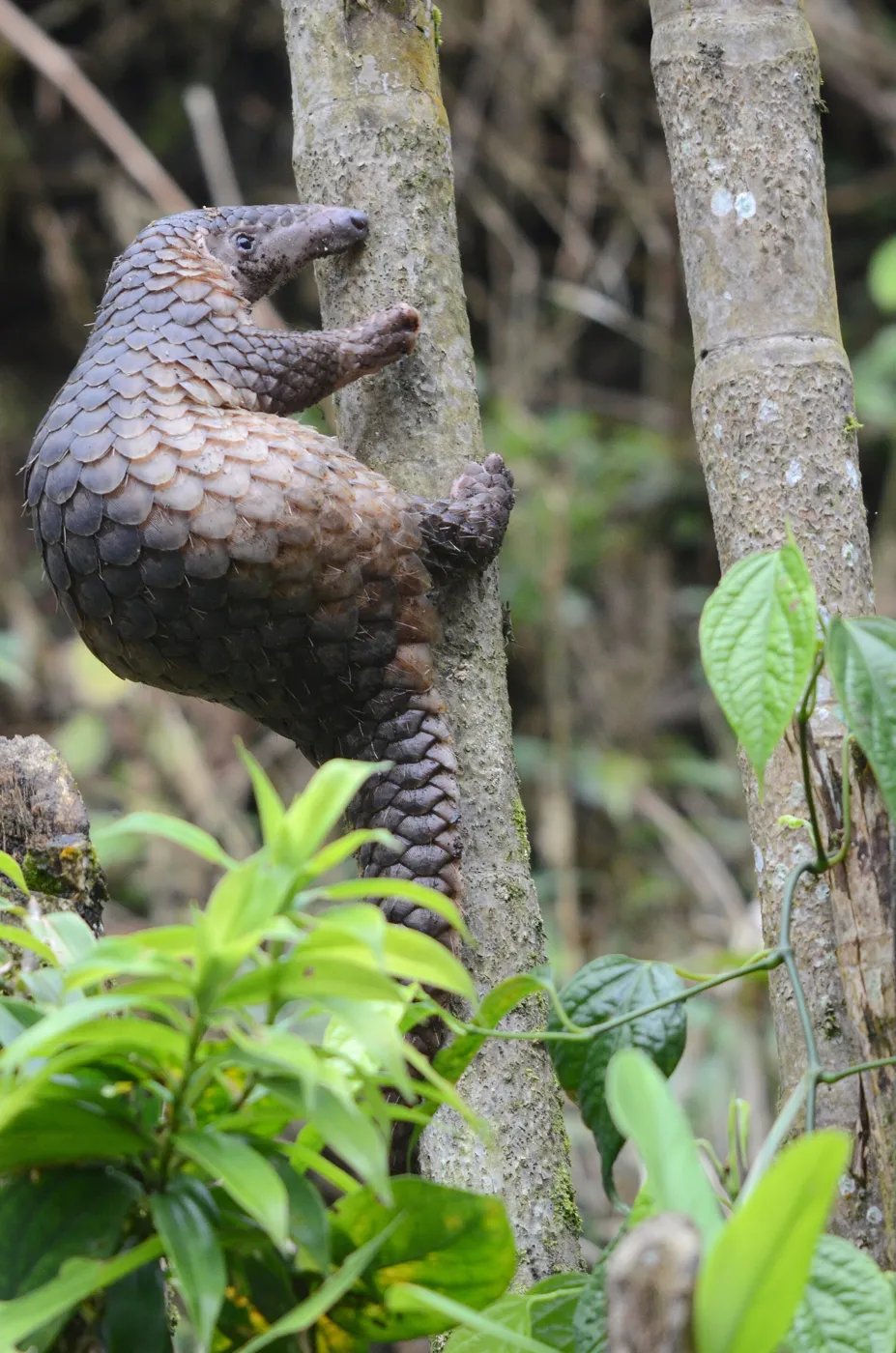
The Sunda pangolin (Manis javanica) is the best known Southeast Asian species. It ranges through Malaysia, Indonesia, Thailand, Vietnam, and nearby countries, adapting to tropical forest, plantations, and sometimes settlement edges. It is semi arboreal: it forages on the forest floor and climbs well, using strong claws and a prehensile tail. That flexibility once helped it survive in varied habitats, but not against trafficking. It is Critically Endangered and often described as one of the most heavily traded mammals in the world.
Philippine Pangolin
The Philippine pangolin (Manis culionensis) has the smallest range of any pangolin. It lives only on Palawan and nearby islands in the Philippines, so its entire global population sits inside one island province. A local threat, habitat loss, or a rise in poaching can therefore affect the whole species at once, with no other population to fall back on. It is Critically Endangered, a clear example of island endemism: an animal found nowhere else on Earth.
African Pangolins: The Four Species of Africa
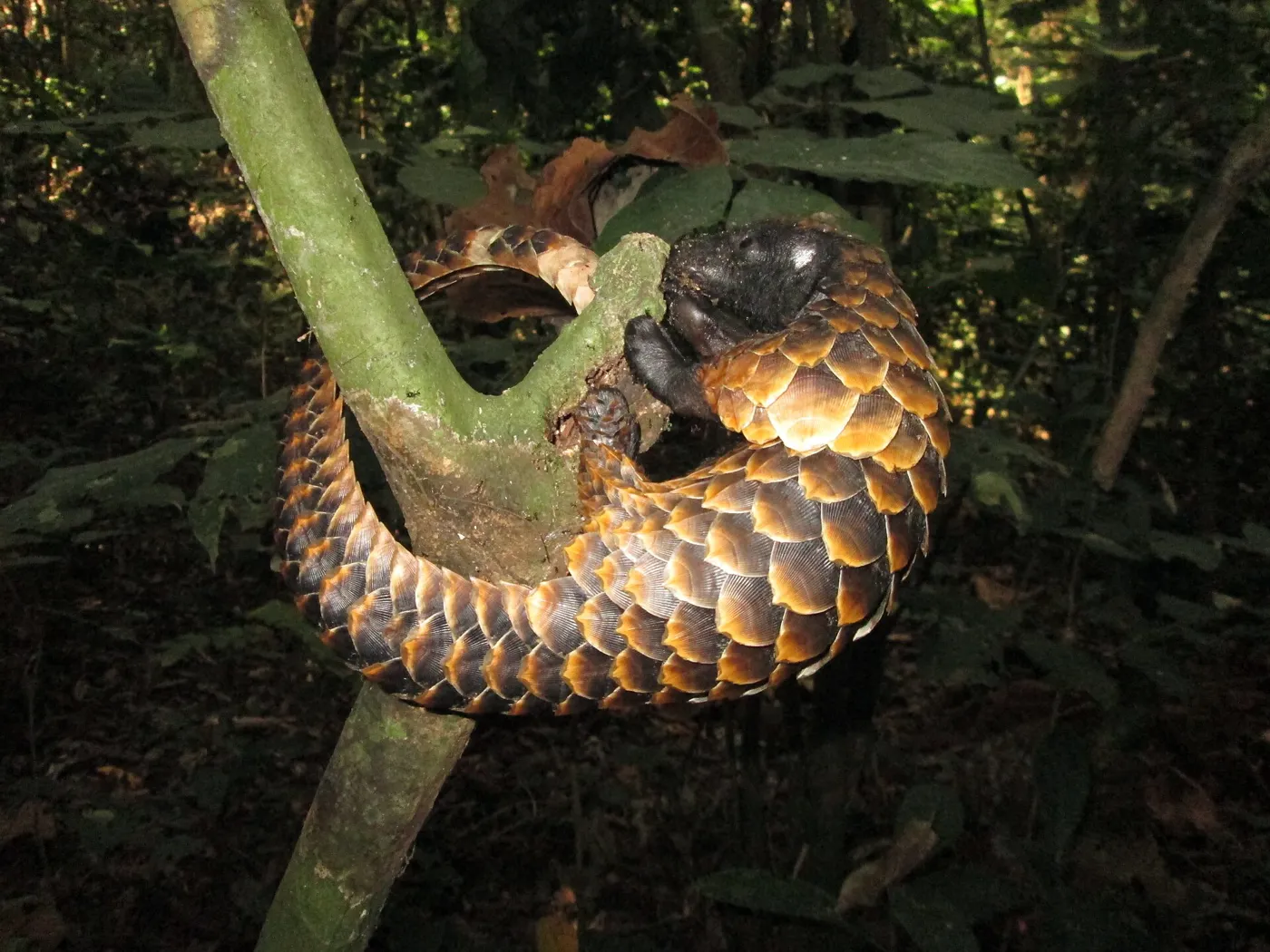
Africa also has four species, in two genera and two lifestyles. Two live on the ground and two in trees, a split visible in body shape, tail length, and claw size. Africa holds both the largest pangolin and two of the smallest.
Giant Ground Pangolin
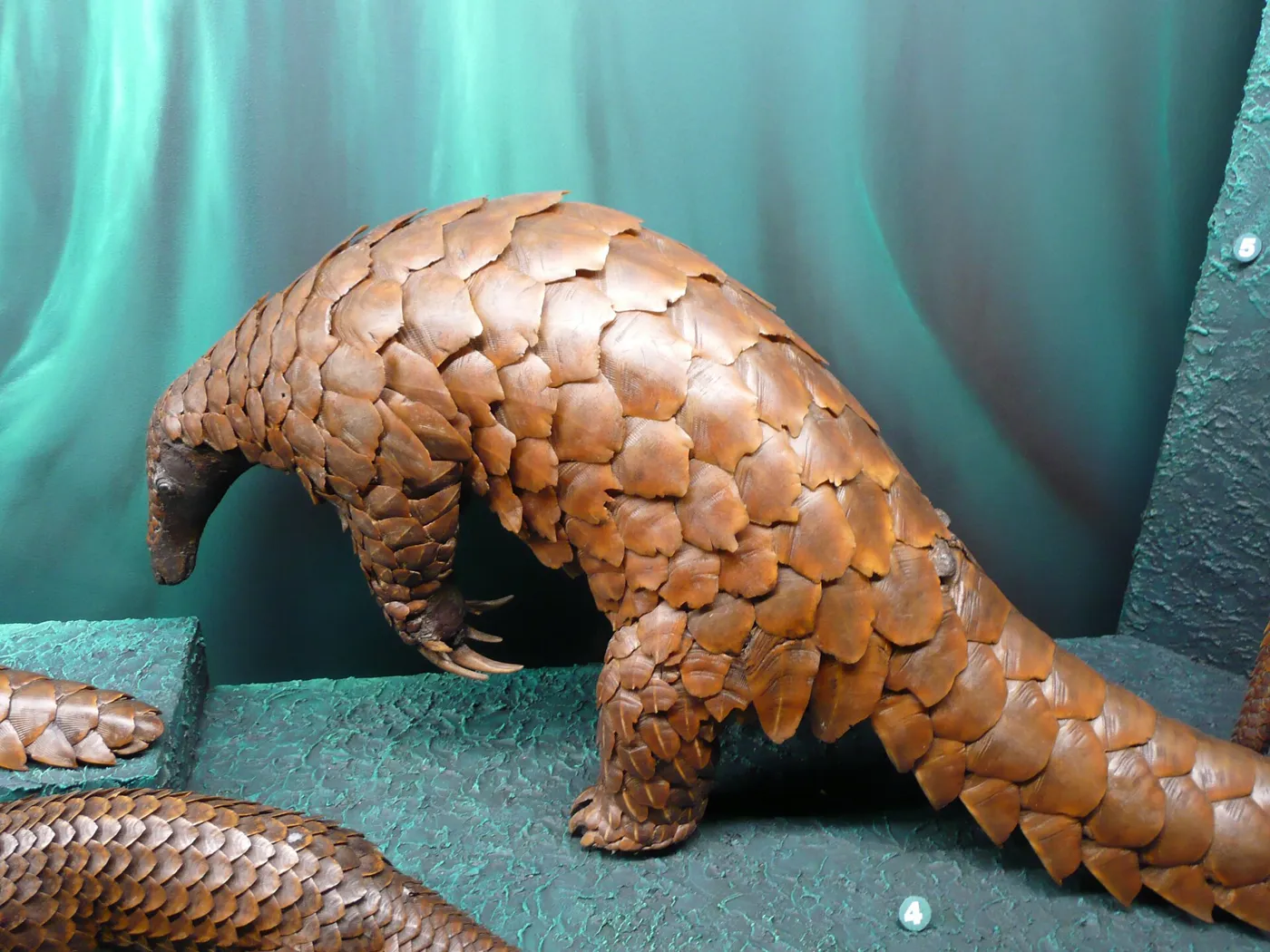
The giant ground pangolin (Smutsia gigantea) is the largest of all pangolins, reaching about 30 kg and sometimes more. It lives in West and Central Africa, in forests and savanna edges, and is strictly terrestrial. It walks on its hind legs at times, front claws curled under, and uses those claws to tear open termite mounds. Its size does not make it safe. It is Vulnerable, hunted for meat and scales, while farming and logging steadily fragment its habitat.
Temminck’s Ground Pangolin
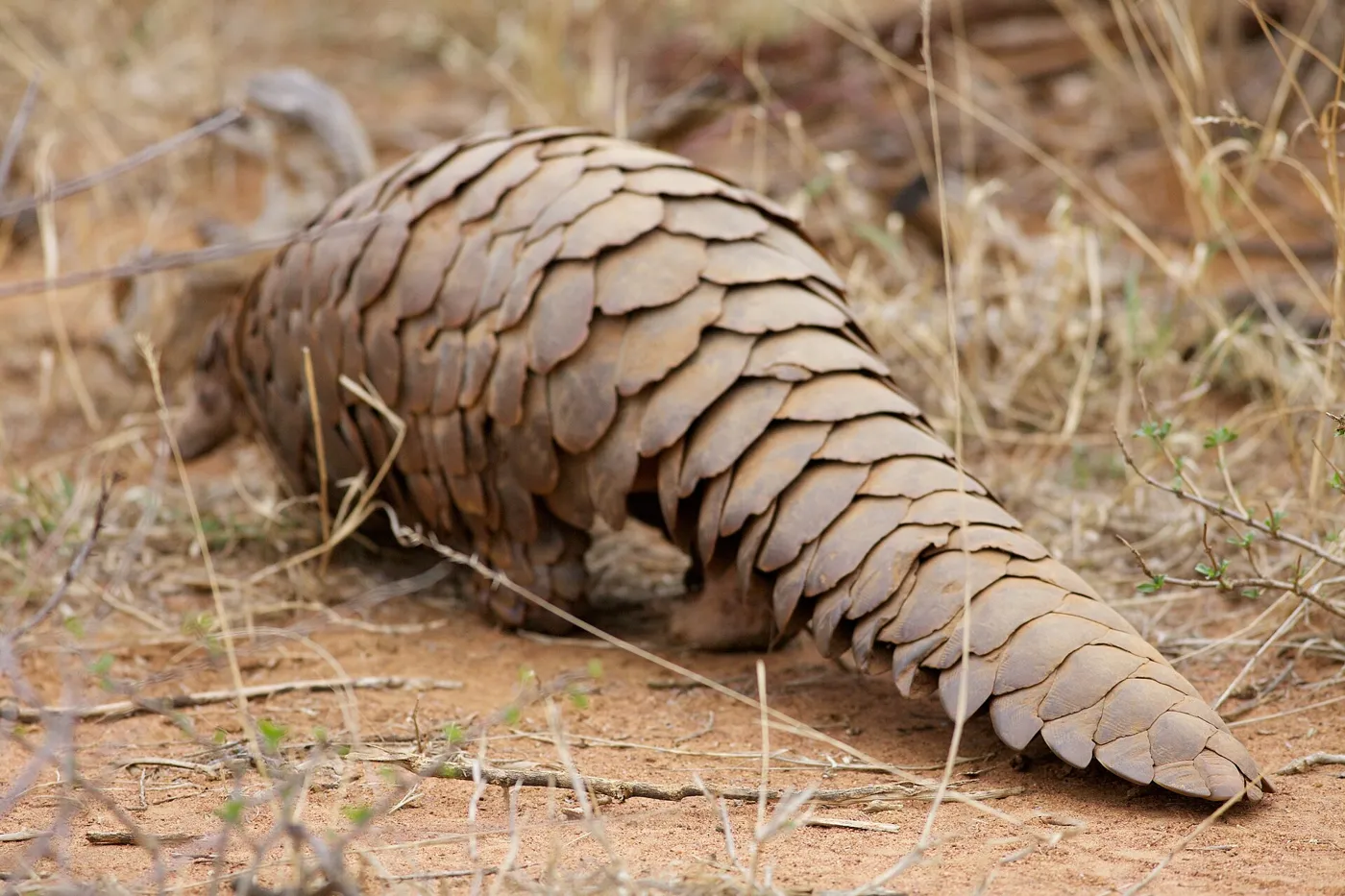
Temminck’s ground pangolin (Smutsia temminckii) is the ground pangolin of eastern and southern Africa, from Chad and Sudan south to South Africa. It prefers savanna and open woodland, digging burrows or sheltering in aardvark holes and rock crevices. It is a strong walker and can cover surprising distances in a night of foraging. Compared with the giant ground pangolin, it is smaller and more southerly, which helps separate the two ground species on a map. It is Vulnerable.
White-Bellied Pangolin
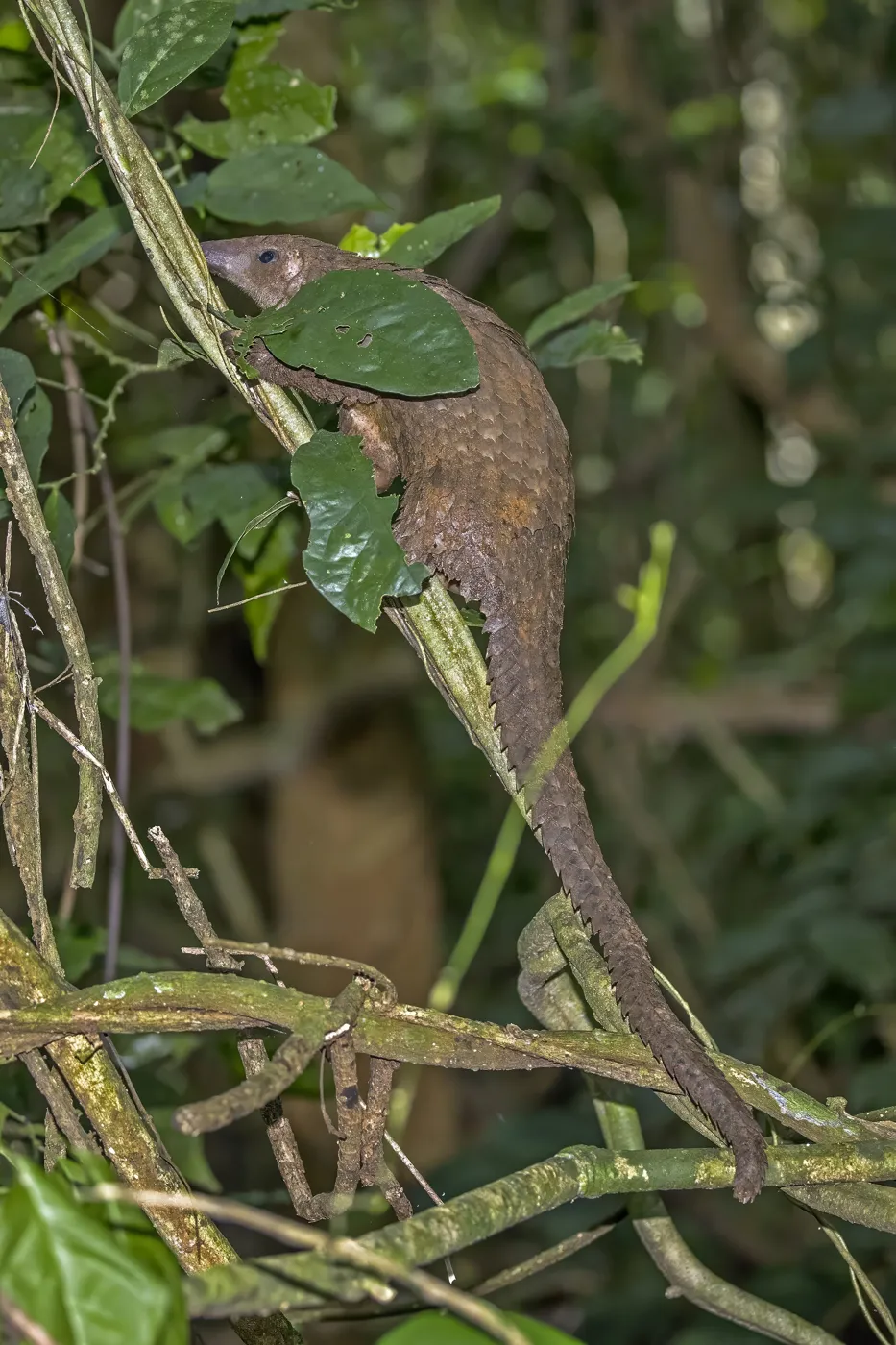
The white-bellied pangolin (Phataginus tricuspis), also called the tree pangolin, is the most widespread African tree species. It lives in West and Central African forests, spending much of its life in the canopy, sleeping in tree hollows and moving along branches with a prehensile tail. Its pale belly scales give it its name, and its small, light body suits climbing. Do not let widespread mislead you: it is Endangered, because forest loss and hunting have cut its numbers across much of its range.
Black-Bellied Pangolin
The black-bellied pangolin (Phataginus tetradactyla), also known as the long-tailed pangolin, is the most arboreal of all. Its tail is exceptionally long, often longer than its body, and it uses it to hang from branches while feeding. It lives in West and Central African rainforest and is rarely seen, partly because it stays high in the canopy and is nocturnal. Its dark belly scales separate it from the white-bellied species at a glance. It is Vulnerable, and scarce sightings mean researchers still have much to learn about it.
African Pangolins vs Asian Pangolins: How to Tell Them Apart
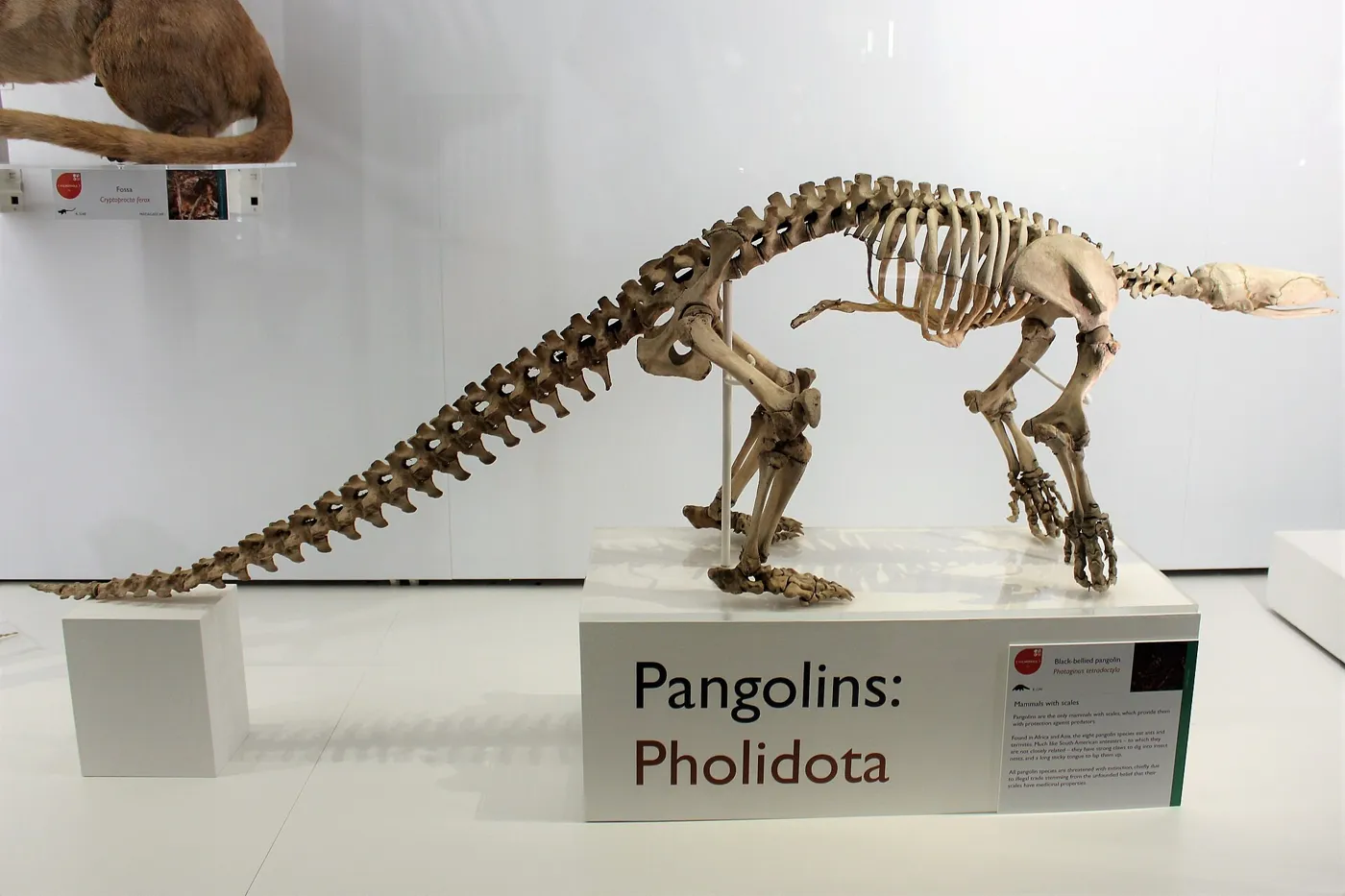
Geography is the first clue. A pangolin in Asia is one of the four Manis species, while one in Africa is one of the four African species. Asian pangolins generally have more visible ears, while African tree pangolins have the longest, most obviously prehensile tails. Ground species are heavier, with stronger digging claws and shorter, thicker tails. Behaviour helps too: a pangolin walking across savanna at night is almost certainly a ground species, while one curled around a high branch is almost certainly a tree species. In photos, check belly scales, tail length, and ears before colour, because lighting changes colour far more than shape.
For a closer comparison with other scaly and armoured animals, see our guides to types of sloths, types of gazelle, and types of rhinoceros. Each one uses the same chart first, details second approach, so you can compare species side by side.
Why Every Type of Pangolin Is Threatened
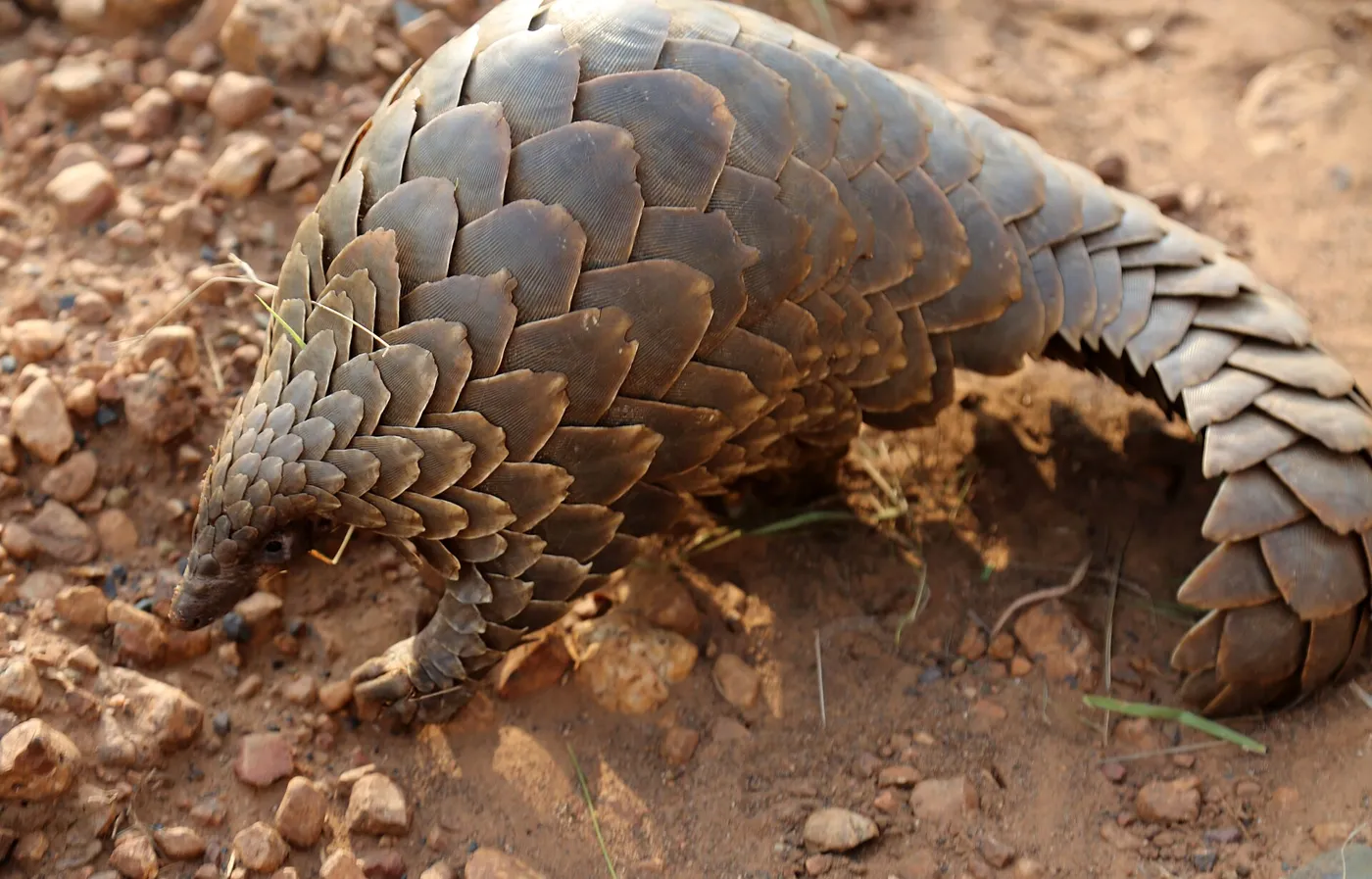
Every species is listed as Vulnerable, Endangered, or Critically Endangered. No pangolin is currently considered safe. The main cause is illegal trade: scales are sought in traditional medicine and meat is eaten in parts of Asia and Africa, despite international bans. Pangolins are also slow breeders, usually producing a single pup at a time, so hunted populations recover slowly even after protection improves. Habitat loss adds pressure as forests are cleared and grasslands become farms. Conservation work now focuses on enforcement, community based protection, and rescue and rehabilitation.
Frequently Asked Questions About Types of Pangolins
How many types of pangolins are there?
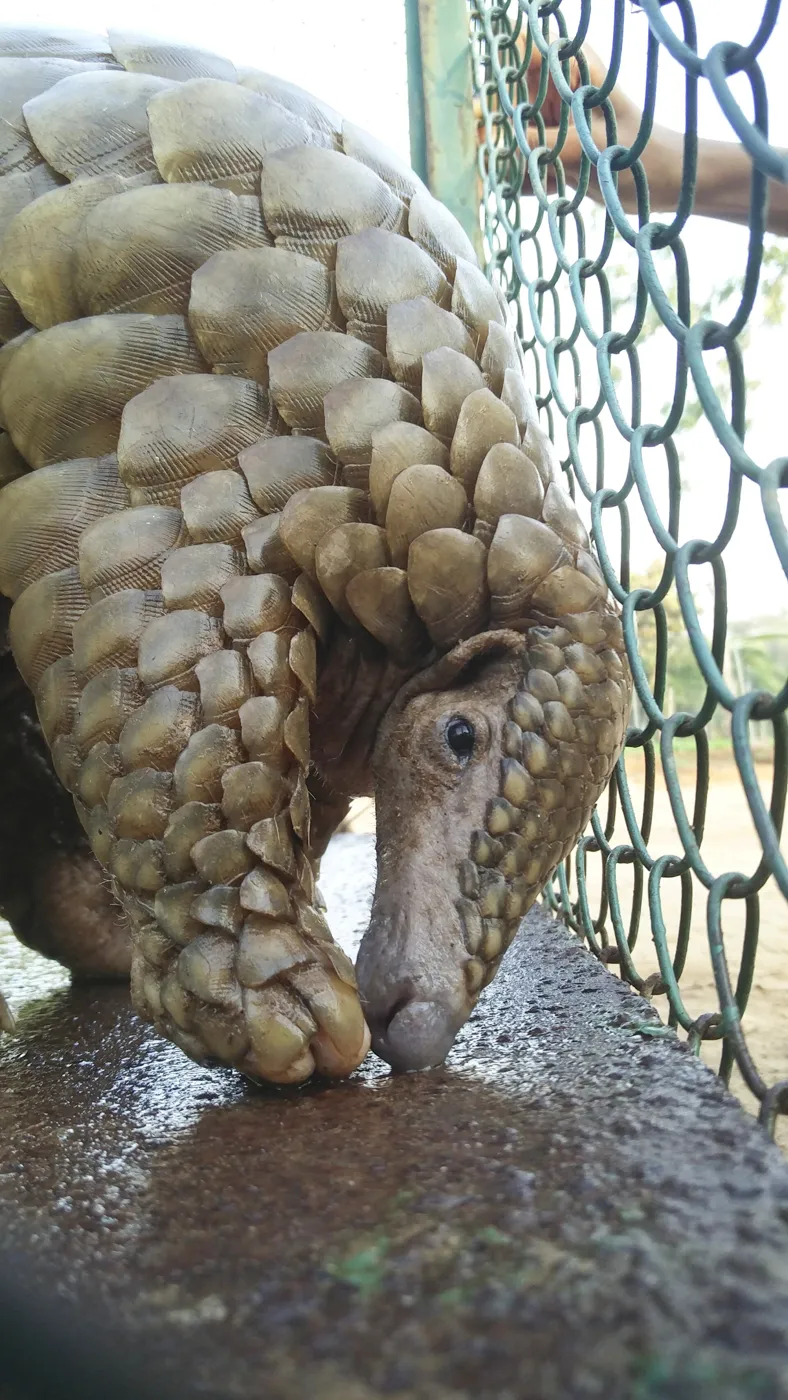
There are eight recognised species: four in Asia and four in Africa. Older guides sometimes list different counts because taxonomy has changed, but eight is the current scientific consensus.
What is the largest type of pangolin?
The giant ground pangolin is the largest, at about 30 kg and sometimes more. The smallest are the African tree pangolins, which usually weigh only 2 to 3 kg.
Are pangolins related to anteaters or armadillos?
No, despite the similar diet and appearance. Pangolins belong to their own order, Pholidota, and their resemblance to anteaters and armadillos is a case of convergent evolution, where unrelated animals develop similar traits for similar lifestyles.
Can pangolins be kept as pets?
No. Pangolins are wild, protected animals that do poorly in captivity, need a specialist diet of ants and termites, and are illegal to own or trade in most countries. The right way to help them is through reputable conservation organisations, not private keeping.
Conclusion
The eight types of pangolins show how much variety can hide inside one quiet family. From the giant ground pangolin to the island bound Philippine pangolin, each species adapted to a different corner of the world, and each is now in trouble for the same human reasons. Remember this: a pangolin is not just a pangolin. Knowing which species you are looking at, where it lives, and how threatened it is turns curiosity into a reason to protect it. For more charts, explore our types of buffalo guide next.

