
Last summer I found a glossy green beetle on my rosebush and spent twenty minutes deciding whether it was a friend or a future hole in my garden. That one beetle turned into a habit, and this beetle identification chart is the result: 20 of the most common beetles in the United States, organized so you can name what you found in under a minute.
The Main Beetle Identification Chart
Sizes are adult body length. Match color first, then size, then where you found it.
| Beetle | Color and Appearance | Size | Where You Find It | Friend or Problem |
|---|---|---|---|---|
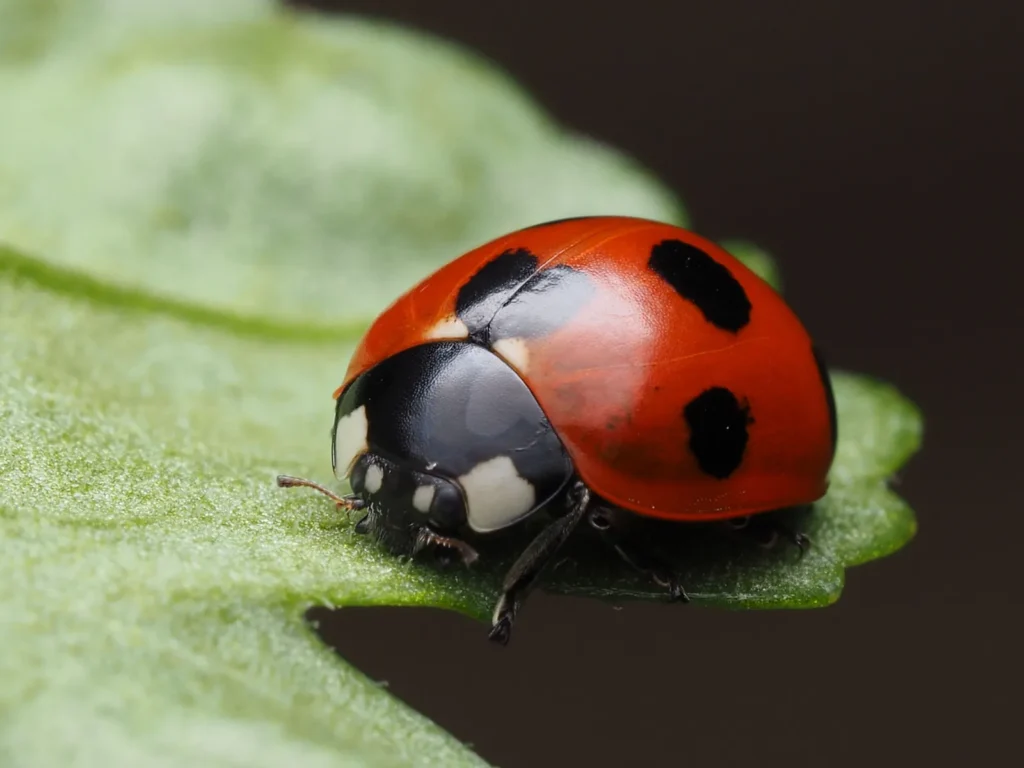
| Seven-Spotted Ladybug | Round, red with 7 black spots | 6-8 mm | Roses, vegetables, houseplants | Friend: eats aphids |
| Asian Lady Beetle | Orange, variable spots, white “M” on head | 6-8 mm | Homes in fall, gardens | Nuisance indoors |
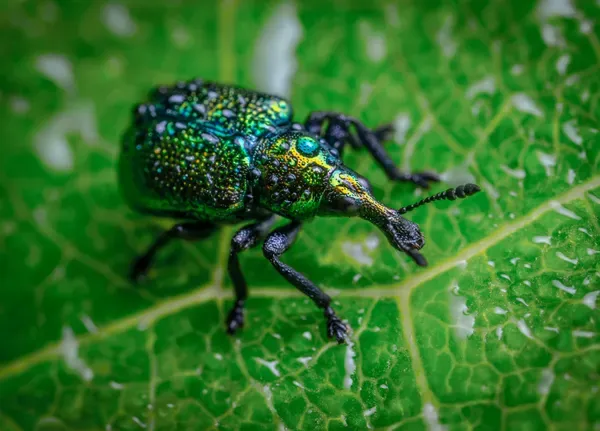
| Japanese Beetle | Metallic green body, copper wing covers | 10-15 mm | Roses, fruit trees, lawns | Problem: skeletonizes leaves |
| June Beetle (June Bug) | Reddish brown, chunky, clumsy | 12-25 mm | Porch lights, lawns, trees | Mild problem: grubs eat roots |
| Common Ground Beetle | Glossy black, long legs, fast | 12-30 mm | Under rocks, soil, mulch | Friend: hunts pests |
| Tiger Beetle | Metallic green or bronze, long jaws | 10-20 mm | Sandy paths, open soil | Friend: fast predator |
| Firefly (Lightning Bug) | Dark with a glowing yellow-green abdomen | 10-20 mm | Yards, meadows at dusk | Friend: larvae eat snails |
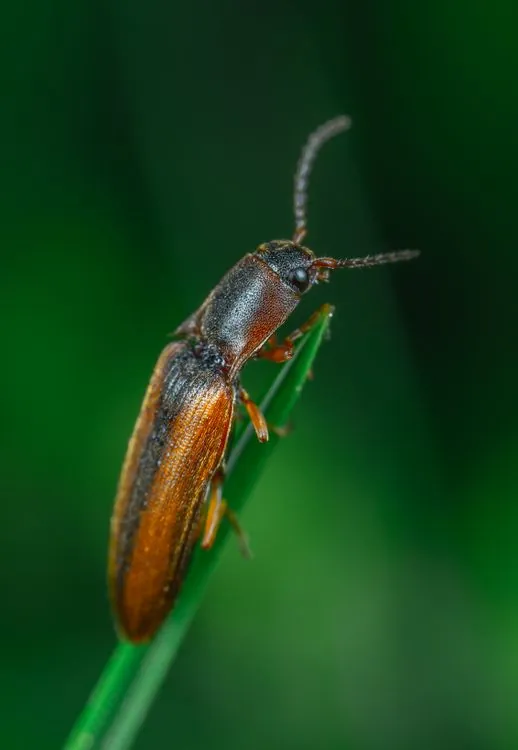
| Click Beetle | Brown or black, long narrow body | 10-30 mm | Grass, gardens, under bark | Neutral: larvae can nibble roots |
| Soldier Beetle | Orange-red with black tips | 10-20 mm | Flowers, especially goldenrod | Friend: pollinator, eats aphids |
| Stag Beetle | Dark brown or black, males have huge jaws | 30-80 mm | Woodlands, compost, stumps | Friend: recycles dead wood |
| Rhinoceros Beetle | Dark brown or black, horn on head | 30-60 mm | Gardens, forests, compost | Friend: harmless, strong |
| Weevil (Boll or Grain) | Gray or brown, long snout | 3-10 mm | Pantry, grains, garden plants | Problem: eats stored food and plants |
| Carpet Beetle | Mottled brown, black or patterned | 2-5 mm | Carpets, closets, upholstery | Problem: larvae eat wool and silk |
| Black Carpet Beetle | Shiny black, oval | 3-5 mm | Rugs, wool clothing, pantry edges | Problem: damages natural fibers |
| Red Flour Beetle | Reddish brown, flat, oval | 3-4 mm | Flour, cereal, pet food | Problem: contaminates food |
| Drugstore Beetle | Light brown, cylindrical | 2-3 mm | Spices, tea, dry pet food | Problem: eats almost anything dry |
| Larder Beetle | Dark brown with a pale yellow band | 7-9 mm | Kitchens, near dried meat or cheese | Problem: infests stored protein |
| Blister Beetle | Black or striped, narrow neck | 10-25 mm | Fields, alfalfa, gardens | Caution: skin blisters on contact |
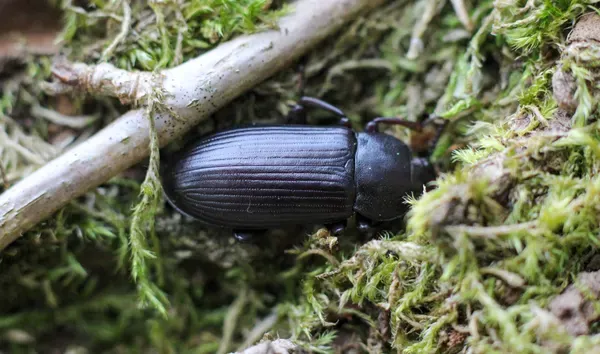
| Darkling Beetle | Matte black, hard shell | 5-25 mm | Dry soil, basements, feed stores | Neutral to mild problem |
| Rose Chafer | Metallic green or golden | 8-15 mm | Roses, peonies, fruit blossoms | Mild problem: chews flowers |
Garden Beetles You Will Meet Most Often
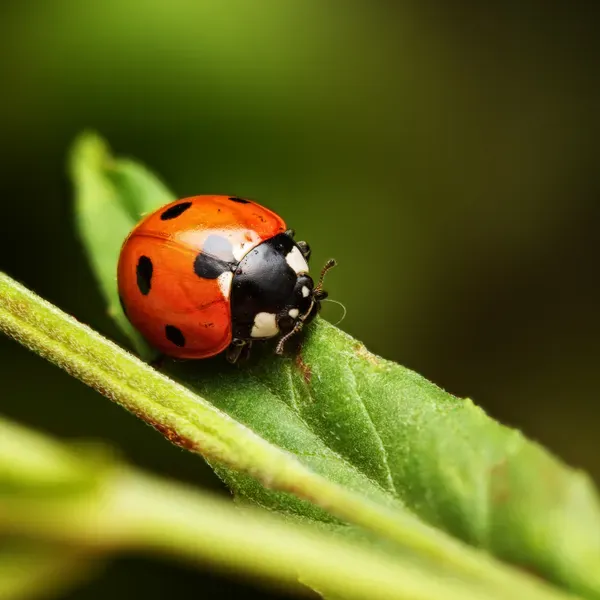
The ladybug is the beetle everyone loves, and for good reason: one larva can eat hundreds of aphids before it pupates. True seven-spotted ladybugs are bright red with exactly seven spots. Their close cousin, the Asian lady beetle, is more orange, has a white “M” mark behind its head, and is the one that swarms into houses every October.
The Japanese beetle is the garden villain of the chart. Metallic green with copper wings, it feeds in groups and can strip a rosebush to lace in days. Hand-pick in the morning when they are sluggish, and avoid traps placed near the plants you want to protect, since traps can draw in more beetles than they catch.
June beetles, the clumsy brown ones that slam into porch lights, are mostly harmless as adults. The real damage comes from their white grub larvae, which chew grass roots and leave brown patches in lawns.


Japanese beetle photo: Holger Krisp, via Wikimedia Commons, CC BY 4.0.
The rose chafer looks like a smaller, more golden Japanese beetle and causes similar flower damage, but it lacks the white hair tufts along the sides of the abdomen that Japanese beetles have.
House Beetles: The Indoor Troublemakers

Almost every beetle you find indoors belongs to one of a handful of species, and the adults are rarely the problem. It is the larvae that do the damage.
Carpet beetles (including the shiny black carpet beetle) are the most common. Larvae feed on wool, silk, fur, and feathers. Small irregular holes in natural-fiber clothing or bald patches on a wool rug point to carpet beetles. Regular vacuuming under furniture and along baseboards removes the lint and hair their larvae live on.
Flour beetles, drugstore beetles, and weevils are pantry beetles. The telltale sign is movement inside a bag of flour, cereal, rice, or pet food. Throw out infested food, vacuum the shelves, and store replacements in sealed glass or hard plastic. The larder beetle, bigger at up to 9 mm with its yellow band, prefers protein: dried meat, cheese, and pet treats.
Ground Beetles and Other Helpful Predators
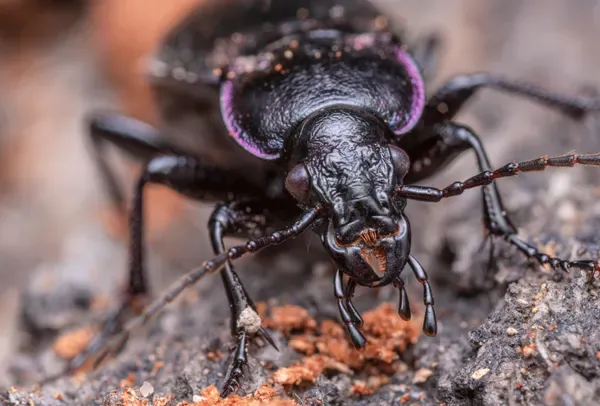
Flip over a rock or a bag of mulch and you will often find a ground beetle: glossy black, long-legged, and astonishingly fast. Do not squish it. Ground beetles are nocturnal hunters that eat slugs, cutworms, and other garden pests.
Tiger beetles are the sprinters of the beetle world, metallic green or bronze, and they chase down prey on open sandy ground.
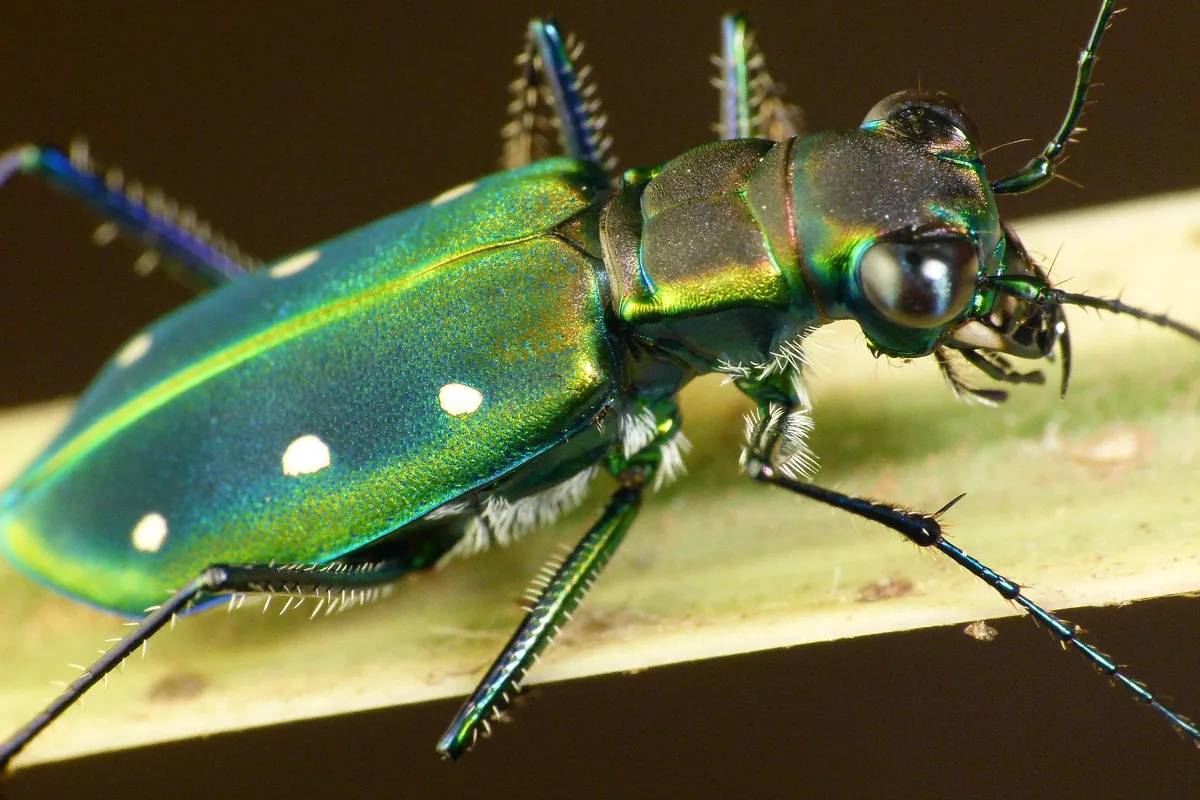
Tiger beetle photo: L. Shyamal, via Wikimedia Commons, CC BY-SA 3.0.
Fireflies are beetles too, though most people never think of them that way. The glow comes from the abdomen of adults signaling for mates, while the larvae hunt snails and slugs underground. Leave some leaf litter and skip the lawn pesticides if you want more of them.
Soldier beetles patrol flowers in late summer, orange-red with dark wing tips. They eat aphids and pollinate as they go. Gardeners often confuse them with fireflies, but soldier beetles never glow.

Flying Beetles Worth Knowing

Stag beetles look intimidating, with males carrying antler-like jaws, but they cannot hurt you. The jaws are for wrestling other males. The larvae spend years in rotting wood, which is why stag beetles are a good sign that old logs and stumps are doing their ecological job.
Rhinoceros beetles are the strongmen: some can lift 850 times their own body weight. The horn is only on males and is used in pushing contests. Their larvae develop in compost and mulch, so turning your compost pile may reveal a grub the size of your thumb.

Click beetles get their name from the hinge mechanism between their thorax segments. Flip one on its back and it snaps with an audible click, launching itself into the air to land right side up. Their larvae, called wireworms, live in soil and can damage potato and corn roots in large numbers.

Tricky Lookalike Pairs, Solved
These are the pairs that fool almost everyone. Memorize one difference for each.
Japanese beetle vs. rose chafer. Both are metallic green and both eat flowers. The Japanese beetle has five white tufts of hair along each side of its abdomen; the rose chafer has none. Japanese beetles are also slightly larger and more copper on the wings.
Asian lady beetle vs. true ladybug. Check the head: the Asian lady beetle has a white face with a black “M” (or “W”) mark. True seven-spotted ladybugs have a black head with white cheeks. Behavior helps too: indoors in October means Asian lady beetle.
Carpet beetle vs. ladybug larva. Ladybug larvae are elongated, segmented, usually black with orange markings, and move purposefully. Carpet beetle larvae are shorter, very hairy, and tend to curl up. When in doubt: tiny fuzzy oval means carpet beetle; tiny alligator means ladybug larva.
Firefly vs. soldier beetle. Only fireflies glow. If it is on goldenrod in daylight and not glowing, it is a soldier beetle.
Blister beetle vs. darkling beetle. Blister beetles have a narrow “neck” where the head meets the thorax; darkling beetles are uniformly hard-shelled with no visible neck. Handle blister beetles with gloves, since their cantharidin secretion raises painful blisters.

How to Identify Any Beetle in 4 Steps
When the chart does not give you an instant match, work through these in order:
1. Note the size. Under 5 mm points to pantry and carpet beetles. Over 30 mm points to stag, rhinoceros, or other large woodland species. Most garden beetles sit between 10 and 20 mm.
2. Note the color and texture. Metallic green suggests Japanese beetle, rose chafer, or tiger beetle. Matte black suggests ground or darkling beetle. Red with spots suggests a ladybug or lady beetle. Mottled brown indoors suggests carpet beetle.
3. Note the location and behavior. On flowers: Japanese beetle, soldier beetle, rose chafer. In the pantry: flour, drugstore, or grain beetles. Fast runner on soil: ground or tiger beetle. Glowing at dusk: firefly. Swarming windows in fall: Asian lady beetle. If you are building a general insect reference, our bee identification chart and hummingbird identification chart cover the other small visitors your garden attracts.
Frequently Asked Questions
Are black beetles in the house dangerous?
Almost never. Black beetles indoors are usually ground beetles that wandered in (harmless), darkling beetles (harmless), or black carpet beetles (they damage fabrics but do not bite or sting). None of the common black house beetles is dangerous to people or pets.
What is the small brown beetle in my kitchen?
Most likely a drugstore beetle, flour beetle, or weevil, all between 2 and 4 mm. Check flour, cereal, rice, spices, tea, and dry pet food, then remove the infested package.
Do beetles bite humans?
Very few do. Blister beetles cause chemical burns rather than bites, and large stag or rhinoceros beetles can give a defensive pinch if handled roughly.
How do I get rid of carpet beetles for good?
Vacuum thoroughly and often, especially under furniture and along baseboards; wash or dry-clean natural-fiber clothing and rugs; store woolens in sealed containers.
What is the difference between a beetle and a true bug?
Beetles have hardened wing covers that meet in a straight line down the back. True bugs, like stink bugs, have wings that overlap or form a triangle.
Conclusion
Twenty beetles cover nearly every encounter you will have: the helpful ladybugs and ground beetles, the destructive Japanese and carpet beetles, the merely interesting stag and rhinoceros beetles. With color, size, location, and one behavior note, this beetle identification chart turns a mystery insect into a named neighbor, and the name tells you whether to admire it, relocate it, or reach for the vacuum.


Pingback: Ant Identification Chart: Identify 20 Common Ants by Sight – Chart Identify
Pingback: Types of Weevils: 20 Species, Sizes and Habitats – Chart Identify
Pingback: Beetle Lifespan Chart: How Long 20 Beetles Live – Chart Identify