
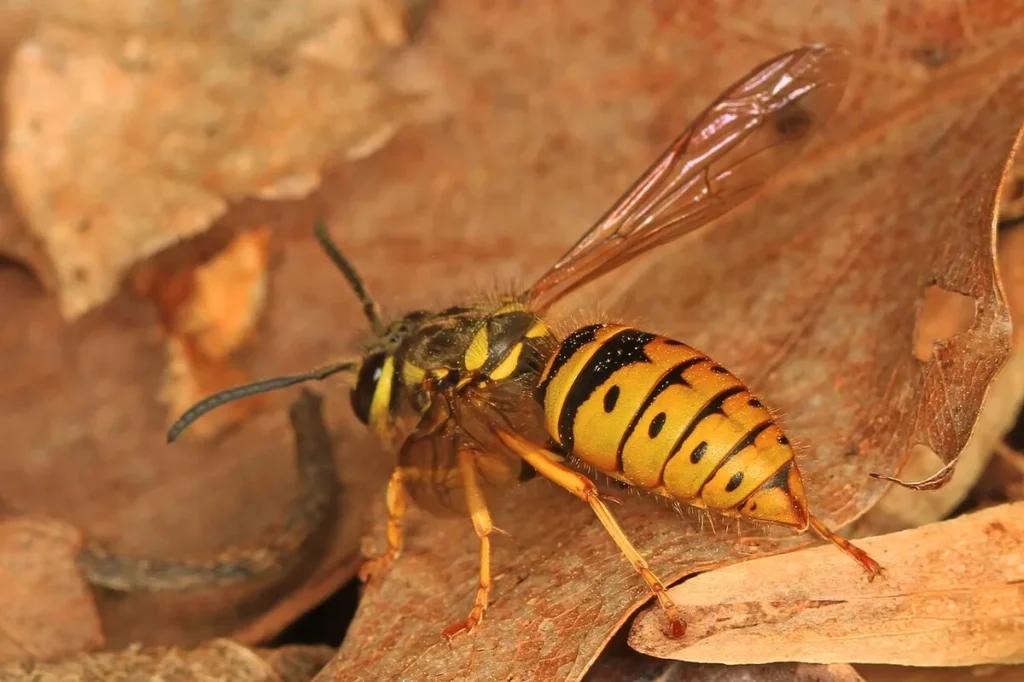
Types of yellow jackets cause more picnic panic than almost any other backyard insect, mostly because people cannot tell which one they are looking at. A yellow jacket is a social wasp, not a bee, and every female worker can sting more than once. This guide covers 20 types of yellow jackets, with real sizes, markings, nest habits, and sting notes, so you can identify the wasp on your porch rail or in your lawn.
Yellow jackets fall into two genera. Vespula species mostly nest underground or in hidden cavities, while Dolichovespula species build aerial paper nests in trees and under eaves. That split alone narrows most identifications.
Types of Yellow Jackets: The 20 Species Chart
The table lists 20 species and close relatives, with worker size, markings, nest habits, and sting notes. Queens run larger, around 18 to 20 mm, and males (drones) cannot sting.
| Species | Scientific name | Worker size | Markings to look for | Nest type and location | Aggression and sting notes |
|---|---|---|---|---|---|
| Eastern yellowjacket | Vespula maculifrons | 12 to 16 mm | Black and yellow bands, yellow markings on the face | Underground, often in old rodent burrows | Bold scavenger, defends nest strongly in late summer |
| Western yellowjacket | Vespula pensylvanica | 11 to 15 mm | Yellow face with black markings, black and yellow abdomen | Underground, also in wall voids and attics | Common around western homes, aggressive near nests and food |
| German yellowjacket | Vespula germanica | 12 to 16 mm | Bright yellow with black spots and anchor mark on the face | Ground, wall cavities, attics, and roof spaces | Among the boldest near people, stings readily when disturbed |
| Common yellowjacket | Vespula vulgaris | 11 to 15 mm | Bold yellow and black stripes, anchor-shaped face mark | Hidden cavities, ground burrows, wall voids | Attracted to sweet food and meat, defensive near nest |
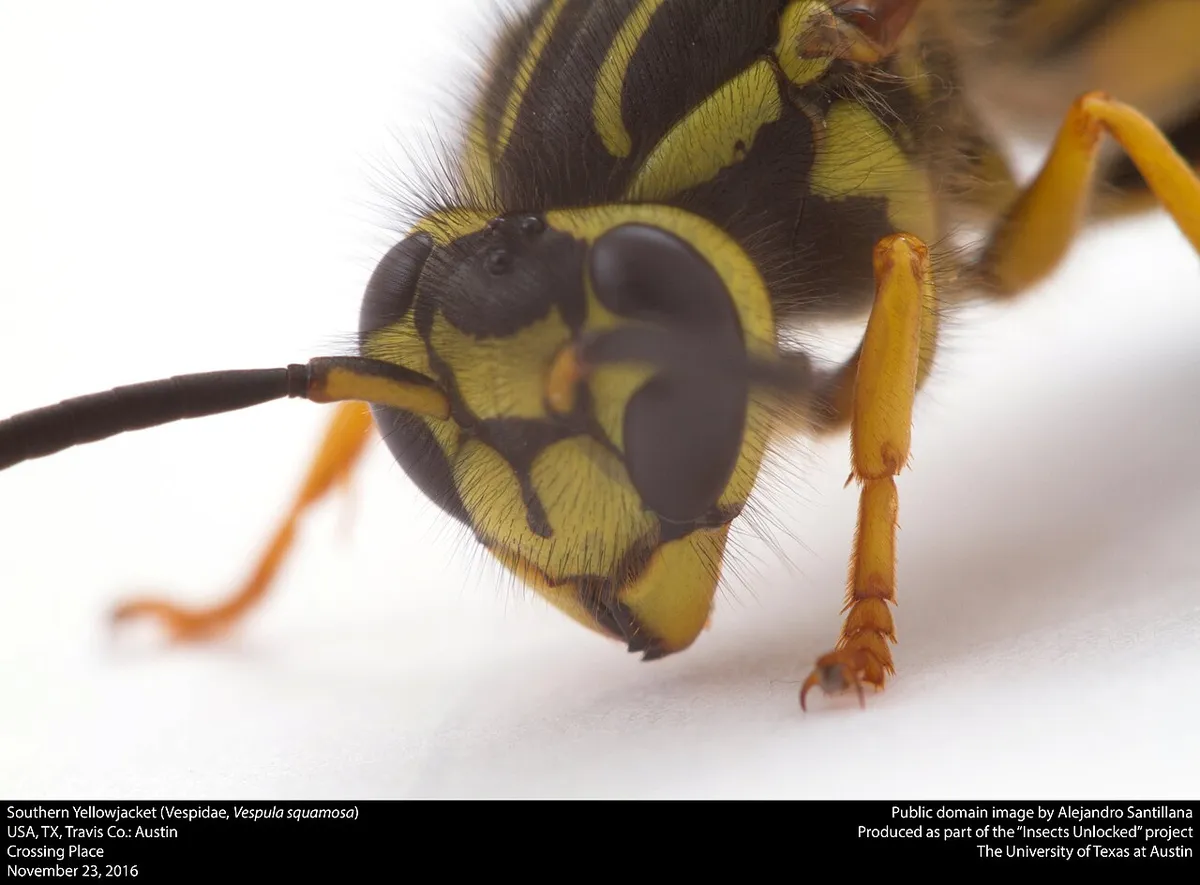
| Southern yellowjacket | Vespula squamosa | 13 to 17 mm | Orange-yellow markings, queens often largely orange | Underground, very large colonies | Colonies reach several thousand, vigorous nest defense |
| Prairie yellowjacket | Vespula atropilosa | 11 to 14 mm | Yellow and black abdomen, dark markings on the thorax | Underground in grassland soil | Moderate, defensive mainly near the nest entrance |
| Forest yellowjacket | Vespula acadica | 11 to 14 mm | Black and yellow, relatively dark overall | Logs, stumps, and rotting wood | Shy woodland species, rarely near homes |
| Blackjacket | Vespula consobrina | 12 to 15 mm | Darker than most yellow jackets, reduced yellow markings | Underground and in hollow logs | Less common near people, moderate defense |
| Downy yellowjacket | Vespula flavopilosa | 11 to 14 mm | Yellow and black with fine pale hairs on the body | Underground, often in woodland edges | Moderate, usually noticed only near the nest |
| Red-banded yellowjacket | Vespula rufa | 11 to 14 mm | Reddish brown bands on the rear abdomen segments | Underground burrows | Quiet species, low nuisance level around homes |
| Alaska yellowjacket | Vespula alascensis | 11 to 15 mm | Black and yellow, similar to the common yellowjacket | Ground nests in northern and western regions | Moderate, active through the short northern summer |
| Cuckoo yellowjacket | Vespula austriaca | 13 to 17 mm | Yellow and black, queens larger and stockier | No nest of its own, invades other yellow jacket nests | Parasitic, rarely seen in numbers, low sting risk |
| Aerial yellowjacket | Dolichovespula arenaria | 12 to 16 mm | Slim body, yellow markings, long face | Gray paper ball in trees, shrubs, and under eaves | Mild unless nest is disturbed, then defends fast |
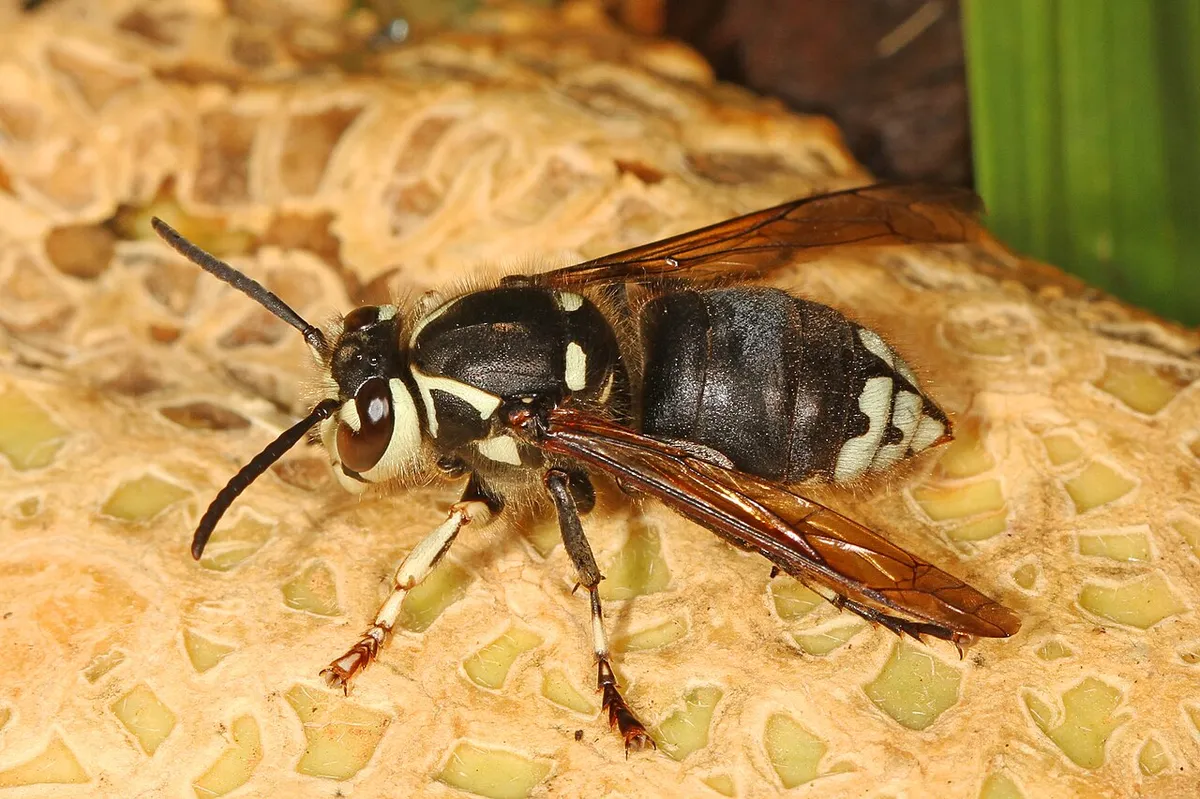
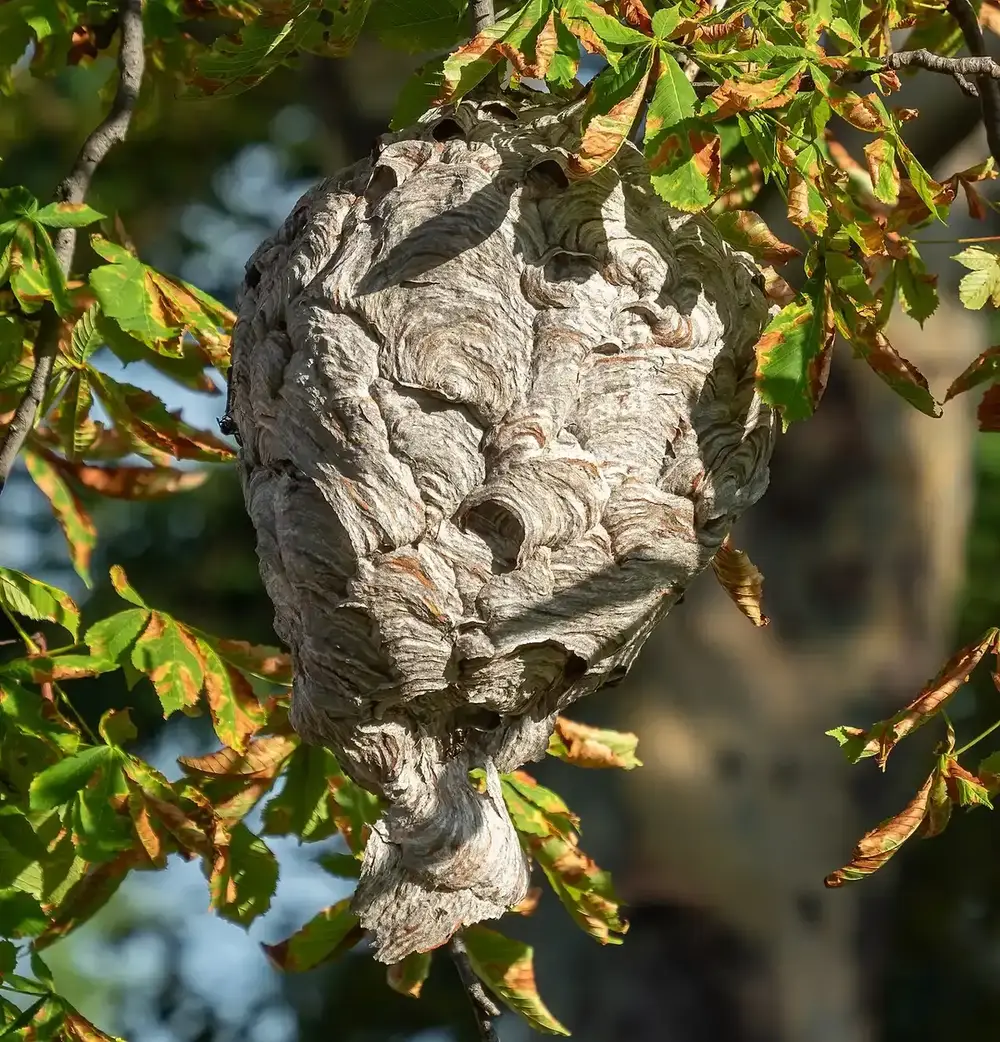
| Bald-faced hornet (lookalike) | Dolichovespula maculata | 15 to 20 mm | Black body with a white face and white tail markings | Large hanging gray paper nest in trees and on buildings | Not a true hornet, fiercely defends nest, painful sting |
| Saxon wasp | Dolichovespula saxonica | 11 to 15 mm | Yellow and black, reddish brown on the rear abdomen | Aerial paper nests in shrubs, sheds, and attics | Moderate, defensive near the nest in late summer |
| Tree wasp | Dolichovespula sylvestris | 11 to 15 mm | Yellow and black with a long face and slim waist | Paper nests in trees, bushes, and sometimes buildings | Moderate temperament, quick to defend a disturbed nest |
| Median wasp | Dolichovespula media | 13 to 17 mm | Broad yellow bands, relatively large for an aerial species | Large paper nests on trees, gables, and eaves | Defensive near the nest, otherwise not a frequent picnic pest |
| Norwegian wasp | Dolichovespula norwegica | 11 to 15 mm | Yellow and black, reddish tint on parts of the abdomen | Paper nests in shrubs, heathland, and buildings | Moderate, common in cool northern areas |
| Arctic yellowjacket | Dolichovespula arctica | 13 to 16 mm | Dark yellow and black, adapted to cold climates | Parasitic, takes over aerial yellow jacket nests | Rarely encountered, low risk |
| Parasitic aerial yellowjacket | Dolichovespula adulterina | 13 to 17 mm | Yellow and black, queen-like build | No nest of its own, invades Saxon wasp and related nests | Rarely seen, little sting risk |
Ground Nesters vs Aerial Nesters
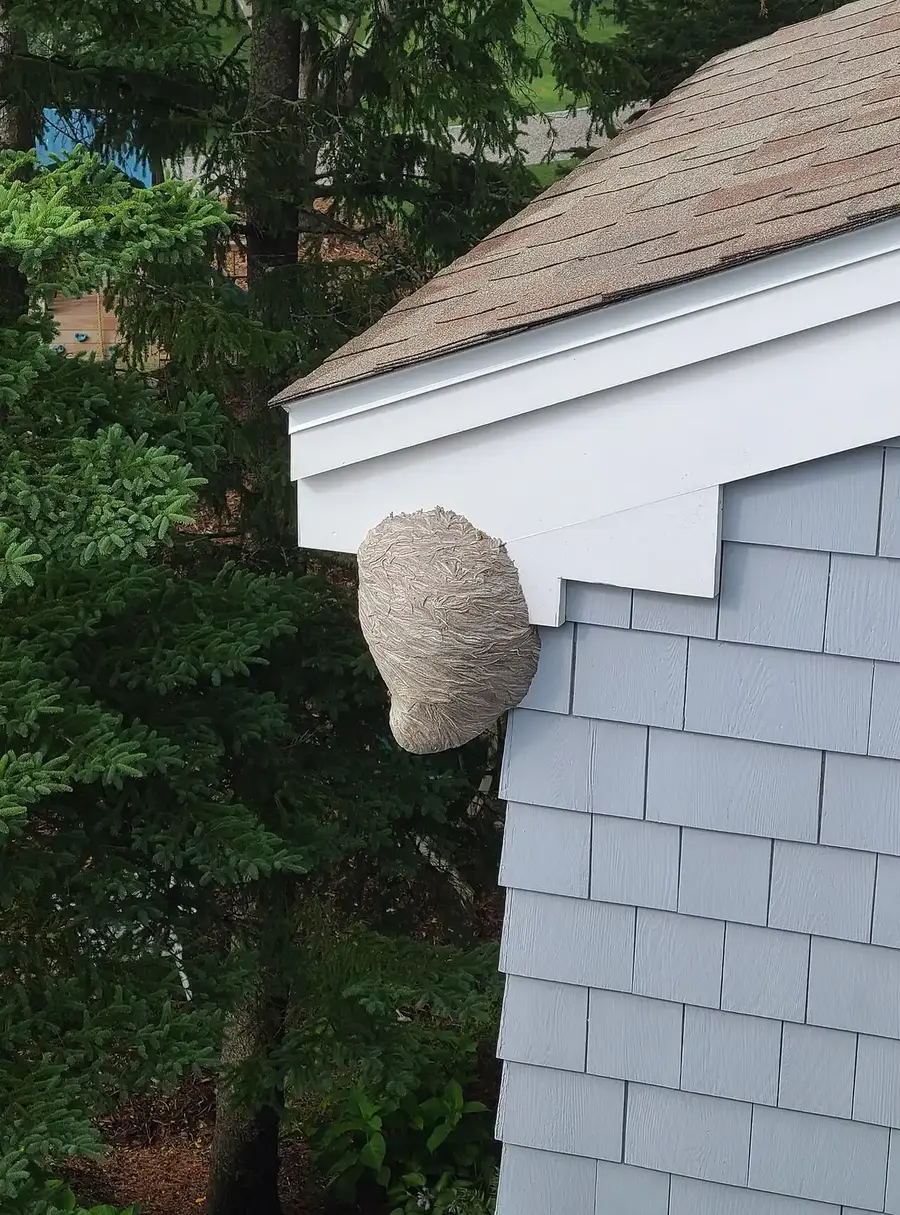
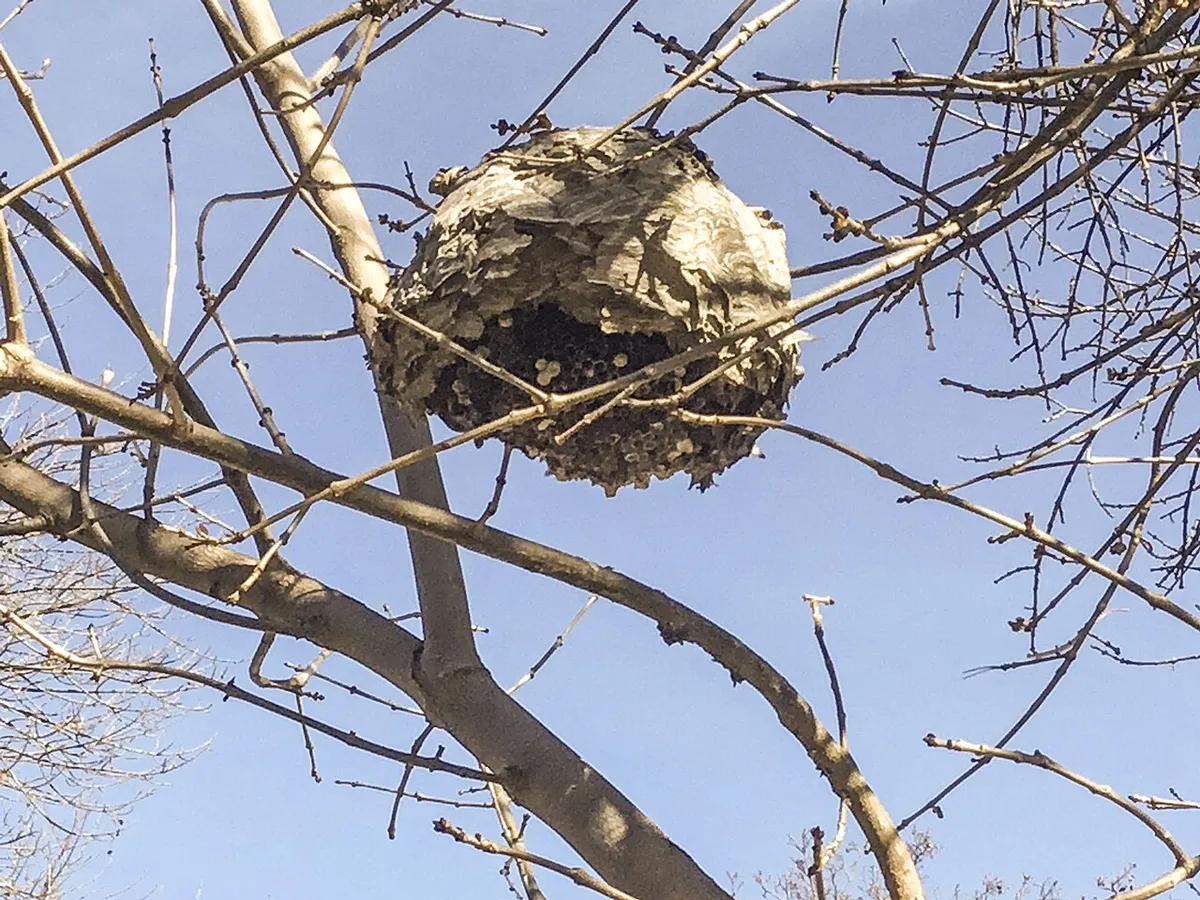
Ground nesters, mostly Vespula, are the ones that turn a mowing job into a sprint. Their entrance is often just a hole in the lawn or a gap under a porch step, with the paper nest hidden below. Aerial nesters, mostly Dolichovespula, are easier to spot because the gray paper nest hangs in the open, sometimes as large as a football by late summer. A visible gray ball in a tree almost certainly means an aerial species, and the bald-faced hornet is the largest and most defensive of them.
All yellow jackets chew wood fiber into papery pulp, so nests look gray and layered, unlike a honeybee wax comb. A wall void nest can grow quietly for months, which is why wasps streaming from a vent in August deserve a professional, not a can of spray and a ladder.
How to Identify a Yellow Jacket in Seconds
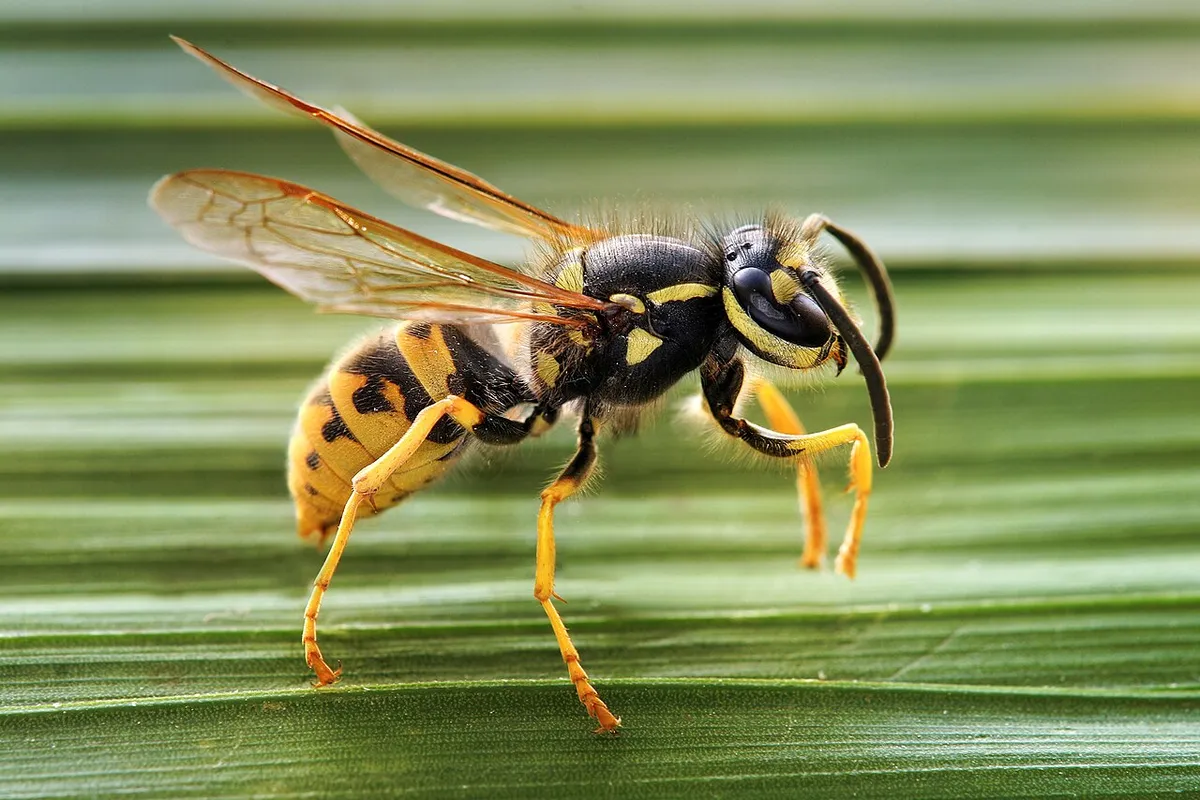
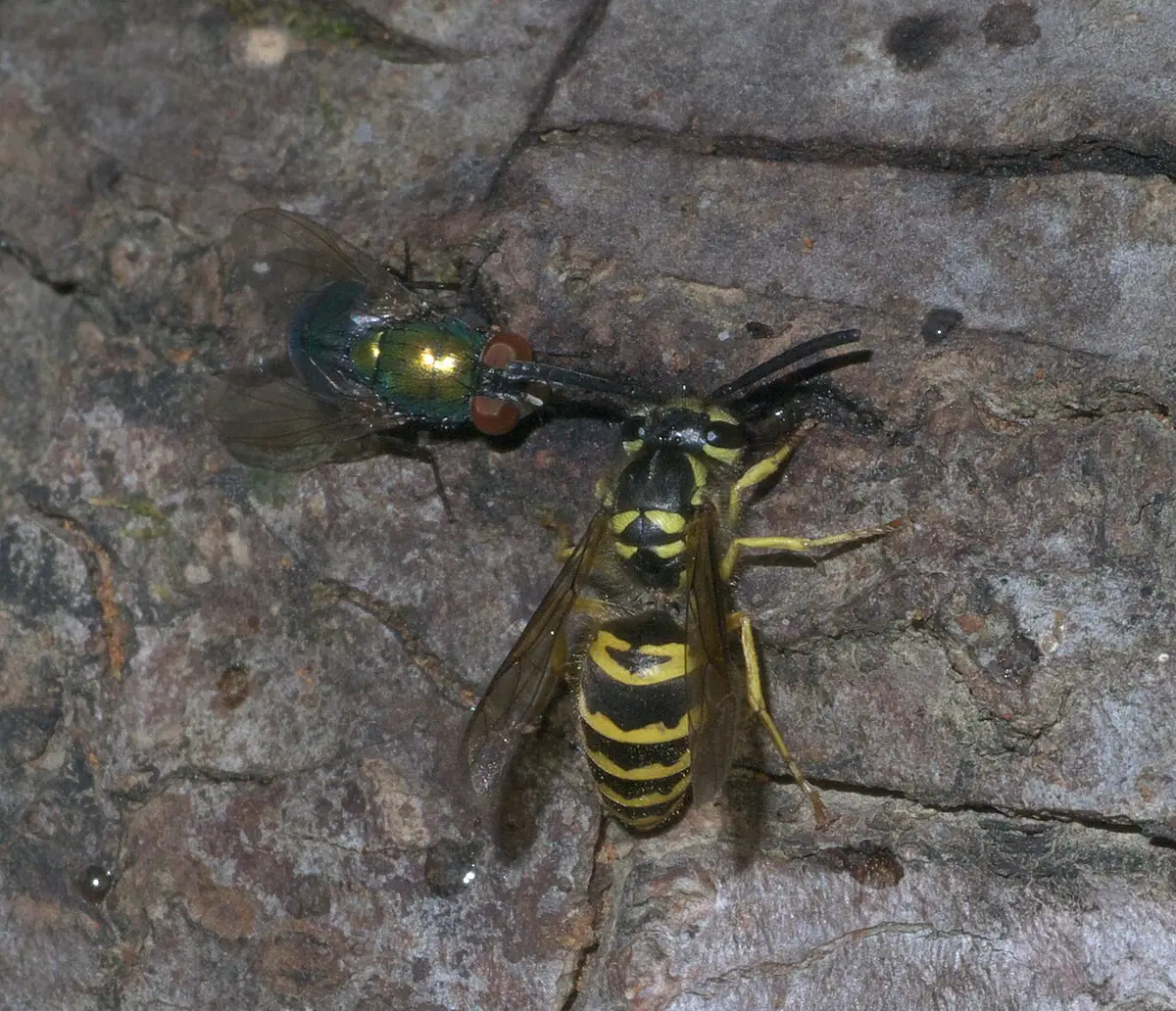
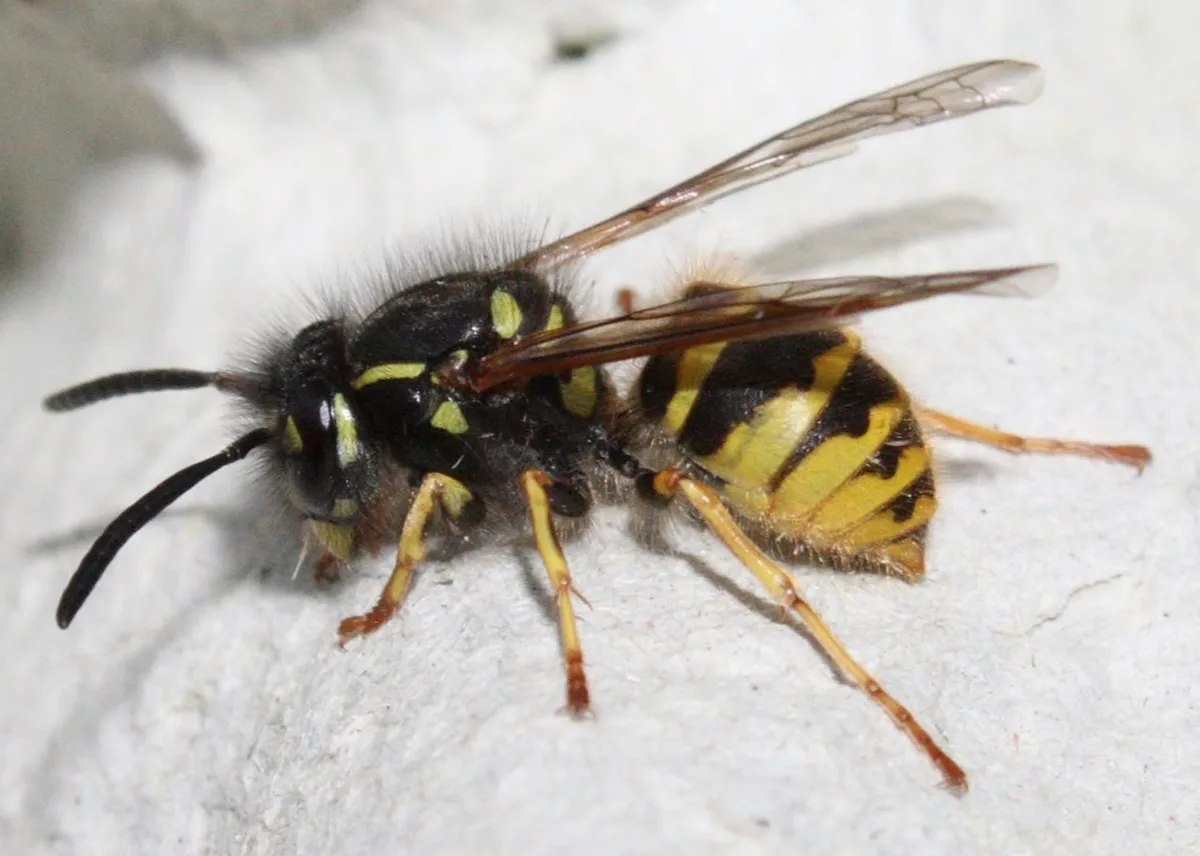
Start with body shape. A yellow jacket is slim, smooth, and shiny, with a sharply pinched waist. A honeybee looks rounder and fuzzier. Next, check the color: most yellow jackets are bright black and yellow, but the bald-faced hornet is black and white, and the southern queen can look surprisingly orange. Finally, watch behavior. A wasp hovering over meat, soda, or fallen fruit in late summer is very likely a yellow jacket, since bees stick to flowers.
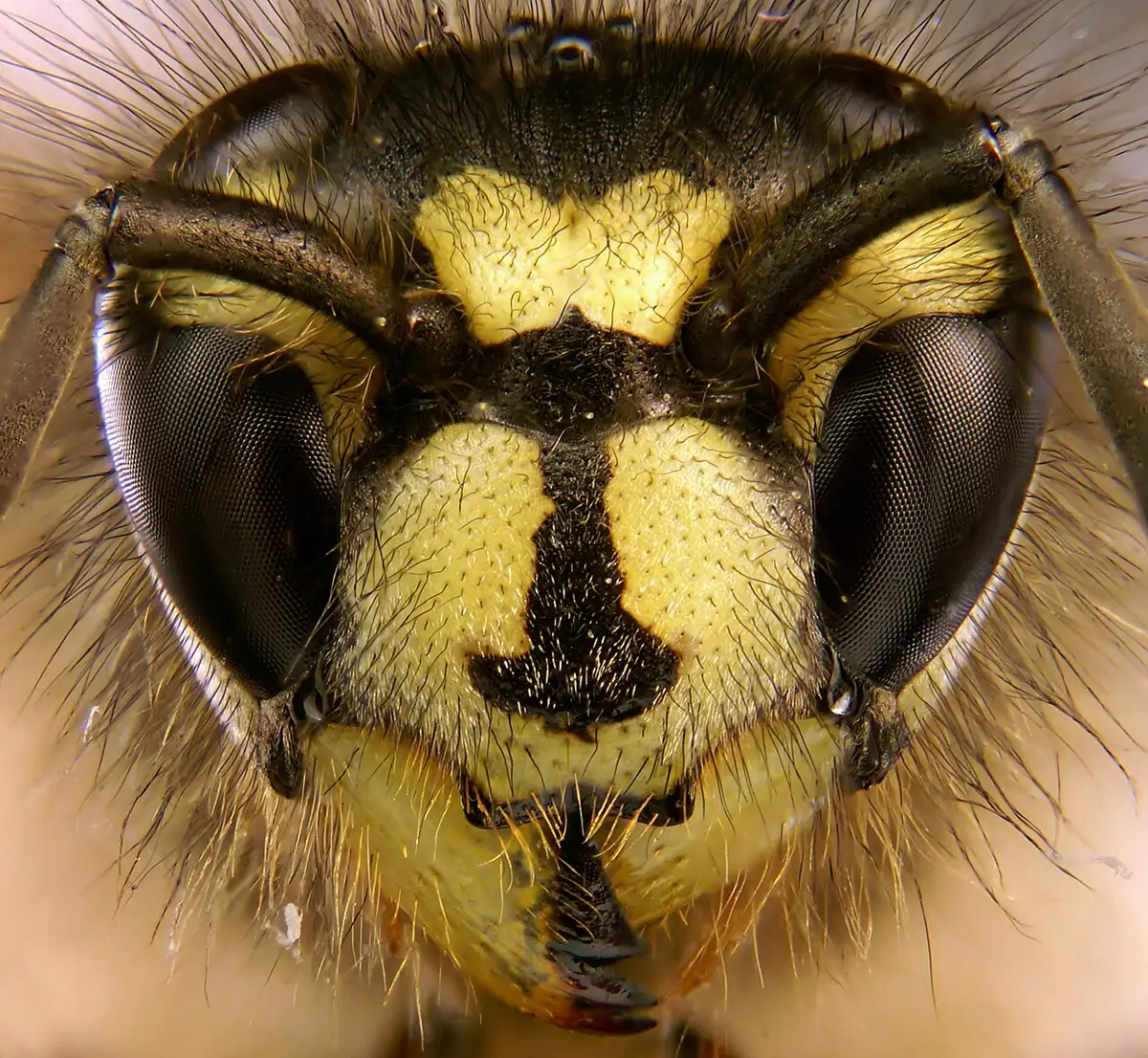
Face markings help separate common species: the German and common yellowjackets show a dark anchor mark on the face, while the western yellowjacket shows a mostly yellow face with black spots. Never get close to study a live wasp near a nest. Photograph it from a safe distance and zoom in later.
Yellow Jacket vs Bee vs Hornet
A honeybee stings once and dies, because its barbed stinger stays in the skin. A yellow jacket has a smooth stinger and can sting repeatedly. True hornets, such as the European hornet, are larger and stouter, brown and yellow rather than bright black and yellow. The bald-faced hornet is called a hornet but belongs to Dolichovespula, making it a close yellow jacket relative. For wider comparisons, see our wasp identification chart and hornet identification chart.
Castes: Queen, Worker, and Drone
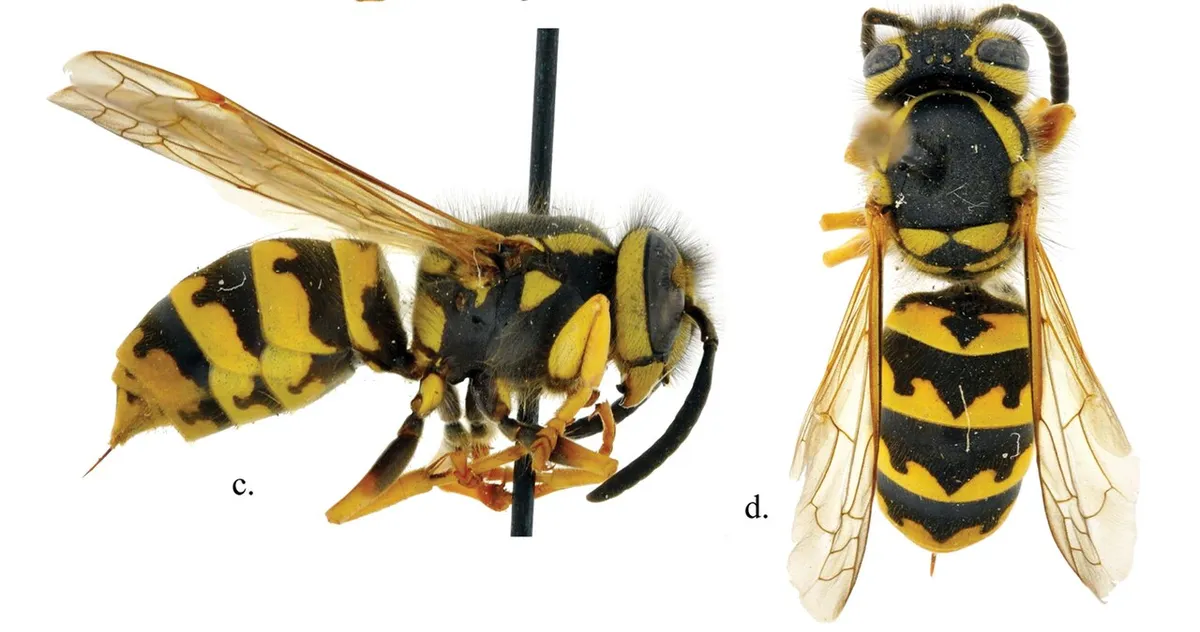
The queen starts the colony alone in spring, building a golf ball sized nest and raising the first workers herself. Workers, all sterile females, then take over building, foraging, and guarding. Drones are males with longer antennae, and they cannot sting. By late summer a colony holds hundreds of workers, and large southern colonies can reach several thousand. In autumn only new mated queens survive winter to start again next spring.
When Yellow Jackets Get Aggressive
Early summer yellow jackets mostly hunt caterpillars and flies to feed their larvae. Trouble starts in late summer, when colonies peak, prey runs short, and workers switch to scavenging sweets and meat, which puts them on your picnic table. A disturbed nest is the other trigger: stepping on a ground entrance or squashing a wasp releases alarm pheromones that summon nestmates fast. Move away slowly, do not swat, and never block an entrance.
Staying Safe Around Yellow Jackets
Keep food and sweet drinks covered outdoors, and check an open soda can before you sip, since a wasp can crawl inside unnoticed. Wear shoes on lawns in late summer. If wasps circle you, walk away calmly rather than flailing. For a sting, wash the area and apply a cold pack, and seek urgent care for trouble breathing or swelling of the lips or throat, which can signal an allergy. For a nest in a wall, near a walkway, or above a doorway, call a pest professional. Our types of hornets guide covers larger stinging lookalikes around eaves and trees.
Are Yellow Jackets Useful at All
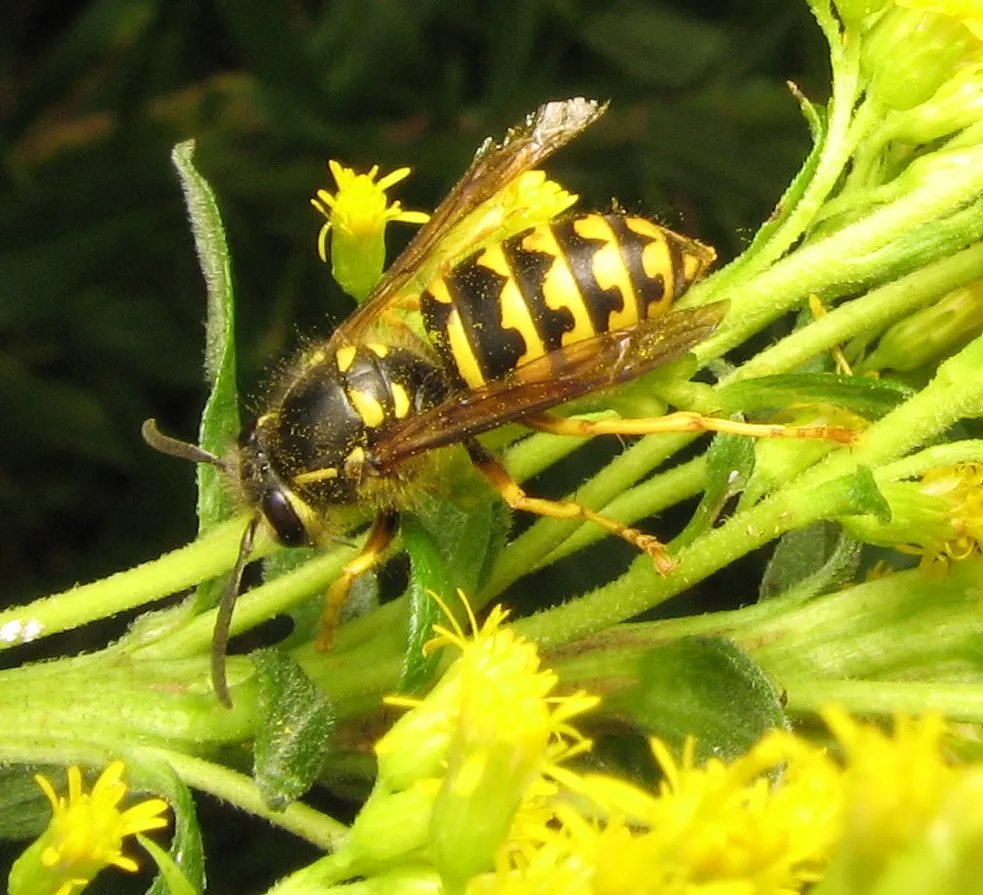
Yellow jackets hunt crop and garden pests all summer and visit flowers for nectar, so they do some good. Colonies die naturally in winter and nests are never reused, so an out of the way nest in autumn soon solves itself.
Yellow Jackets Around the House and Yard
Ground nests favor sunny lawns and old rodent burrows, while aerial nests favor eaves, sheds, and dense shrubs. Seal gaps in siding and around vents in spring, before queens settle, and keep bins tightly closed, since exposed food draws scouts. If you find a nest, keep children and pets away and avoid mowing over it. Paper wasps, with long legs dangling in flight and open comb nests, are often mistaken for yellow jackets but are slimmer and far less interested in food. Our bee identification chart helps with the bee side of the confusion.
Frequently Asked Questions About Types of Yellow Jackets
How many types of yellow jackets are there?
Dozens of species exist worldwide, with roughly a dozen common in North America. This chart covers the 20 most useful for identification in the United States and Europe.
What is the most aggressive yellow jacket?
The German and common yellowjackets rank among the boldest near homes and food, and the southern yellowjacket defends very large colonies vigorously. Any species turns aggressive near its nest in late summer.
Is a bald-faced hornet a yellow jacket?
It is a close relative, not a true hornet. It belongs to Dolichovespula, the aerial yellow jacket genus, and builds a hanging paper nest. Its black and white coloring sets it apart.
Why are yellow jackets worse in late summer?
Colonies peak, prey declines, and workers switch to scavenging sweets and meat, putting more wasps near people and making them more defensive.
Do male yellow jackets sting?
No. Only females sting. Males, called drones, have no stinger and exist to mate with new queens in autumn.
Conclusion
Knowing the types of yellow jackets turns a scary blur of black and yellow into readable clues: ground or aerial nest, bright yellow or black and white, bold scavenger or shy woodland species. Use the chart to match size, markings, and nest location, give nests space in late summer, and keep food covered outdoors. When a nest sits where people walk or eat, professional removal is safest, and wasps left in quiet corners will be gone by winter.



Pingback: Wasp Nest Identification Chart: Identify 20 Common Nests – Chart Identify