
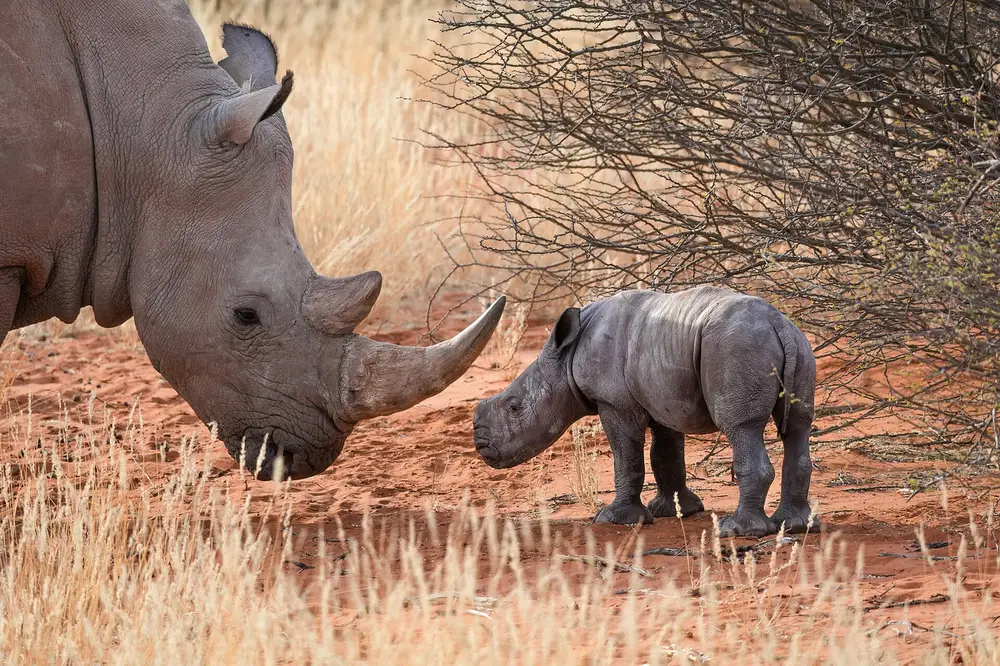
There are five types of rhinoceros alive today, and they could hardly be more different. The biggest, the white rhino, outweighs a large SUV. The rarest, the Javan rhino, survives as about 76 animals in one Indonesian park. This guide compares every type of rhinoceros side by side: weight, shoulder height, horn count, habitat, wild population, and conservation status, with a full section on each species.
All five species fall into two groups. The African rhinos (white and black) live on savanna and bushveld and carry two horns. The Asian rhinos (Indian, Javan, and Sumatran) live in grassland, swamp, and rainforest, with skin folded into armor-like plates. For another African heavyweight comparison, see our types of elephants chart.
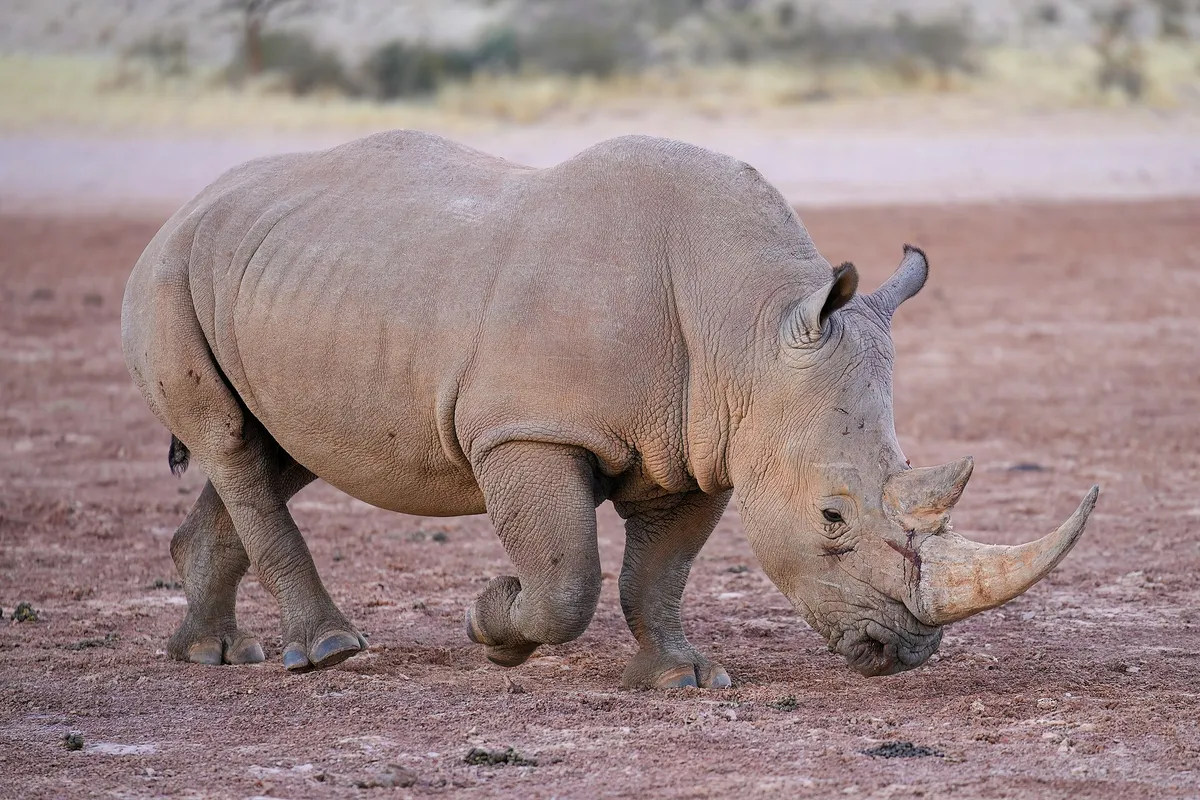
Types of Rhinoceros Chart: All 5 Species at a Glance
Weights and heights are for typical large adults. Populations are rounded wild estimates from recent IUCN and conservation-group figures.
| Rhinoceros type | Scientific name | Weight | Shoulder height | Horns | Where it lives | Wild population | IUCN status |
|---|---|---|---|---|---|---|---|
| White rhinoceros | Ceratotherium simum | 1,800 to 2,500 kg | 1.7 to 1.8 m | Two, front up to 1.5 m | Southern and East Africa | About 17,500 | Near Threatened |
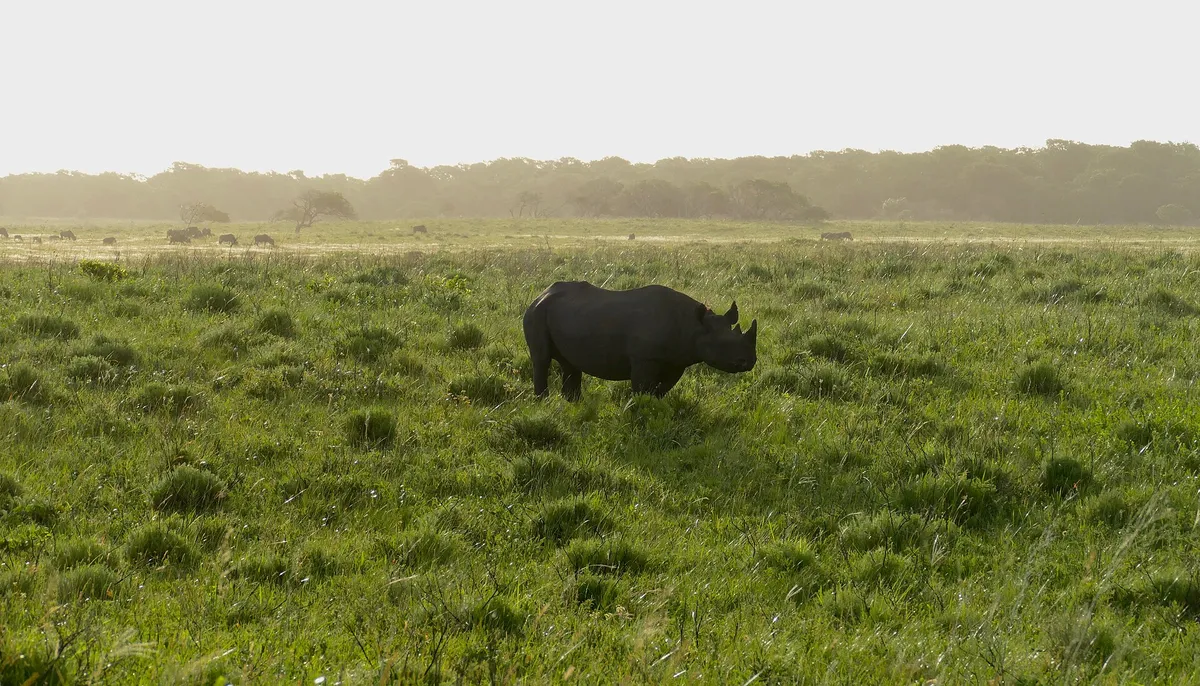
| Black rhinoceros | Diceros bicornis | 800 to 1,400 kg | 1.4 to 1.7 m | Two, front up to 1.4 m | Eastern and Southern Africa | About 6,400 | Critically Endangered |
| Indian rhinoceros | Rhinoceros unicornis | 1,800 to 2,700 kg | 1.7 to 2.0 m | One, 20 to 60 cm | India and Nepal | About 4,000 | Vulnerable |
| Javan rhinoceros | Rhinoceros sondaicus | 900 to 2,300 kg | 1.4 to 1.7 m | One, males only, up to 25 cm | Java, Indonesia | About 76 | Critically Endangered |
| Sumatran rhinoceros | Dicerorhinus sumatrensis | 600 to 950 kg | 1.0 to 1.5 m | Two, front 15 to 25 cm | Sumatra and Borneo | Fewer than 80 | Critically Endangered |
One subspecies deserves its own line. The northern white rhinoceros, a subspecies of the white rhino, is functionally extinct: only two animals remain, both female, under armed guard at Ol Pejeta Conservancy in Kenya. Scientists are working to save it with IVF using stored sperm and southern white surrogate mothers, and the first successful embryo-transfer pregnancy in a rhino was confirmed in 2024.
African vs Asian Rhinoceros: How the Two Groups Differ
Geography is only the start. African rhinos are smooth-skinned animals of open country, built for spotting predators at a distance. Asian rhinos live in tall grass, reed beds, and dense forest, where folded, plate-like skin protects them as they push through thick cover. The Indian rhino is also a strong swimmer and spends hot hours half-submerged in rivers and pools.
Three quick checks separate the groups. Horn count: African species always have two horns, Asian species have one (Indian and Javan) or two much smaller ones (Sumatran). Skin: smooth and hairless in Africa, folded into plates in Asia, with the Sumatran adding a coat of reddish-brown hair. Size: the white rhino is largest overall, but the Indian rhino matches it closely and stands taller at the shoulder. Every rhino horn is made of keratin, the same protein as human fingernails, and it grows back if an animal is safely dehorned by a conservation team.
White Rhinoceros: The Largest Rhino
The white rhino is the largest of the five types of rhinoceros and the second-largest land mammal after the elephants. It is a pure grazer: its wide, square lip works like a lawn mower, cropping short grass as it walks with its huge head held low. The name has nothing to do with color. It comes from the Dutch word wijd, meaning wide, a description of that square lip that early English settlers misheard as white.

The southern white rhino is one of conservation’s great recoveries. By the early 1900s, poaching had cut it to fewer than 100 animals, all in what is now Hluhluwe-iMfolozi Park in South Africa. Protection and reintroductions rebuilt the population to about 17,500 across South Africa, Namibia, Kenya, and other range states. Like the animals in our types of giraffes guide, it depends on guarded reserves.
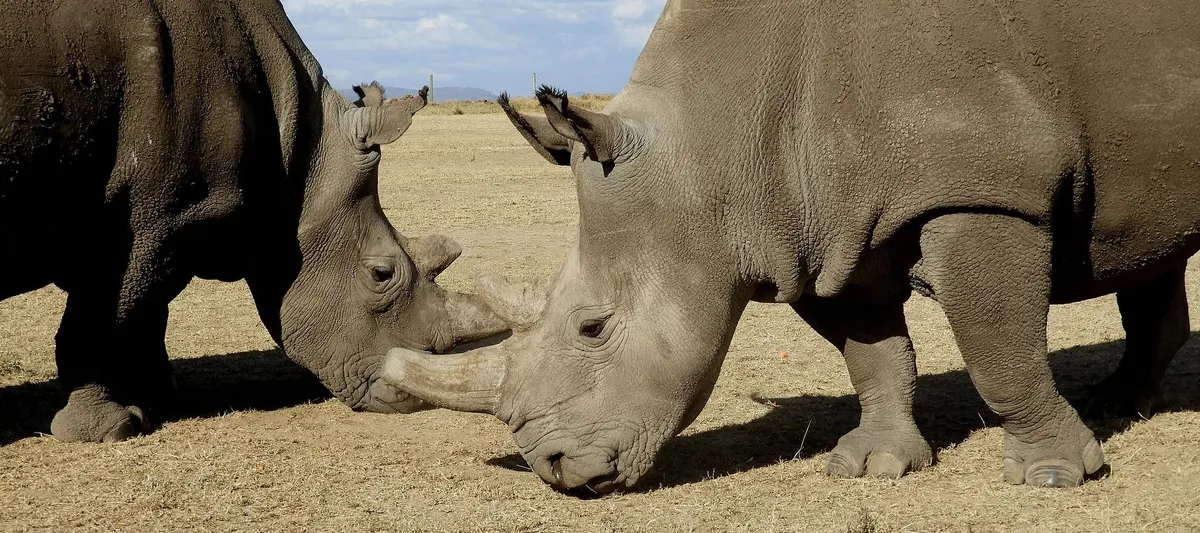
Its northern cousin tells the opposite story. The last male northern white rhino, Sudan, died in 2018, leaving his daughter Najin and granddaughter Fatu as the final two. Neither can carry a pregnancy, so the BioRescue project creates embryos in a lab from stored sperm and eggs, with southern white rhinos as surrogate mothers. It is the most advanced rescue attempt ever made for a subspecies in this position.
Black Rhinoceros: The Hooked-Lip Browser
The black rhino is smaller, more compact, and famously more temperamental than the white rhino. Instead of grazing, it browses: a pointed, hooked upper lip pulls leaves, twigs, and branches into its mouth, which lets it feed in dry bush where grass is scarce. Poor eyesight explains much of its reputation, since a black rhino that cannot identify a shape may charge first and check later.
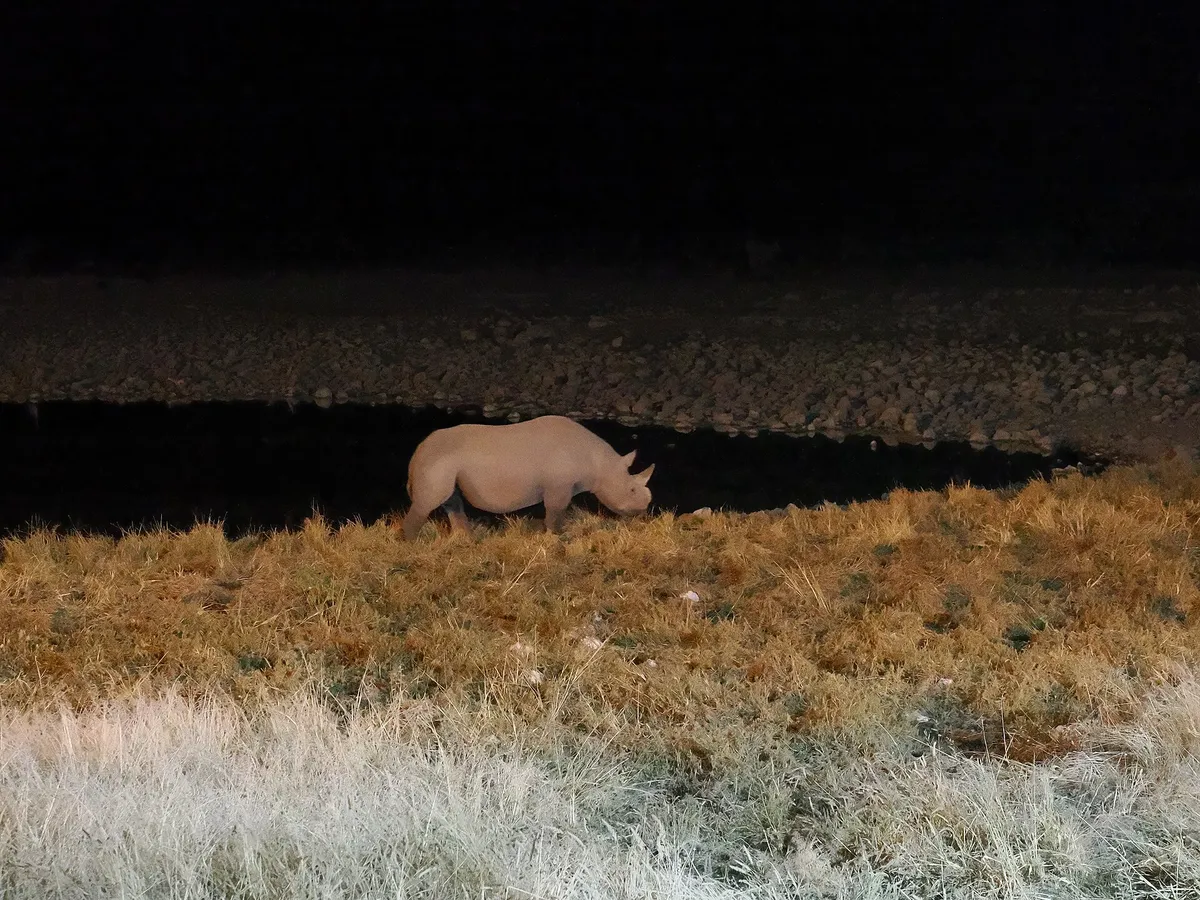
No rhino species crashed harder. Black rhinos numbered around 70,000 in 1970; by 1995, poaching for horn had reduced them to about 2,410. Guarding, translocations, and community conservancies, especially in Namibia and Kenya, have since lifted numbers to roughly 6,400 across four subspecies. The recovery is real but fragile.
Indian Rhinoceros: The Armored One-Horned Rhino
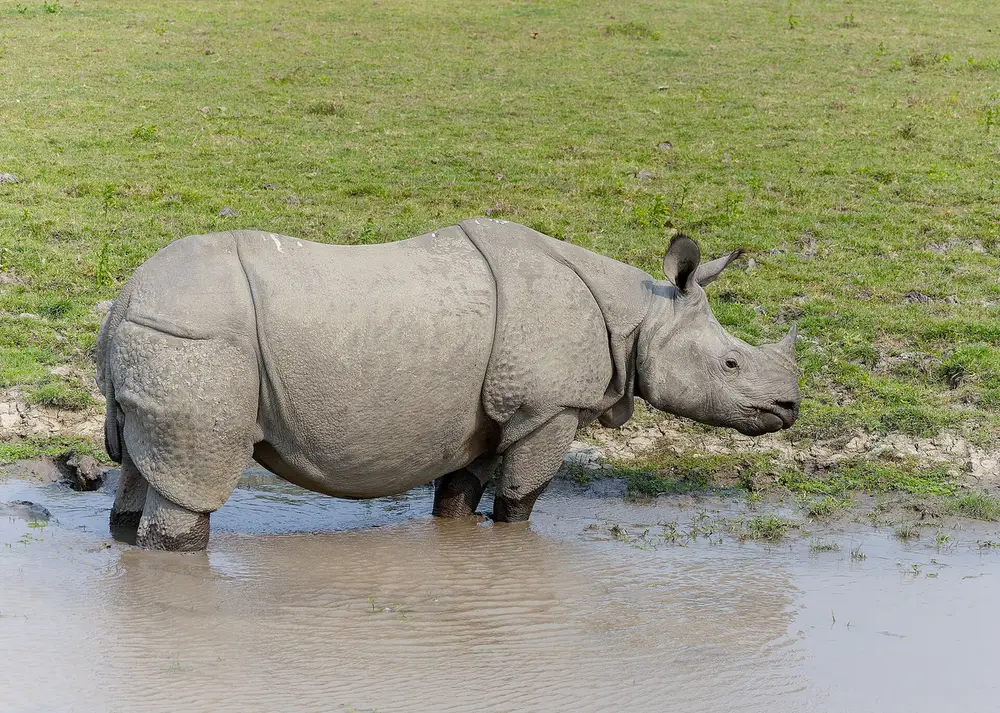
The Indian rhino, also called the greater one-horned rhinoceros, looks built for battle. Deep skin folds at the neck, shoulders, and hips form plates that resemble armor, and wart-like bumps cover its upper legs. It carries a single horn, eats tall elephant grass and aquatic plants, and swims so well that rivers are part of its habitat.
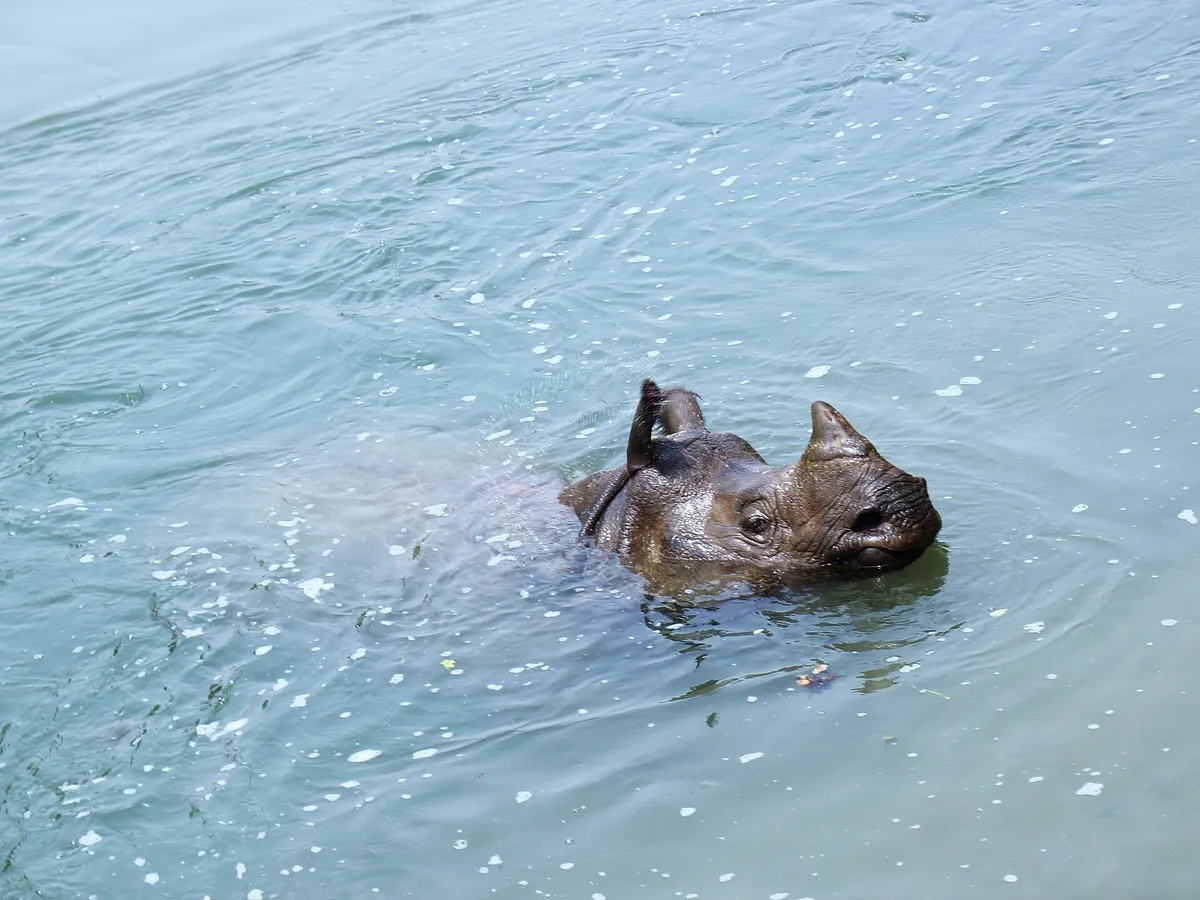
This species is Asia’s version of the white rhino recovery. Hunting and habitat loss cut it to around 200 animals in the early 1900s. Strict protection in India and Nepal has rebuilt it to about 4,000. Kaziranga National Park in Assam holds roughly two-thirds of all Indian rhinos, with smaller populations in parks such as Chitwan in Nepal.
Javan Rhinoceros: One Park, One Species
The Javan rhino is the rarest of all types of rhinoceros. About 76 survive, and every one lives in Ujung Kulon National Park, a lowland rainforest reserve on the western tip of Java. It is a smaller, single-horned relative of the Indian rhino, and females often grow no visible horn at all, a trait found in no other species.
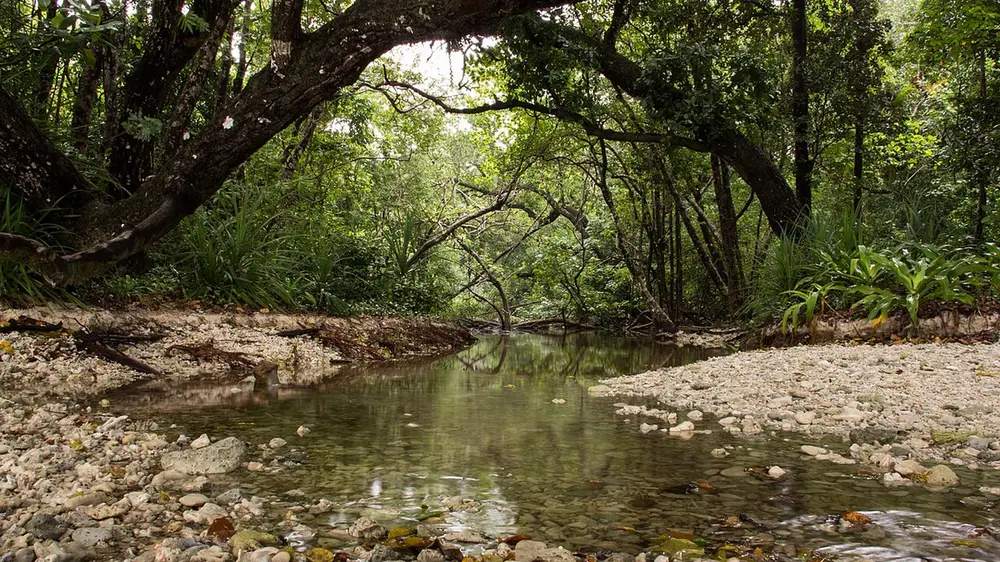
Javan rhinos once ranged from northeast India through Vietnam, but hunting wiped out the mainland population; the last Vietnamese animal was found poached in 2010. Holding a species in one park is risky, since disease or an eruption from the nearby Anak Krakatau volcano could reach the whole population. Indonesian conservation groups are preparing a second site so part of the population can be moved to safety.
Sumatran Rhinoceros: The Small, Hairy Forest Rhino
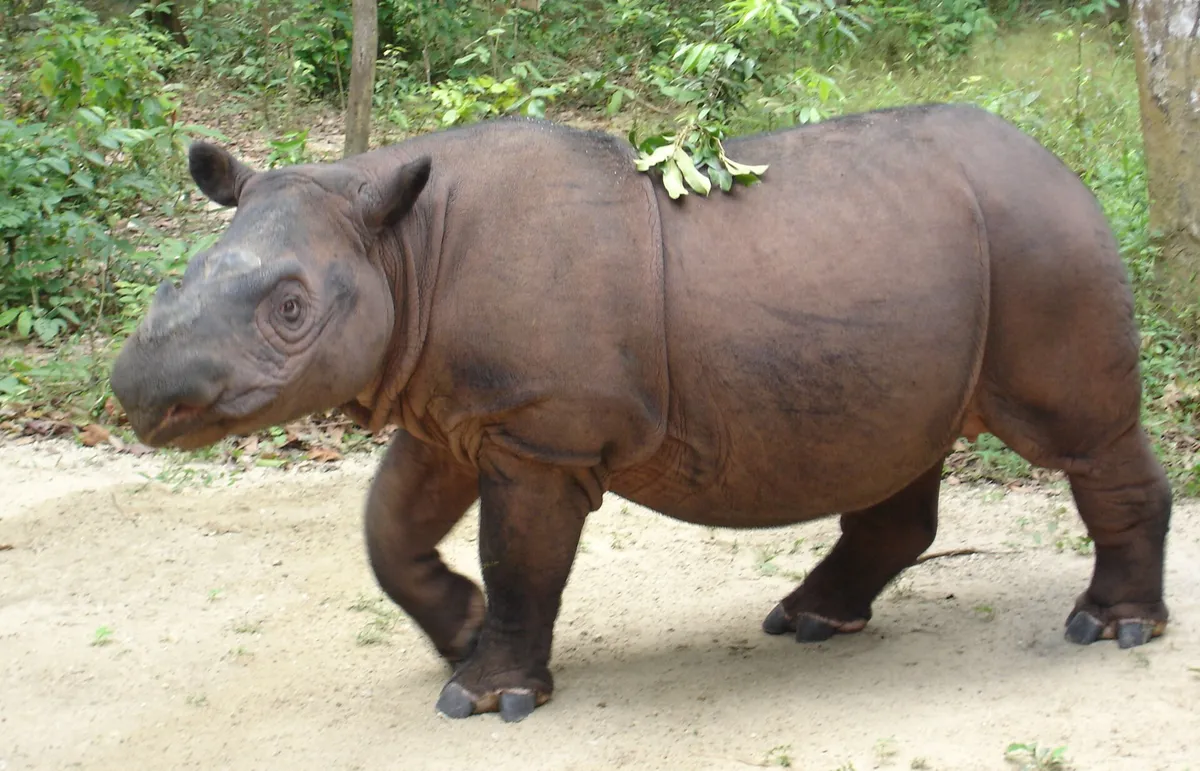
The Sumatran rhino is the smallest living rhinoceros, the only one with a noticeable coat of hair, and the closest living relative of the extinct woolly rhinoceros. It lives alone in dense mountain rainforest, communicates with whistles and squeaks, and wallows in mud daily to cool its skin and keep parasites off. Fewer than 80 remain, split into tiny groups across Sumatra and Indonesian Borneo.
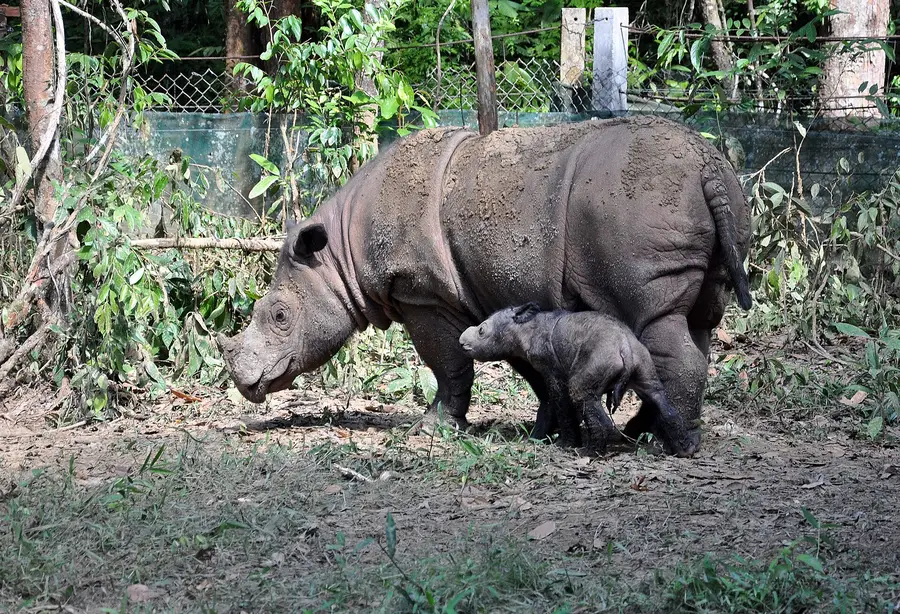
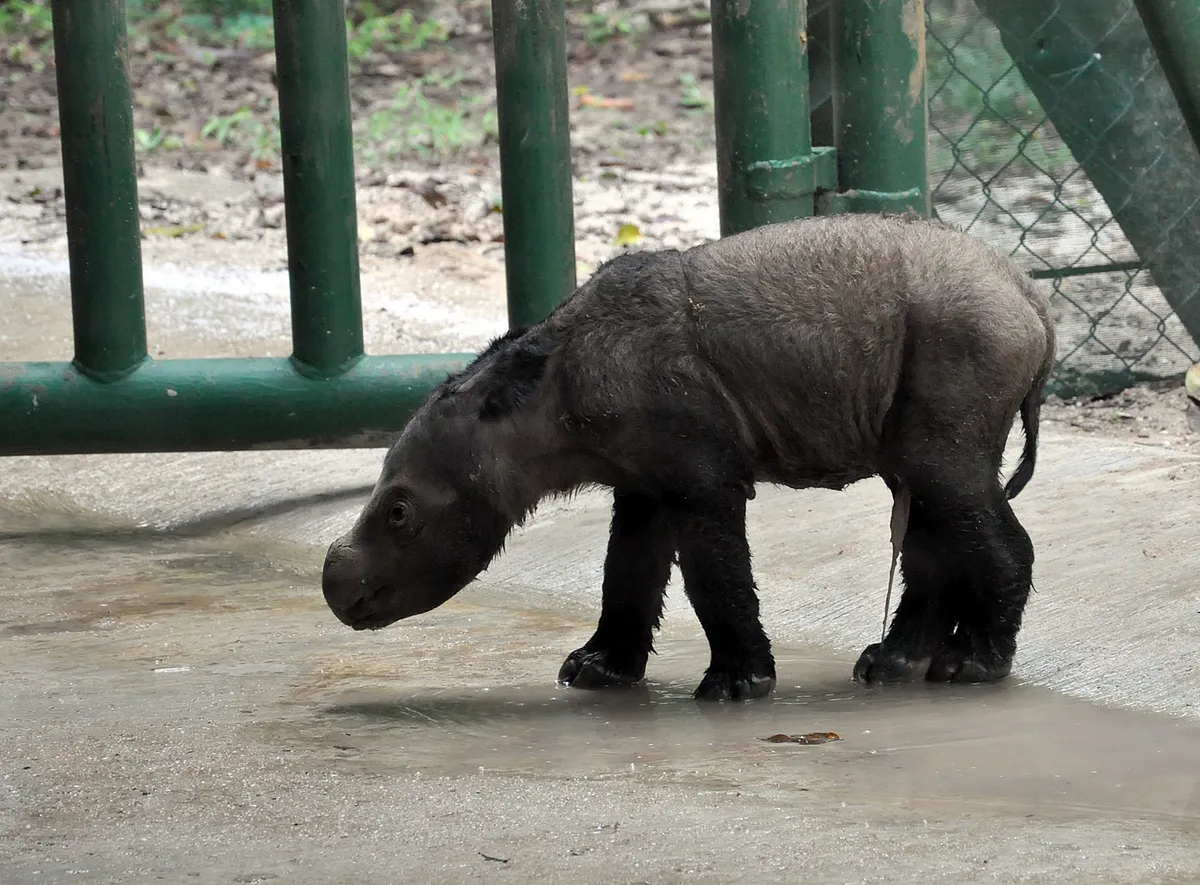
Because the wild groups are so scattered, breeding is now as important as guarding. At the Sumatran Rhino Sanctuary in Way Kambas National Park, a managed breeding program has produced a handful of calves since 2012, each a significant event for a species this rare. Malaysia’s population was declared extinct in 2019, making the Indonesian animals the species’ only future.
How to Tell the Types of Rhinoceros Apart
Five checks identify any rhino in a photo or in the field. Lip shape: square and wide means a white rhino, hooked and pointed means a black rhino. Horn count: one horn means Indian or Javan, two horns means white, black, or Sumatran. Skin: deep armor-like folds mean an Asian species, and hair on top of folds means Sumatran. Size: anything over 1,700 kg with a huge head held low is a white rhino, while the tallest shoulder belongs to the Indian rhino. Habitat: savanna points to Africa, tall river grass to the Indian rhino, dense mountain forest to the Sumatran.
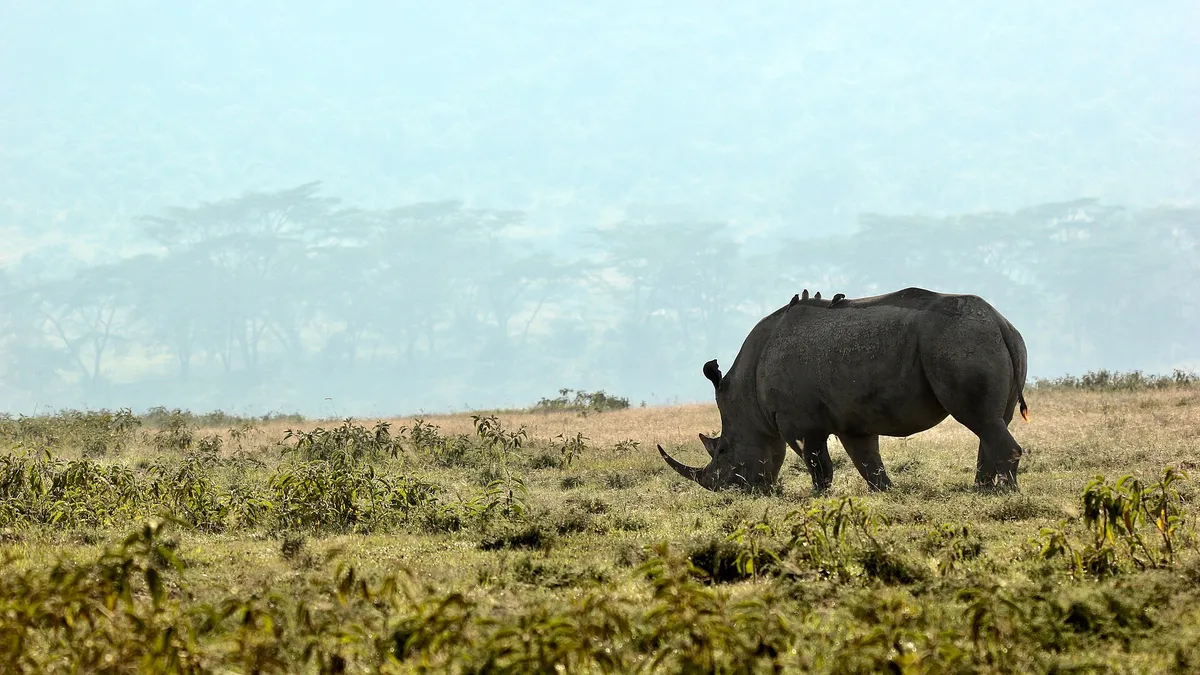
Behavior helps too. Grazing head-down in the open is white rhino behavior; head-up browsing in bush is black rhino behavior. African rhinos often carry red-billed oxpeckers, small birds that pick ticks from their skin and raise the alarm when danger approaches. Asian rhinos are more often seen alone near water. Readers can cross-check sizes in our types of buffalo chart.
Rhinoceros Conservation: Why Every Species Is Threatened
All five types of rhinoceros are on the threatened list: three Critically Endangered, one Vulnerable, and one Near Threatened. The main driver is poaching for horn, sold illegally in parts of Asia for traditional medicine and status goods, despite horn being plain keratin with no proven medicinal effect. South Africa’s crisis peaked in 2014, when more than 1,200 rhinos were killed in one year.
The tools that work are unglamorous: armed anti-poaching patrols, fenced sanctuaries, dehorning programs that make animals less valuable to poachers, and translocations that spread risk across more parks. The white and Indian rhino recoveries prove populations can come back from very low numbers. The Javan and Sumatran rhinos show how little time is left when that work starts late.
Frequently Asked Questions
How many types of rhinoceros are there?
There are five living species: white, black, Indian, Javan, and Sumatran. Two live in Africa and three in Asia. A famous sixth species, the woolly rhinoceros, went extinct about 10,000 years ago.
What is the largest type of rhinoceros?
The white rhinoceros, at 1,800 to 2,500 kg with a front horn that can reach 1.5 m. The Indian rhino is a close second and can stand taller at the shoulder, up to 2.0 m.
What is the rarest rhinoceros in the world?
The Javan rhinoceros, with about 76 animals, all in Ujung Kulon National Park in Indonesia. The Sumatran rhino is nearly as rare, with fewer than 80 left.
Why is it called a white rhino if it is grey?
The name comes from the Dutch word wijd, meaning wide, which describes the species’ broad square lip. English settlers misheard it as white, and the other African species became the black rhino by contrast.
Is a rhinoceros horn made of bone or ivory?
Neither. Rhino horn is solid keratin, the same protein as hair and fingernails, with no bony core. It grows throughout the animal’s life and regrows if trimmed safely.
Conclusion
The five types of rhinoceros split neatly once you know the checks: two African species told apart by their lips, and three Asian species told apart by horns, folds, and hair. What they share is risk. Every figure in the chart above depends on guards, fences, and breeding programs holding the line.


Pingback: Rhino Lifespan Chart – Chart Identify