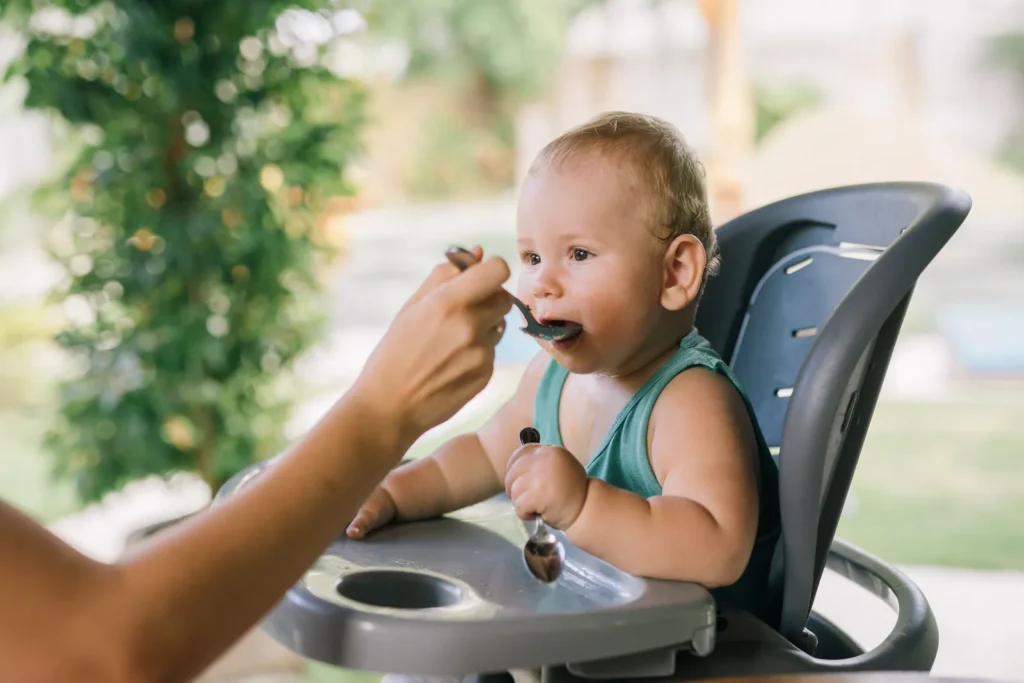
Starting solids is one of the most exciting milestones in your baby’s first year, and also one of the most confusing. What can they eat at 6 months? How much? When do finger foods start? This baby food chart by month answers all of that in one place, with clear textures, realistic serving sizes, and safety notes for every stage from 4 months to 12 months and beyond.
Baby Food Chart by Month
Find your baby’s age, check the texture column, and you will know exactly what belongs on the tray today.
| Baby’s Age | Texture | Example Foods | Meals per Day |
|---|---|---|---|
| 4-6 months | Smooth, thin purees | Iron-fortified rice or oat cereal, mashed banana, sweet potato puree, carrot puree, pureed pear | 1 small meal |
| 6-7 months | Thicker purees | Mashed avocado, lentil puree, apple puree, carrot mash, plain whole-milk yogurt, peanut butter thinned with breast milk or formula | 1-2 meals |
| 7-8 months | Mashed and soft lumps | Soft-cooked egg yolk, mashed beans, soft rice, shredded soft fruits like mango and peach, ground meat mixed into puree | 2 meals |
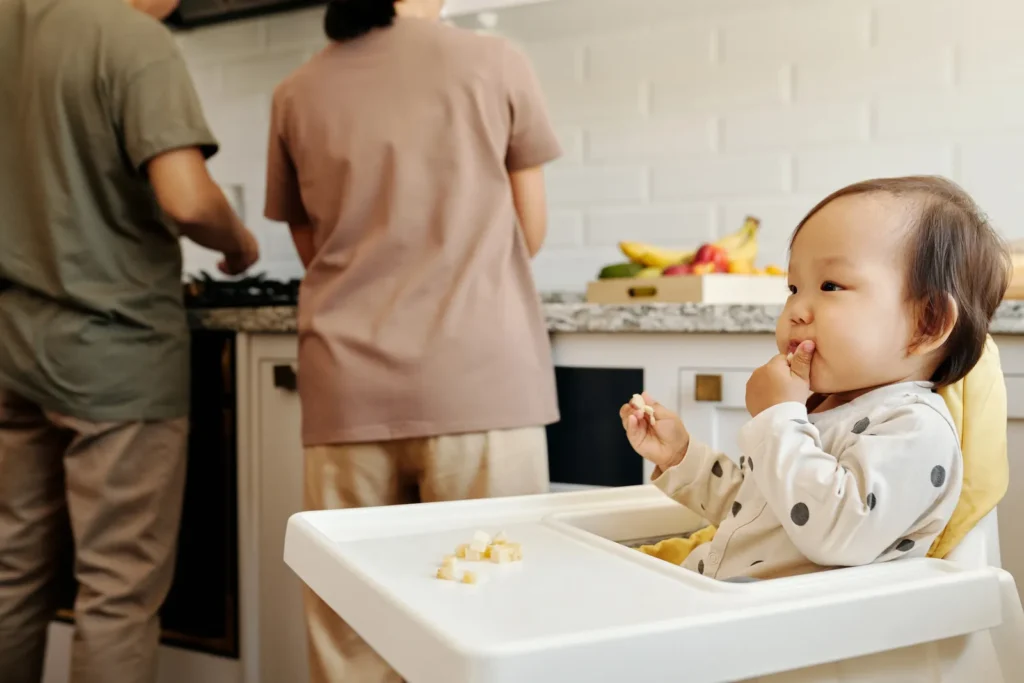
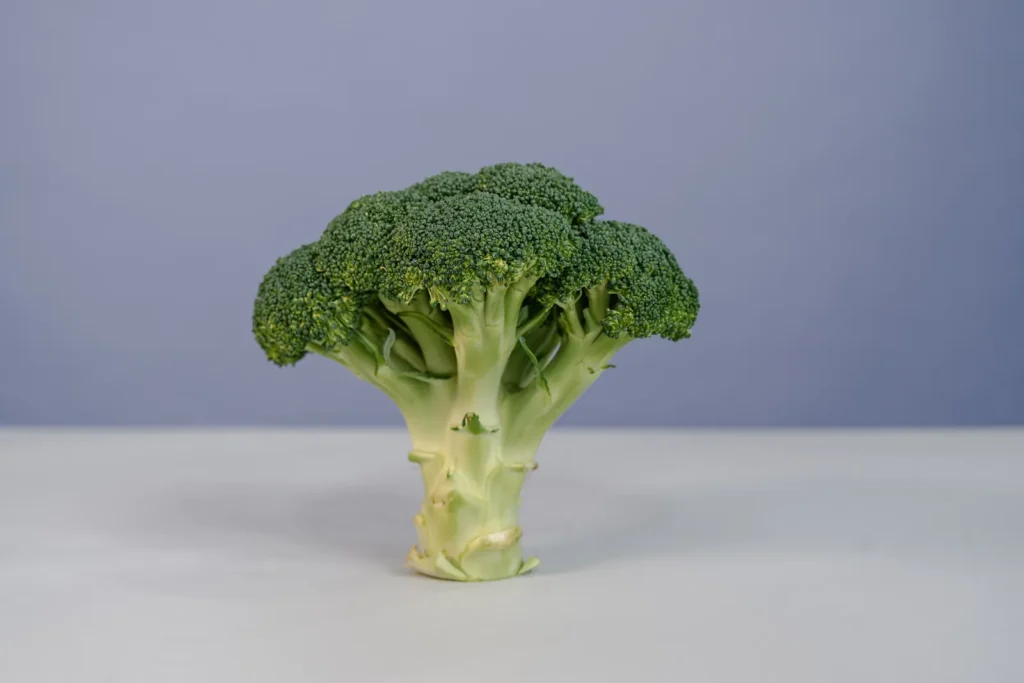
| 8-9 months | Soft finger foods | Steamed broccoli florets, soft fruit cubes, toast strips, cooked pasta spirals, soft cheese cubes | 2-3 meals |
| 9-10 months | Finely chopped foods | Finely chopped chicken, small pasta shapes, soft-cooked vegetables, diced soft fruits, scrambled egg pieces | 3 meals |
| 10-12 months | Modified family foods | Small portions of whatever the family eats, cut small and low in salt: soft meats, cooked vegetables, grains, beans, fruit | 3 meals + 1-2 snacks |
| 12+ months | Regular family textures | Family meals with age-appropriate cuts, whole milk as a drink, water with meals | 3 meals + 2 snacks |
Breast milk or formula stays the main nutrition source through the first year. Solids complement it; they do not replace it until around 12 months.
When to Start Solids: Watch Your Baby, Not Just the Calendar
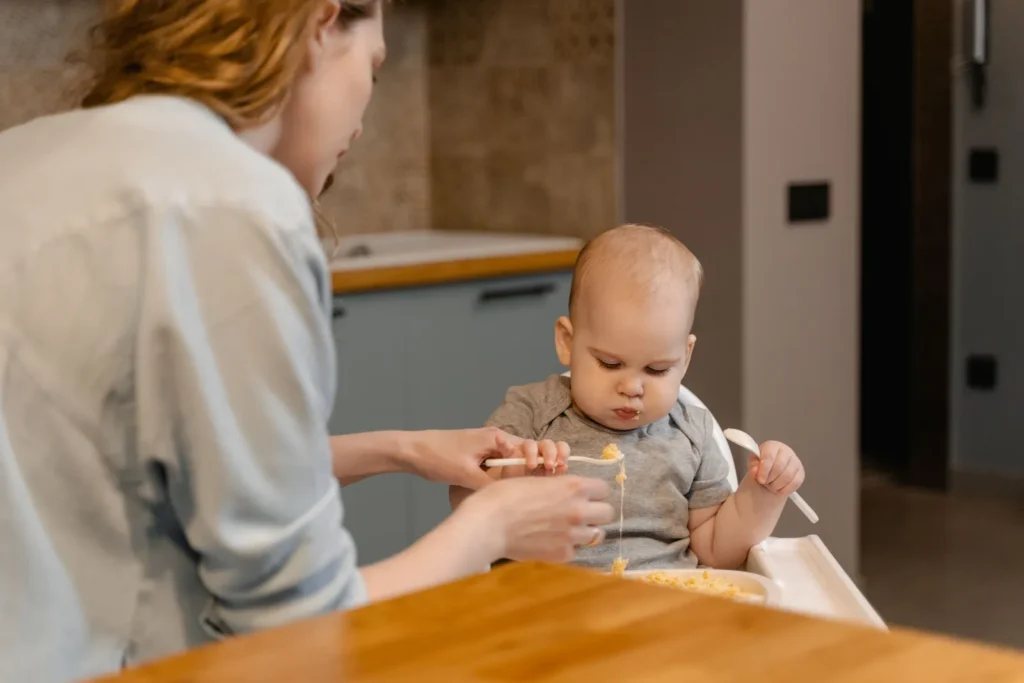
Most babies are ready between 4 and 6 months, and the American Academy of Pediatrics recommends around 6 months for most full-term babies. But readiness signs matter more than the calendar. Look for all of these before offering the first spoonful:
- Sits upright with minimal support and holds the head steady
- Shows interest when others eat: watches, reaches, opens the mouth
- Opens the mouth as food approaches
- The tongue-thrust reflex (automatically pushing food out) has faded
- Can move food from the front of the tongue to the back to swallow
If your baby was born prematurely, use their adjusted age and talk to your pediatrician first.
Best First Foods for Babies
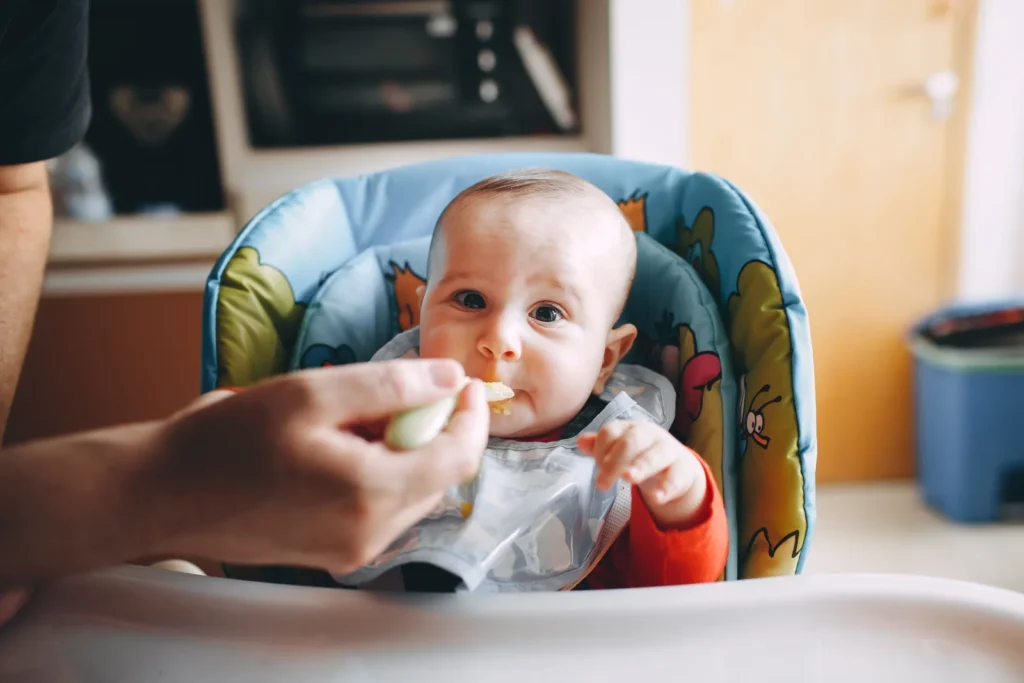
The best first foods share three traits: nutrient-dense, easy to digest, and served as single ingredients so you can spot reactions. Iron deserves special attention here. Babies are born with iron stores that start running low around 6 months, so iron-rich foods should appear early and often.
Strong first-food choices:
- Iron-fortified infant oat or rice cereal mixed with breast milk or formula
- Pureed lentils, beans, or meat (beef, chicken, turkey) for highly absorbable iron
- Sweet potato, carrot, and butternut squash purees (vitamin A)
- Mashed avocado and banana (healthy fats, potassium)
- Cooked and pureed pear or apple (gentle fiber)
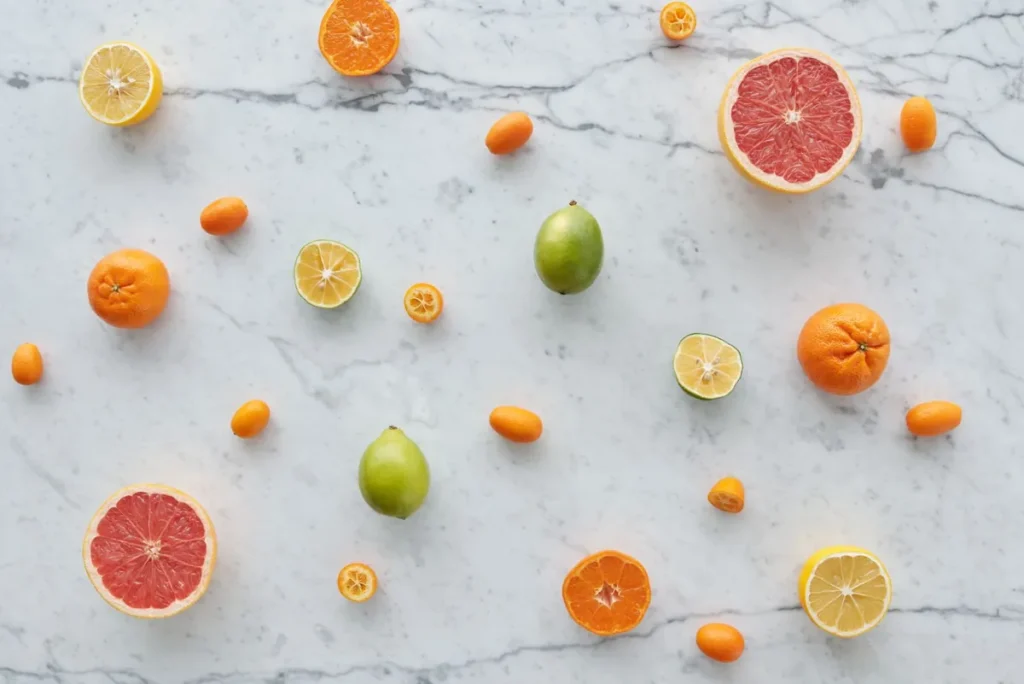
Pair iron-rich foods with a little vitamin C (a spoonful of fruit puree alongside lentils) to boost iron absorption. For the freshest fruit purees, check our fruit season chart to see what is ripe each month.
Baby Food Textures by Month: Why Timing Matters
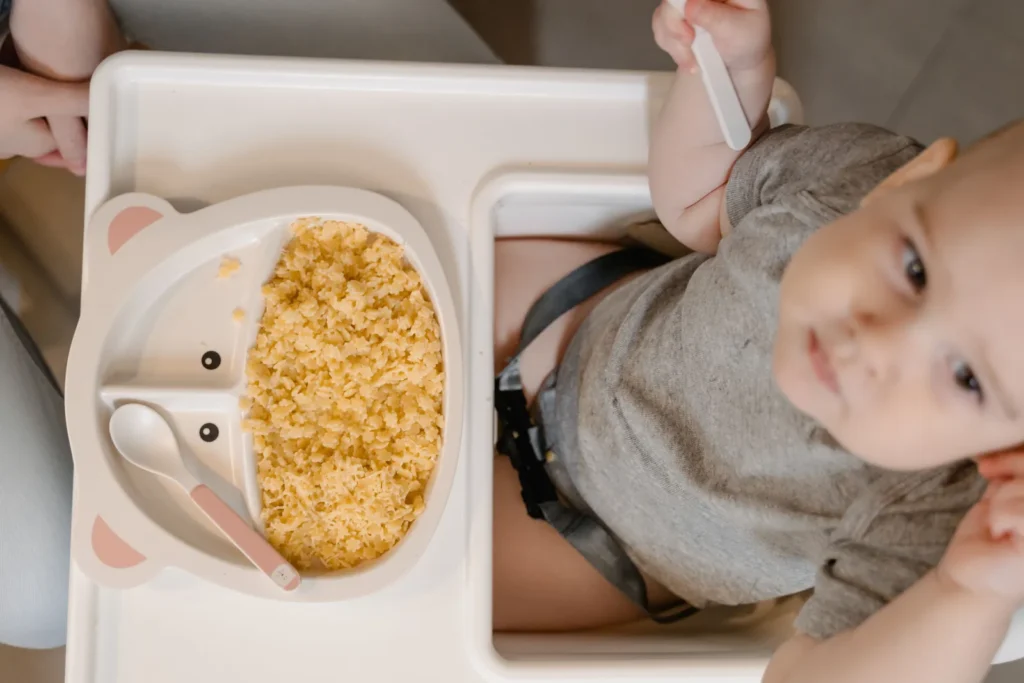
Texture progression is not just about convenience; it trains the mouth muscles babies need for speech and chewing. Offer a new texture roughly on this timeline, and do not wait too long: holding babies on smooth purees past 9-10 months is linked to pickier eating later.
| Age | Move Toward | Examples |
|---|---|---|
| 4-6 months | Smooth, thin puree | Thin cereal, fruit puree strained smooth |
| 6-8 months | Thicker puree and mashes | Mashed banana, lentil puree, lumpy mashed potato |
| 8-10 months | Soft finger foods and dissolvable pieces | Steamed veggie sticks, soft fruit cubes, toast fingers |
| 10-12 months | Finely chopped and minced | Minced chicken, chopped soft veg, small pasta |
| 12+ months | Family textures, bite-size pieces | Whatever the family eats, cut to safe sizes |
Gagging is normal when new textures arrive. It is loud, dramatic, and usually resolves in seconds. Choking is silent and needs immediate action, so always supervise meals and keep pieces soft enough to mash between your fingers.
How Much to Feed: Realistic Serving Sizes
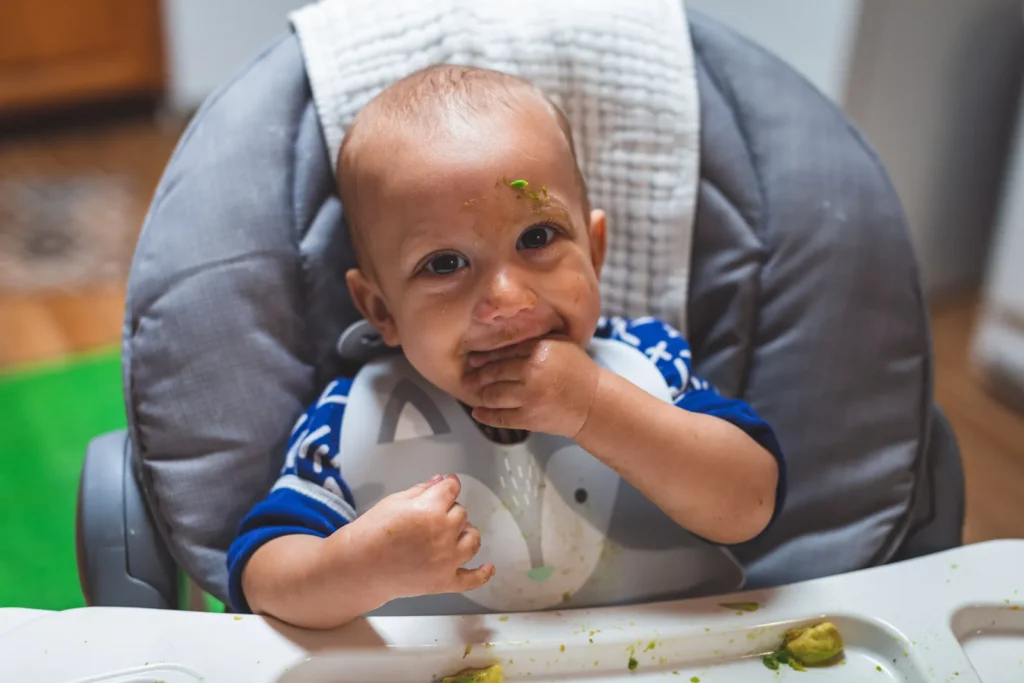
Parents routinely overestimate portions. These ranges are starting points; your baby’s appetite will vary day to day, and that is normal.
| Age | Typical Serving per Food | Notes |
|---|---|---|
| 4-6 months | 1-2 teaspoons, building to 1-2 tablespoons | Increase slowly; milk is still the main meal |
| 6-8 months | 1-3 tablespoons per food | Variety matters more than volume |
| 8-10 months | 2-4 tablespoons per food | Introduce new textures at this stage |
| 10-12 months | 1/4 cup per food, plus snacks | Add one healthy snack, then two |
| 12+ months | 1/4 to 1/2 cup per food | Follow hunger and fullness cues |
Never force “one more bite.” Babies self-regulate remarkably well when adults trust their signals: turning away, pushing the spoon, or clamping the mouth shut all mean done.
A Simple Feeding Schedule by Age
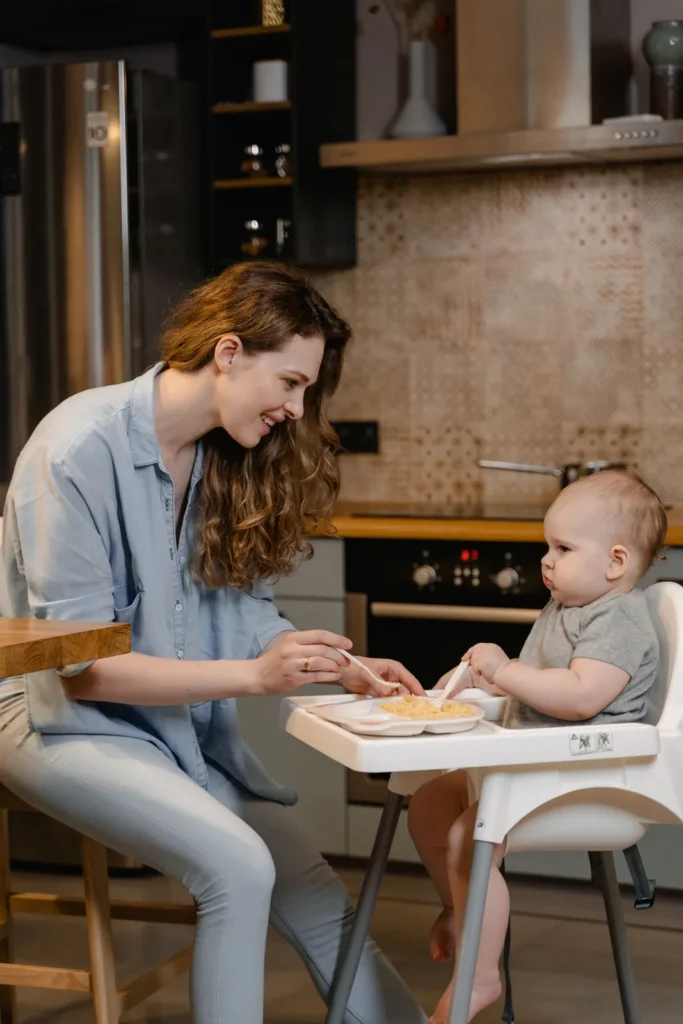
Think of this as a rhythm, not a rigid timetable. Early on, offer solids about an hour after a milk feed so your baby is calm but not starving.
| Age | Milk Feeds | Solid Meals |
|---|---|---|
| 4-6 months | 5-6 | 1 small meal |
| 6-8 months | 4-5 | 2 meals |
| 8-10 months | 3-4 | 3 meals |
| 10-12 months | 3 | 3 meals + snacks |
| 12+ months | 2-3 (plus water) | 3 meals + 2 snacks |
Introducing Allergens: Early and Calmly
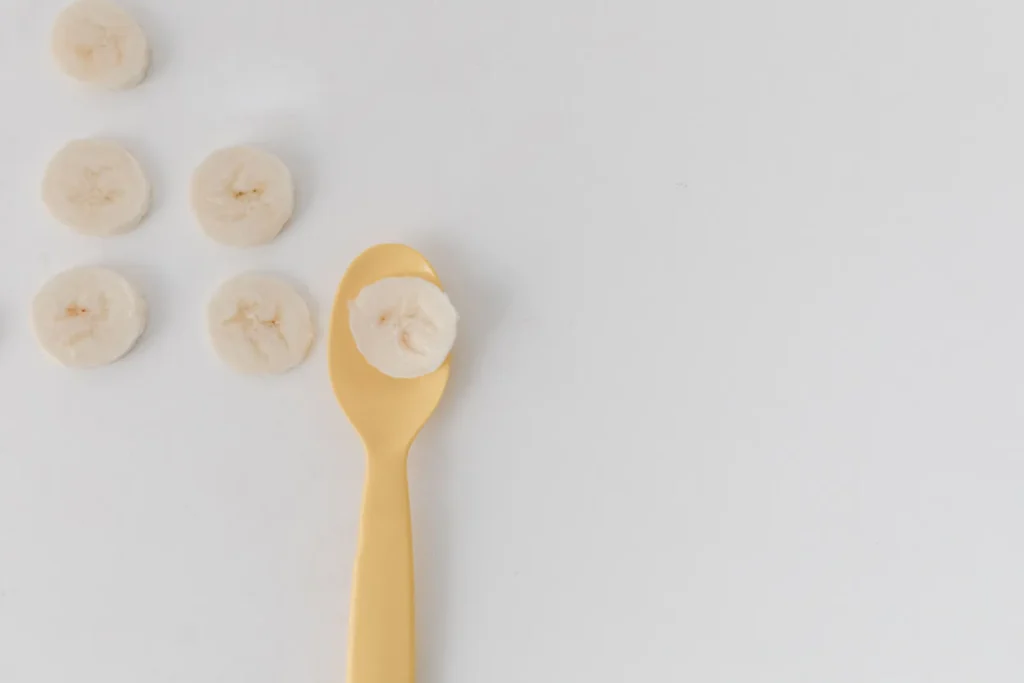
Current guidance has flipped from the old advice to delay allergens. For most babies, introducing peanut and egg around 6 months, in safe forms, may reduce allergy risk. If your baby has severe eczema or an existing egg allergy, talk to your pediatrician first; they may recommend testing before peanut introduction.
Safe ways to introduce common allergens:
- Peanut: smooth peanut butter thinned with breast milk, formula, or water (never whole peanuts or chunks)
- Egg: well-cooked scrambled egg or hard-boiled yolk, mashed
- Dairy: plain whole-milk yogurt or soft cheese (not cow’s milk as a main drink before 12 months)
- Wheat: infant oat or wheat cereal, soft toast strips
- Fish: well-cooked, boneless, flaky fish mashed into puree
Introduce one allergen at a time and wait 2-3 days before adding the next, so you can identify any reaction. Mild redness around the mouth is common and usually harmless; hives, vomiting, swelling, or breathing trouble need prompt medical care.
Foods to Avoid Before 12 Months
| Food | Why to Wait |
|---|---|
| Honey | Risk of infant botulism, a rare but serious illness |
| Whole nuts and popcorn | Choking hazard (nut butters, thinned, are fine) |
| Whole grapes and cherry tomatoes | Choking hazard; always quarter lengthwise |
| Added salt | Strains immature kidneys; babies need almost none |
| Added sugar and juice | Builds a sweet preference; offers no nutrition |
| Cow’s milk as a main drink | Can interfere with iron absorption; fine in cooking |
| Raw or undercooked meat, eggs, fish | Foodborne illness risk |
| Hard raw vegetables (carrot sticks, apple slices) | Choking hazard until molars develop; steam or grate instead |
Homemade Baby Food: Storage and Safety Tips
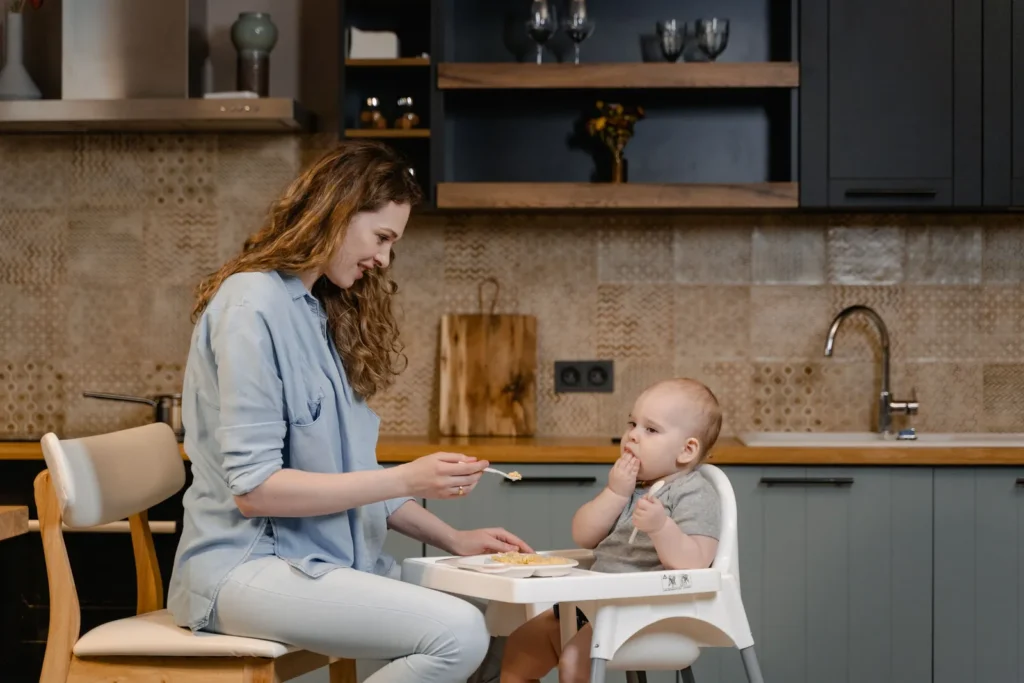
Homemade purees are cheaper than jars and let you control every ingredient. A few rules keep them safe:
- Cook vegetables, meats, and eggs thoroughly; wash all produce well.
- Blend to the right texture for your baby’s stage, adding breast milk, formula, or water to thin.
- Refrigerate within 2 hours and use within 48 hours, or freeze in ice-cube trays for up to 3 months.
- Label frozen portions with the food and date; thaw in the fridge, never on the counter.
- Do not refreeze thawed food, and discard anything your baby’s spoon has touched after the meal.
A weekend batch-cooking session of sweet potato, carrot, lentil, and apple purees can cover a full week of meals.
Troubleshooting: When Your Baby Refuses Food
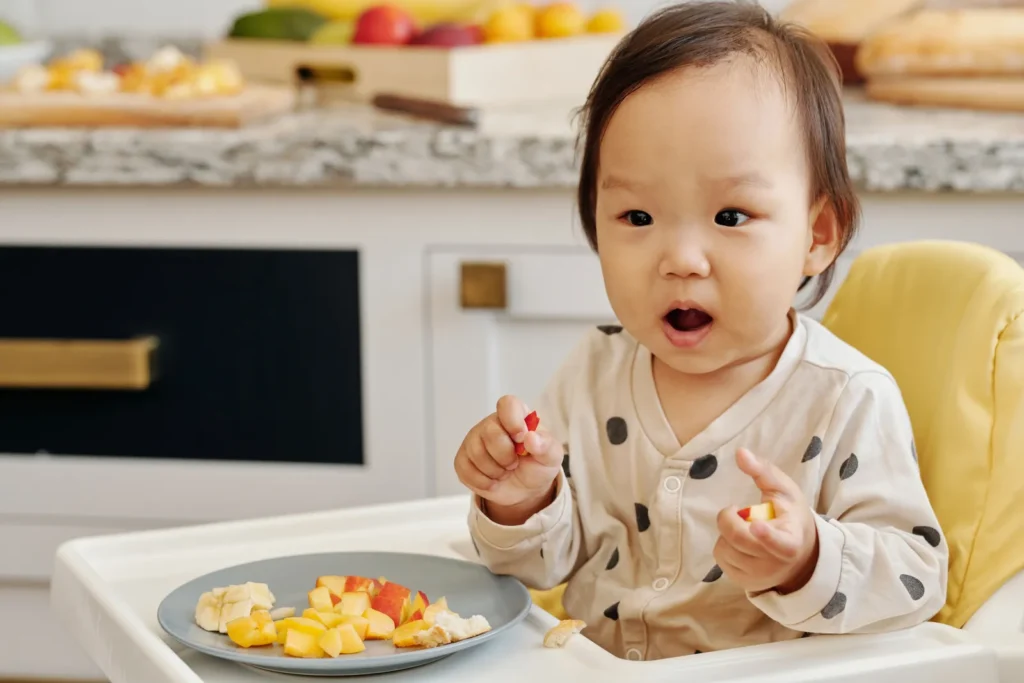
Food refusal is a normal phase, not a verdict on your cooking. New foods often need 10-15 exposures before a baby accepts them. Keep portions tiny and never pressure or bribe. Offer without comment, and try again another day. If refusal comes with weight loss, vomiting, or distress at most meals, check in with your pediatrician.
Frequently Asked Questions
Can I start solids at 4 months?
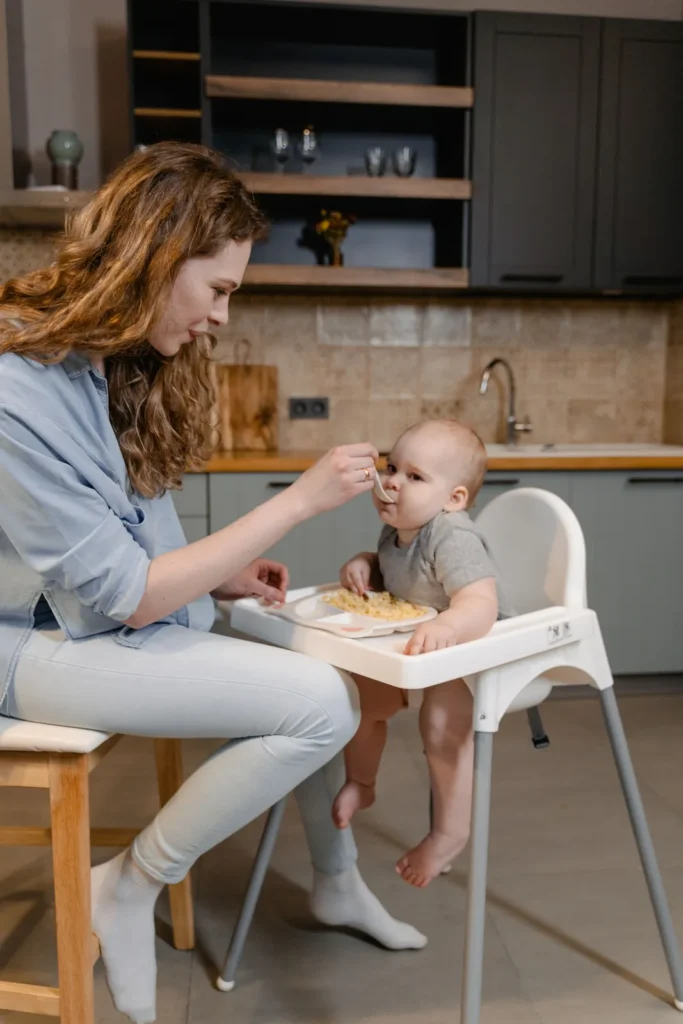
If your baby shows all the readiness signs and your pediatrician agrees, yes. Many babies do best starting closer to 6 months. Readiness matters more than the exact week.
How many meals a day should a 7-month-old eat?
Two meals a day is typical at 7 months, usually offered after a milk feed. By 9-10 months most babies are at three meals plus snacks.
Is homemade baby food better than store-bought?
Both can be excellent. Homemade gives you full control and costs less; store-bought saves time. If you buy jars or pouches, read labels and choose options with no added sugar or salt.
When can my baby have finger foods?
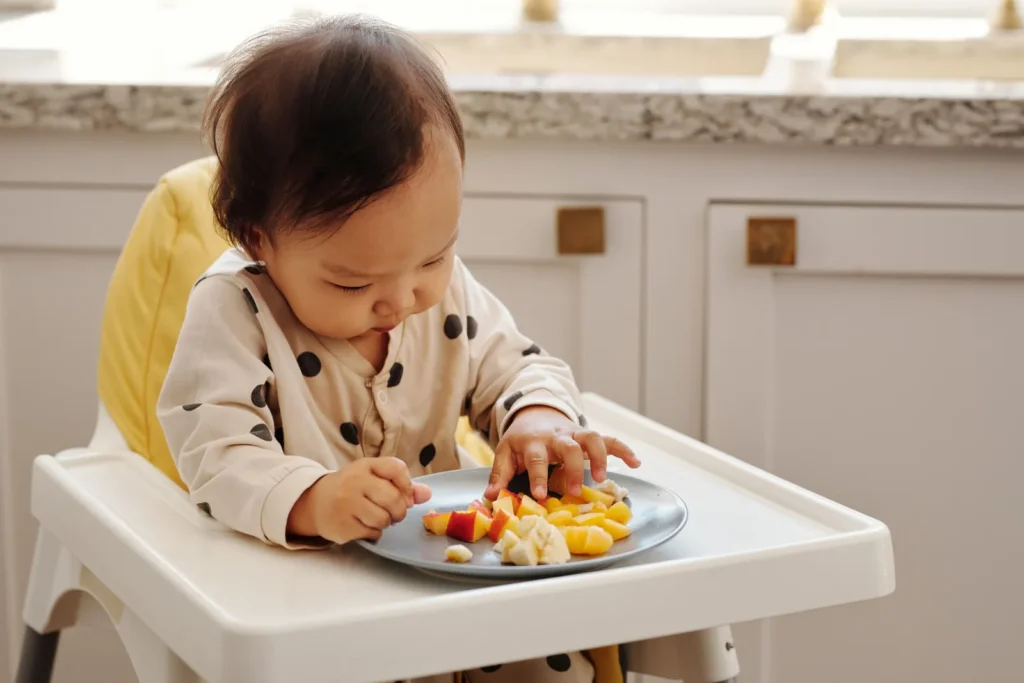
Around 8 months, once your baby can sit well and bring objects to the mouth. Start with soft, graspable pieces like steamed broccoli florets or banana spears.
My baby gags on lumps. Should I go back to smooth purees?
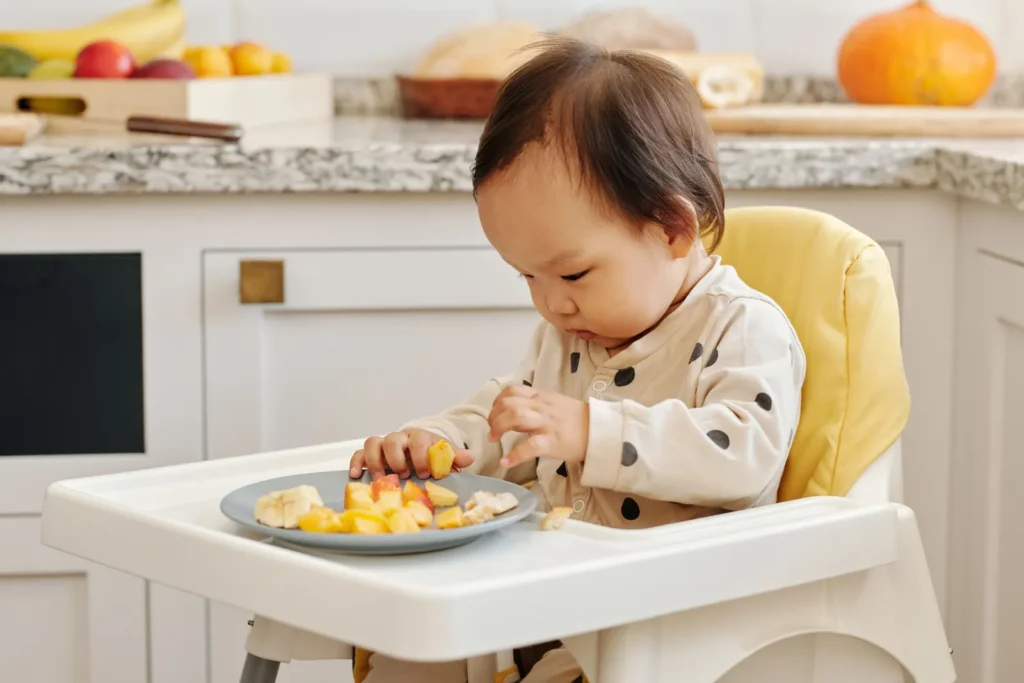
Some gagging is a normal part of learning. Stay calm, keep pieces soft and small, and keep offering. If gagging turns into frequent vomiting or your baby seems distressed at every meal, talk to your pediatrician.
Conclusion
A baby food chart by month takes the guesswork out of the first year of feeding: match the texture to the age, keep servings realistic, introduce iron-rich foods and allergens early, and skip honey, added salt, and choking hazards until 12 months. Stick the chart on the fridge and enjoy watching your baby discover food one tiny spoonful at a time.
This guide is for general information and does not replace advice from your pediatrician, especially for premature babies or babies with medical conditions.